How to Visit Chiang Rai from Chiang Mai
Planning a Chiang Rai trip from Chiang Mai? Learn how to get there, temple fees, timing tips, and why two nights is the ideal stay.
Last updated: July 1, 2026
Decide between a sightseeing day and an overnight stay first, then compare the matching tour or one-way transfer.
Quick Facts: Chiang Rai from Chiang Mai
| Distance | ~180 km (112 miles) by road |
| Green Bus (VIP) Cost | 315 THB at station / 380 THB online |
| Green Bus (Express) Cost | 210-271 THB |
| Private Transfer Cost | 4,500-8,000 THB one-way (vehicle, not per person) |
| Journey Time (Bus) | 3.5-4 hours |
| Journey Time (Private Car) | ~3 hours with no stops |
| Departure Terminal (Chiang Mai) | Arcade Bus Terminal (Terminal 2/3), ~4 km from Old City |
| Arrival Terminal (Chiang Rai) | Chiang Rai Bus Terminal 1 (city center) |
| White Temple Entry (Foreigners) | 200 THB (increased 2026) |
| Blue Temple Entry | Free |
| Best Travel Season | November to February |
| Train Option | No direct train exists |
| Direct Flight Option | No direct flights between the two cities |
Prices verified May 7, 2026. All THB figures are approximate and subject to change.
How Far Is Chiang Rai from Chiang Mai, and How Long Does the Journey Actually Take?
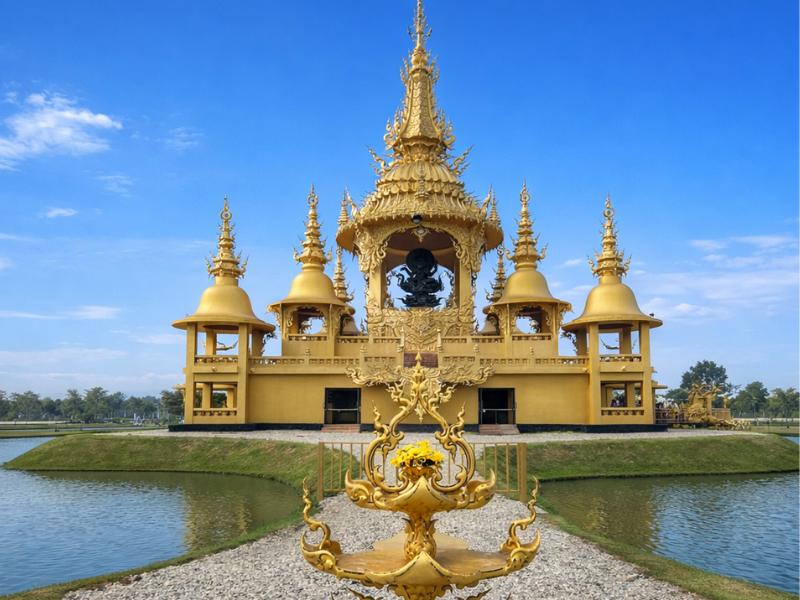
Chiang Rai sits roughly 180 kilometers north of Chiang Mai by road. By Green Bus VIP service that’s 3.5 hours. By private transfer with a good driver and no stops, closer to 3. Add traffic near the Chiang Rai city center at arrival time, and most people should budget 4 hours door to door regardless of transport type.
The route is one of northern Thailand’s best drives, and that’s not marketing speak. You leave Chiang Mai’s suburban sprawl behind within about 20 minutes and then it’s all hills, river valleys, and stretches of teak and bamboo forest. The road climbs and drops through terrain that feels genuinely remote even though it’s one of the most-traveled corridors in the region.
There’s no direct train between the two cities. No direct flight either. Road travel is the only way. That actually works in your favor, because the highway scenery between the two cities is part of the experience, not a gap to endure.
One thing that trips up first-timers: the distance looks short on a map. People see 180 km and think 2 hours. Then they board a bus that stops at a rest area, hits a convoy of trucks on the mountain section, and arrives in 4 hours. Build the buffer. It matters if you’re trying to hit the White Temple before tour buses arrive.
Trying to figure out how many days actually covers everything worth seeing in Chiang Rai without overstaying? Check out our how long do you need in Chiang Rai tours guide before you lock in your itinerary.
What Are Your Transport Options from Chiang Mai to Chiang Rai?
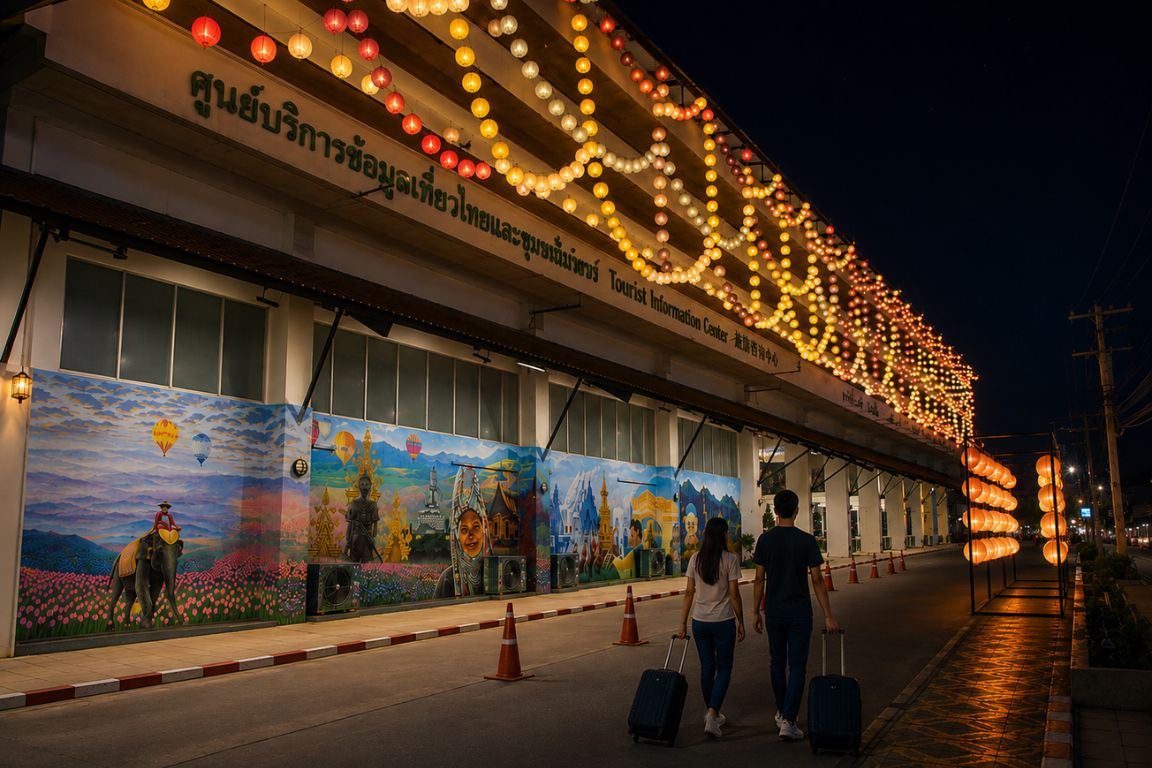 You have three real choices: the Green Bus (Express or VIP) from Arcade Bus Terminal, a private transfer or hired car, or a guided day tour that handles transport and entry for you. There is no train and no direct flight. For most independent travelers, the VIP Bus at 315 THB is the sweet spot. Groups of 4 or more should look at splitting a private transfer.
The Green Bus VIP is the option we recommend to travelers on a budget who want to stay independent. The seats are wide enough that you won’t hate your seatmate, the AC is strong, and there’s a bathroom onboard. Sixteen buses run daily, first departure at 7am. You buy directly at the Greenbus counter at Arcade Terminal or through 12go.asia. The VIP makes no stops, which matters if you’re trying to get there early. Bring a jacket: the AC runs hard the entire way.
The Express bus is about 60 THB cheaper and almost as comfortable. It makes one rest stop, which adds roughly 25 minutes. Not a deal-breaker unless you’re chasing the 8am White Temple opening.
Private transfers run 4,500-8,000 THB for the whole vehicle depending on size. Split four ways, that’s comparable to the VIP Bus per person, but you get door-to-door service and can stop at Mae Khachan Hot Springs along the route without adding logistics. Families and small groups almost always find the value makes sense.
Guided day tours from Chiang Mai bundle transport, a local guide, most entry fees, and sometimes lunch. They cost around 1,300-3,850 THB per person depending on whether it’s a group tour or private. The trade-off is the schedule: you’re on the tour’s clock, and that clock tends to put you at the White Temple at the same time as every other tour bus from Chiang Mai.
Chiang Mai to Chiang Rai: Transport Comparison
| Green Bus Express | 210-271 THB | 4-4.5 hrs | Budget travelers | Station or 12go.asia |
| Green Bus VIP | 315-380 THB | 3.5 hrs | Solo travelers, couples | Station or 12go.asia |
| Private Transfer | 4,500-8,000 THB/vehicle | 3-3.5 hrs | Families, groups of 4+ | chiangrai.tours or GetTransfer |
| Group Day Tour | 1,300-1,900 THB/person | Full day | First-timers, convenience | Viator / chiangrai.tours |
| Private Day Tour | 3,850+ THB/person (2 guests) | Full day | Travelers who want flexibility | chiangrai.tours |
| Train | N/A | N/A | No direct train service exists |
Prices verified May 7, 2026.
No staring at bus schedules, no arriving at the White Temple at peak crowd hour.
Trying to decide between Thailand’s cultural hub and its quieter, more off-the-beaten-path northern neighbour? Check out our Chiang Rai vs Chiang Mai guide before you commit to either.
Should You Do Chiang Rai as a Day Trip or Stay Overnight?
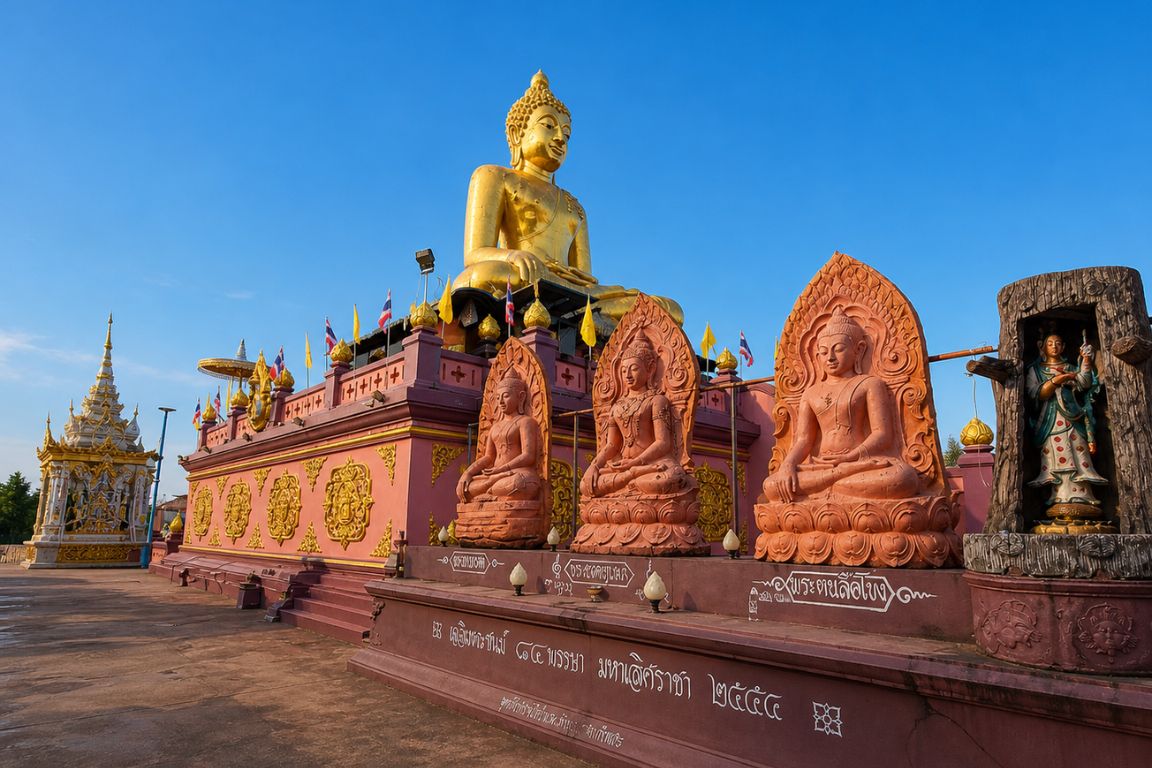 One day is doable but genuinely rushed. You’ll spend 7 to 8 hours total in a vehicle and have maybe 4 hours on the ground. Two nights is where the experience shifts: you can hit the temples before 9am when the day-trip buses haven’t arrived yet, eat at the Night Bazaar in the evening, and still have time for a Golden Triangle excursion the next morning. If you have the flexibility, stay two nights.
Here’s what most people don’t realize about the day trip math. The 7am bus from Chiang Mai arrives around 11am. By that point, tour groups from Chiang Mai left earlier and are already at the White Temple. The White Temple closes at 5:30pm. The last bus back leaves at 6pm. You have six hours in Chiang Rai and two of them are peak crowd hours at the most visited site.
Travelers who stay overnight change the equation entirely. They can be at the White Temple gates when they open at 8am, the crowd still thin, the mirror mosaic catching early light instead of harsh midday sun. They can visit the Blue Temple in the late afternoon when the blue tiles saturate against golden-hour sky. And then they still have an evening ahead.
We’ve guided people both ways since 2014. The ones who did a day trip and came back as overnight guests later almost always say the same thing: the overnight version felt like a different city.
That said, one day is absolutely better than skipping Chiang Rai. If your schedule is fixed, take the 7am VIP bus, visit in this order: Blue Temple first (less crowded), Black House mid-morning, White Temple by 2pm when the lunch rush clears some of the tour groups, then the Night Bazaar if you catch a late bus back. It works.
We’ve put together a full visitor breakdown in our Blue Temple Chiang Rai visitor guide so you know exactly what to see, how to dress, and when to arrive for the best light and the fewest crowds.
What Is the Best Time of Year to Make the Chiang Rai Trip?
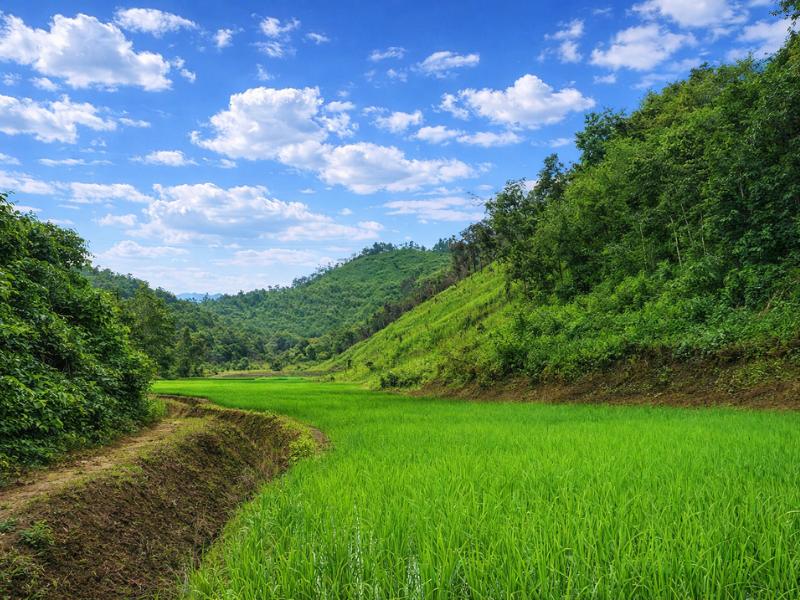
November to February is the peak season for good reason: cool and dry with temperatures between 13°C and 28°C, clear skies, and great light for temple photography. Avoid March to mid-April due to agricultural burning that drops air quality significantly. May to October is the rainy season with genuine bargains but unpredictable afternoon downpours. For first-timers, November or early December is the sweet spot before Christmas crowds spike prices 20%.
The burning season gets underreported in most travel content. From late February through mid-April, farmers across northern Thailand clear fields, and the smoke builds. On bad days the AQI in Chiang Rai can exceed 150. The White Temple’s white exterior looks grey-hazed instead of brilliant. People with respiratory conditions should avoid this window entirely. Other travelers should at minimum check air quality apps before committing to spring travel.
The rainy season (June to October) is genuinely underrated for specific travelers. The countryside turns vivid green. Temple crowds drop by half. Budget guesthouses that run 800 THB in peak season drop to 500 THB. Rain usually comes as afternoon bursts, not all-day drizzle, so morning temple visits stay dry. The White Temple’s marble bridge gets slippery in rain and the administration sometimes closes it briefly. That’s the only real logistical concern.
Month-by-Month Quick Guide
| November | Cool, dry (15-27°C) | Moderate | Loy Krathong festival. Best light for photos. Sweet spot before peak crowds. |
| December | Cool, dry (13-25°C) | High | Peak season. Prices up 20% over Christmas/New Year. Book ahead. |
| January | Coolest month (12-24°C) | High | Flower Festival. Mornings can feel genuinely cold at 12°C. Pack a layer. |
| February | Warming up (14-26°C) | High | Burning season begins late Feb. Still good weather early in the month. |
| March-April | Hot, smoky (up to 42°C) | Low-Moderate | Burning season peak. AQI often above 150. Avoid if possible. |
| May-October | Rainy (22-33°C) | Low | Best prices. Lush scenery. Plan mornings; expect afternoon showers. |
Climate data based on long-term averages for Chiang Rai Province.
Which Chiang Rai Temples Should You Actually Visit and in What Order?
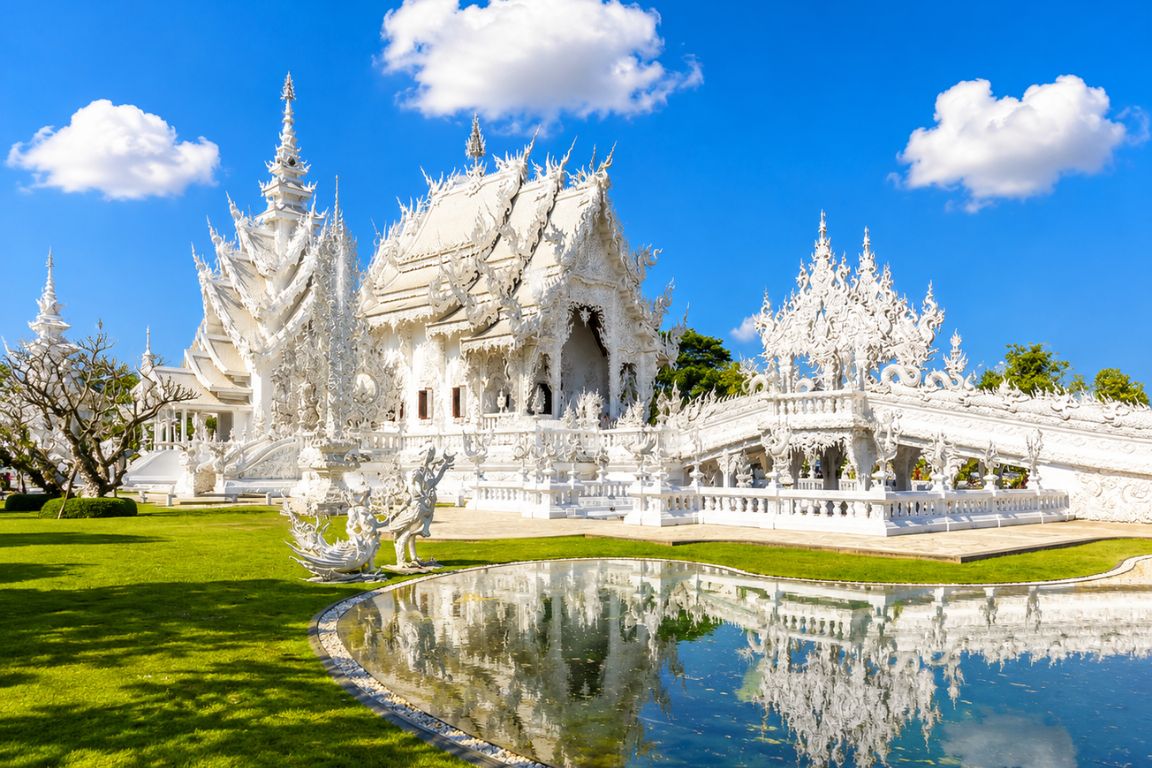 Chiang Rai has four major modern temples, each created by a different visionary artist. The White Temple (Wat Rong Khun) is the anchor and worth the most time. The Blue Temple (Wat Rong Suea Ten) is free and genuinely stunning. The Black House (Baan Dam) is darker, weirder, and often overlooked. Wat Huay Pla Kang is the giant Guanyin temple most day-trippers skip. The optimal order for avoiding crowds: Blue Temple first, Black House second, White Temple from 2pm onward.
Wat Rong Khun, the White Temple, stops people mid-step. It’s not the size. It’s the way the mirrored mosaic catches morning light and throws it back at you in pieces, the whole surface alive and slightly unreal, like something assembled from a fever dream about purity. The bridge crossing over a sea of sculpted hands is symbolism you feel before you understand it. Most visitors give it 45 minutes. Our groups almost always need longer, especially once they find the pop culture murals inside the main hall, where Superman, Iron Man, and Keanu Reeves occupy the same cosmological space as Buddhist iconography.
Want to visit the White Temple without the rookie mistakes that catch most first-timers off guard? Here’s our White Temple Chiang Rai visitor guide so you get the most out of it.
Entry is 200 THB for foreigners as of 2026, up from 100 THB. It’s open daily 8am to 5:30pm. Dress code is strictly enforced: knees and shoulders covered. Sarongs are available to borrow at the entrance, but they run out on busy days. Don’t rely on them.
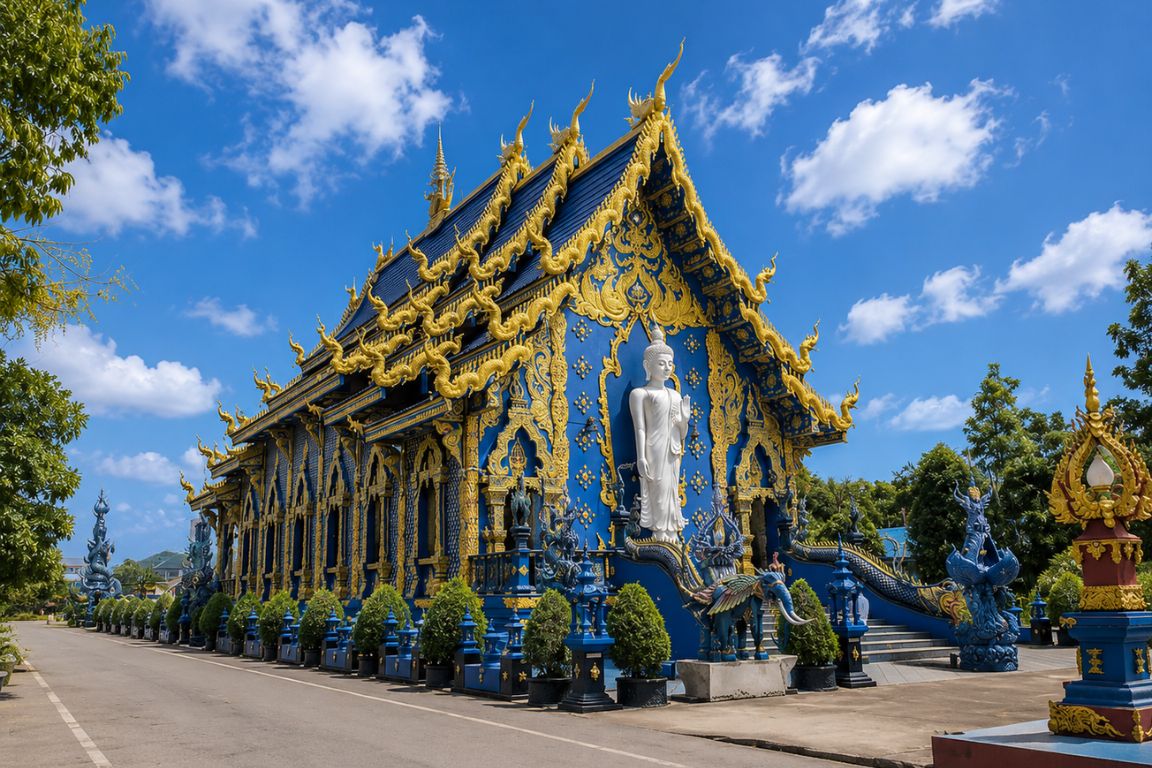
The Blue Temple is six kilometers north of the city center and completely free. Designed by Putha Kabkaew, a former student of the White Temple’s creator, it opened in 2016. The mood inside is different. Quieter. Darker. The walls are deep sapphire with gold trim and the interior has a stillness that the White Temple, with its crowds and scale, doesn’t quite offer. It’s open 7am to 8pm, which means you can visit in the evening when the gold accents glow. Almost no tour buses run evening schedules. It’s genuinely one of the most peaceful places in Chiang Rai after 5pm.
The Black House, Baan Dam, is not a temple but it belongs on the list. Artist Thawan Duchanee spent decades building around 40 dark wooden structures filled with animal bones, crocodile skins, Buddhist iconography, and work that defies easy categorization. The main hall stops you in your tracks. If the macabre is not your thing, skip it. For everyone else: it’s 5 minutes from the Blue Temple, entry is around 80 THB, and the crowds are always thinner than at the White Temple.
Not sure what to expect inside Baan Dam beyond the dark exterior and the rumors about animal bones and skulls? Check out our Black House Chiang Rai visitor guide before your visit.
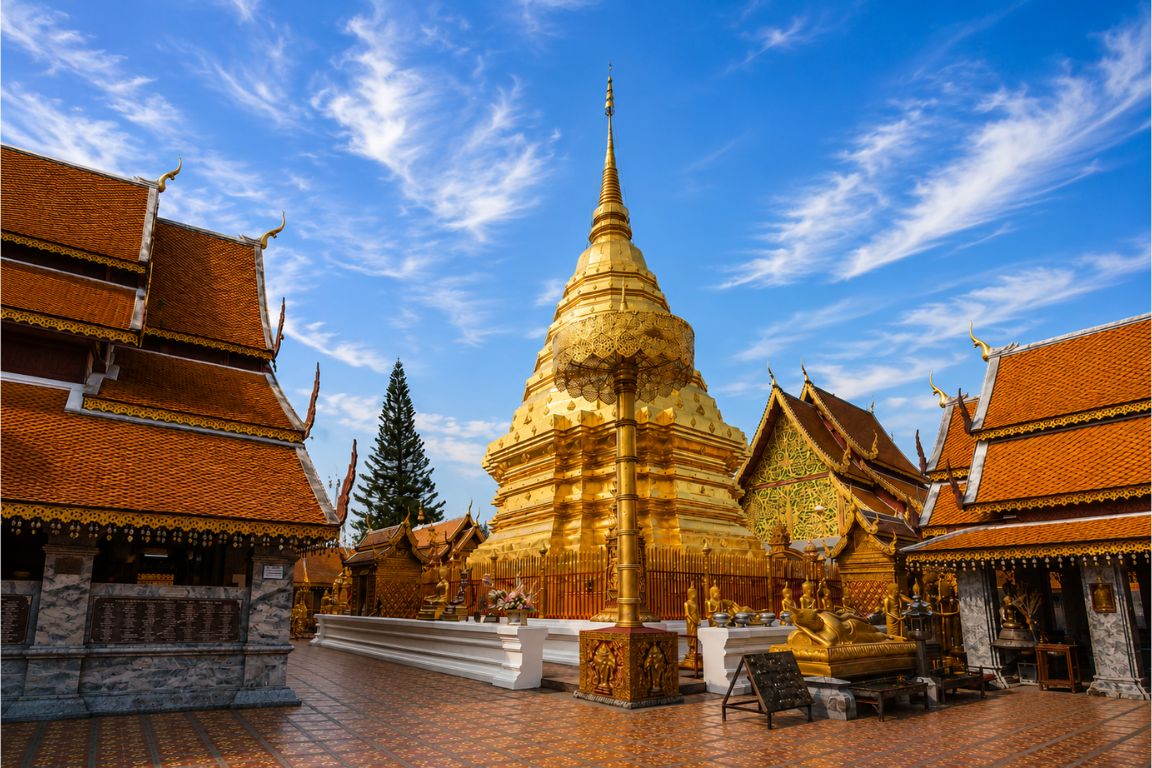
Wat Huay Pla Kang, sometimes called the Guanyin Temple or the Red Temple, sits on a hill about 8 km northwest of the city center. Most day tours skip it, which is exactly why it’s worth adding if you stay overnight. The 9-story pagoda has Lanna-Chinese fusion architecture unlike anything else in Chiang Rai, and the lift inside costs about 40-50 THB. Views from the top over the river valley are the kind you don’t get at the more-visited sites.
Chiang Rai Temples: Entry Guide
| White Temple (Wat Rong Khun) | 200 THB | 8am-5:30pm daily | 8-9am or 2-4pm | Very High (10am-2pm) |
| Blue Temple (Wat Rong Suea Ten) | Free | 7am-8pm daily | 7-9am or 5-7pm | Moderate |
| Black House (Baan Dam) | ~80 THB | 9am-12pm, 1-5pm | Morning or afternoon | Low-Moderate |
| Wat Huay Pla Kang | Free (lift: 40-50 THB) | 7am-6pm daily | Morning for views | Low |
Prices verified May 7, 2026.
The order matters more than most people realize, and getting it right is the difference between a peaceful morning at Wat Rong Khun and fighting for space with five tour buses.
What Should You See If You Only Have One Day in Chiang Rai?
 With a single day from Chiang Mai, take the 7am VIP bus, arrive by 10:30am, and visit in this order: Blue Temple and Black House first (less crowded, closer together), lunch near the city center, then the White Temple from 1:30-2pm when the first wave of tour buses has cleared, and catch the 6pm bus back. You’ll have roughly 6 hours on the ground. It’s tight but doable.
The mistake most people make on a Chiang Rai day trip is letting the tour bus schedule dictate their experience. Standard day tours from Chiang Mai hit the White Temple first at around 10-11am. That’s when all the buses converge. Going independent and doing it in reverse order means you arrive at Wat Rong Khun when those tour groups are eating lunch somewhere, and you actually have space to stand on the bridge without fifteen people in your frame.
The Blue Temple and Black House sit close together, about 10 minutes apart by Grab or tuk-tuk. Both are less crowded in the morning. The Blue Temple is free. Budget 40-45 minutes at each. Then eat something in the city center (khao soi, 60-80 THB, is the move), and head to the White Temple for your 1:30pm window.
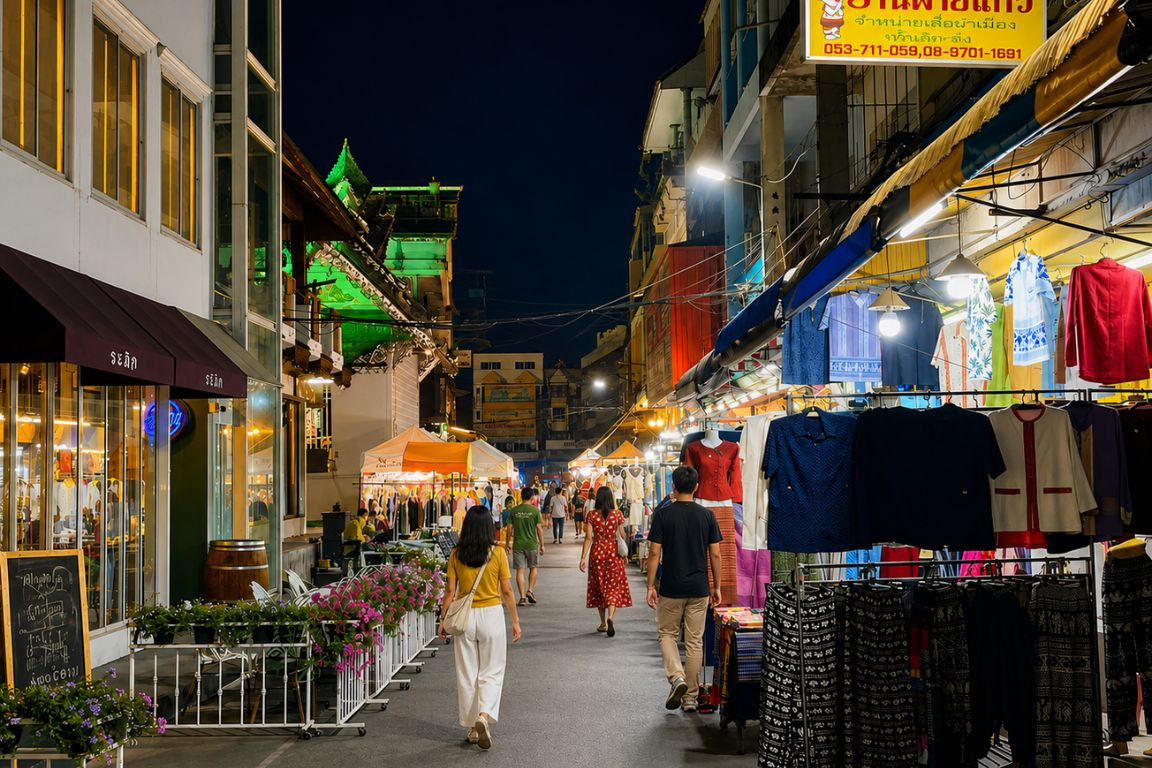
One more thing the day trip version doesn’t show you: the Night Bazaar. If you catch the 7pm or later bus back instead of the 6pm, you have 45 minutes at the Night Bazaar to eat grilled food, watch people, and understand what Chiang Rai actually feels like in the evening. That hour shifts the experience from sightseeing to something more like travel.
Want an honest answer on whether Chiang Rai is worth the trip for a first-time Thailand visitor? Here’s our is Chiang Rai worth visiting guide so you make the call with confidence.
What Does a Chiang Rai Trip Actually Cost from Chiang Mai?
 A day trip runs 700-1,500 THB per person including transport, entry fees, and food. An overnight budget trip runs 1,500-2,500 THB per day all-in. Mid-range travelers spending on nicer accommodation and a private guided tour should budget 3,500-5,000 THB per day. The White Temple entry alone jumped to 200 THB in 2026, so older trip reports will undercount your entry costs.
Here’s how the numbers actually break down for independent travelers. The VIP bus runs 315 THB each way, or 630 THB round trip. White Temple entry is 200 THB. The Blue Temple is free. Black House is roughly 80 THB. Food is cheap: a full khao soi is 60-80 THB at a local place, 100-150 THB at a tourist-facing restaurant. Budget guesthouses near the Night Bazaar area start around 400-600 THB per night for air-con rooms.
Mid-range travelers with a good hotel (800-1,800 THB/night), a private guided tour of the temples, and restaurant meals should expect 3,000-4,000 THB per day in Chiang Rai itself, not counting the transport from Chiang Mai.
Sample Budget: Chiang Rai Trip from Chiang Mai
| Bus (VIP, round trip) | 630 | 630 |
| White Temple entry | 200 | 200 |
| Blue Temple entry | Free | Free |
| Black House entry | 80 | 80 |
| Local transport (Grab/tuk-tuk) | 200-300 | 300-500 |
| Food (2 meals + snacks) | 200-300 | 400-700 |
| Accommodation (1 night, optional) | 400-600 | 800-1,800 |
| Day Trip Total (no overnight) | ~1,310-1,510 | ~1,610-2,110 |
Prices verified May 7, 2026.
What Do First-Time Visitors Always Get Wrong About the Chiang Rai Trip?
 The most common mistake is arriving at the White Temple between 10am and 2pm, which is when every tour bus from Chiang Mai converges. The second is underestimating transport time and missing the last bus back. The third is not packing appropriate temple clothing, then having to borrow a sarong that may not be available during peak days. None of these are complicated problems. All three are preventable with 10 minutes of planning.
The crowd timing issue runs deeper than most guides explain. It’s not just that it’s busy. Tour buses arrive in clusters. One van follows another. The bridge to the White Temple becomes a bottleneck and you end up waiting in a queue to cross it. We’ve watched travelers who had 2 hours budgeted at the temple spend 30 minutes just queuing for photos at the entrance. The solution isn’t avoiding the White Temple. It’s shifting your arrival to 8am when the gates open, or after 2pm when the lunch rush starts clearing. Either window gives you a completely different experience at the same place.
The bus timing trap is subtle. People look up the last bus from Chiang Rai to Chiang Mai, see it leaves at 6pm, and feel fine. Then they spend longer at each temple than planned, grab food, and arrive at the terminal at 5:50pm. The last bus doesn’t wait. The alternative is a 1,500-2,000 THB taxi back to Chiang Mai. Building a buffer of at least 45 minutes before your intended departure is not paranoia. It’s experience talking.
Temple dress code catches people constantly. Not just at the White Temple: every working temple in northern Thailand requires covered shoulders and knees. Sarongs are loanable at the White Temple entrance but they run out on busy days, especially December through February. Pack a lightweight scarf or long pants, not because the rules are difficult but because waiting in line to borrow a sarong wastes the exact 20-minute window before the tour buses arrive.
One more failure pattern we’ve tracked over the years: travelers who book a standard day tour from Chiang Mai expecting flexibility, then discover the tour schedule puts them at the White Temple at 10:30am alongside five other tour buses. If you’re booking a guided experience from Chiang Mai, ask explicitly what time the tour reaches the White Temple. Any tour arriving before 9am or after 1:30pm earns that question.
What Our Travelers Actually Spend: Insights from 8,400+ Chiang Rai Guests
| Budget independent | 28% | 900-1,400 THB/day | Green Bus VIP |
| Mid-range couple/pair | 41% | 2,500-4,000 THB/day | Private transfer or guided tour |
| Family (2 adults + 2 kids) | 19% | 4,000-6,500 THB/day | Private transfer (split cost) |
| Comfort/luxury traveler | 12% | 5,000-9,000 THB/day | Private guided tour, car included |
Based on our 2025 client group data from Chiang Rai Tours guests. Percentages are approximate.
Frequently Asked Questions
Can you do Chiang Rai as a day trip from Chiang Mai?
Yes, but it’s a long day. Expect 7-8 hours total in transit and around 5-6 hours on the ground. Take the earliest bus (7am VIP), visit the Blue Temple and Black House before lunch, then hit the White Temple in the early afternoon to avoid peak tour bus crowds. Catch the 6pm bus back. A one-night stay changes the experience considerably.
How much does it cost to get from Chiang Mai to Chiang Rai?
The Green Bus VIP is 315 THB at the station (380 THB online) for a 3.5-hour journey. The Express bus runs 210-271 THB. Private transfers cost 4,500-8,000 THB for the whole vehicle, which makes sense for groups of four or more. Guided day tours from Chiang Mai start around 1,300 THB per person for group tours and around 3,850 THB per person for private tours.
Is there a train from Chiang Mai to Chiang Rai?
No. There is no direct train or direct flight between the two cities. Road travel is the only option. The Green Bus from Arcade Bus Terminal is the most reliable and affordable public transport choice.
What is the best time to visit Chiang Rai?
November to February is the peak season with cool, dry weather and temperatures between 13°C and 28°C. November is the sweet spot before Christmas crowds push prices up. Avoid March to mid-April due to agricultural burning and poor air quality. The rainy season (June to October) offers lower prices and smaller crowds but afternoon downpours are common.
What is the White Temple entry fee in 2026?
The White Temple (Wat Rong Khun) entry fee increased to 200 THB for foreign visitors in 2026, up from 100 THB. Thai nationals pay a lower rate. The temple is open daily 8am to 5:30pm. Photography is not allowed inside the main hall. Dress code is strictly enforced: shoulders and knees must be covered.
What is the best order to visit Chiang Rai temples?
For independent travelers avoiding tour bus crowds: visit the Blue Temple first (free, opens 7am, less crowded in the morning), then the Black House mid-morning, then the White Temple at 8am sharp if you’ve overnighted in Chiang Rai, or from 2pm onward if you’ve arrived on the day bus from Chiang Mai. Wat Huay Pla Kang is best added as a morning stop if you have a second day.
Written by Jasmine Kittisak
Thai tour guide since 2014 · Founder, Chiang Rai Tours
Jasmine has guided over 8,400 travelers through Chiang Rai and the Golden Triangle region since founding the agency.
Initial recommendation: general guidance, before you enter any preferences.
Private Chiang Rai Day From Chiang Mai
Have a travel date in mind? Visit White and Blue Temples, tea country and the Golden Triangle without changing your Chiang Mai hotel. Check your date before arranging the rest of your trip.
12 hours; private guide, vehicle, city hotel pickup and entry tickets.
Black House is not listed. Standard itinerary stops are short, about 40 minutes at White Temple; do not assume early arrival.
Scheduled dates load here. Confirm availability and final prices on Viator.
No verified option in this shortlist fits all your choices. Change your departure city, allow more time, or reset. Participant or access requirements need direct provider confirmation; no suitability claim is made here.
Adjust The Route Or Compare Alternatives
Choices change the booking recommendation and floating offer. A one-way transfer ends in the other city; a day tour follows its listed return or selected drop-off. Route matches do not confirm age, accessibility, dietary needs or medical suitability.
- Private Chiang Mai To Chiang Rai Transfer
Move between the two cities door to door, with your own departure time. One-way, 3–3.5 hours; private vehicle; hotel/location pickup and drop-off.
Basic English driver; choose direction, vehicle and luggage capacity. Remote addresses and oversized luggage may cost extra. No sightseeing included.
- Chiang Mai Temples & Golden Triangle Boat Day
See White Temple, Blue Temple and Black House, then take the Mekong boat ride. 15 hours; English guide; Chiang Mai pickup; choose the required drop-off option when booking.
Long day and fixed stops. Karen Village inclusion varies by option; confirm all entry inclusions and endpoint.