Is Chiang Rai Worth Visiting?
Is Chiang Rai worth visiting? Absolutely, but only if you stay overnight. Discover why rushing it as a day trip misses the best part of northern Thailand.
Last updated: July 1, 2026
Make the destination decision first, then choose a temple day or countryside experience that gives your stay a purpose.
Quick Facts: Chiang Rai at a Glance
| Location | Northernmost major city in Thailand, 180 km north of Chiang Mai |
| Annual Visitors (2025) | 5,755,778 (TAT data, 2nd in the North behind Chiang Mai) |
| Signature Attractions | White Temple, Blue Temple, Black House, Golden Triangle, Doi Mae Salong |
| Recommended Stay | 2-3 nights (1 night minimum; day trip possible but limiting) |
| Best Season | November to February |
| White Temple Entry (Foreigners) | 200 THB (increased 2026) |
| Avg. Daily Budget (Mid-Range) | ~1,700 THB per day (accommodation, food, transport, one attraction) |
| Vs. Chiang Mai Crowds | Significantly quieter outside peak White Temple hours |
| Founded | 1263, as the first capital of the Lanna Kingdom under King Mengrai |
Data sourced from Tourism Authority of Thailand (TAT) and verified May 7, 2026.
What Makes Chiang Rai Different from Every Other City in Thailand?
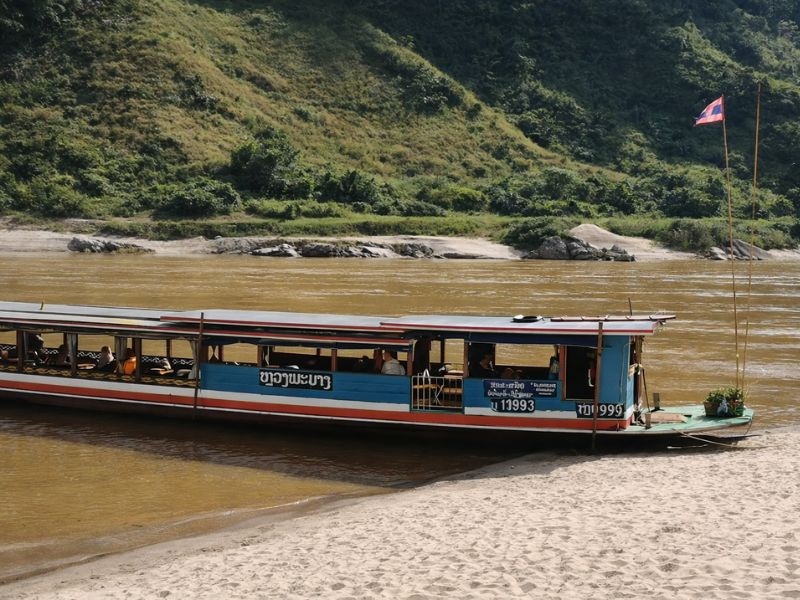
Chiang Rai is the only city in Thailand where the most celebrated attractions were built by living artists within the last 30 years. It sits at the point where Thailand, Myanmar, and Laos converge. It has more ethnic minority hill tribe communities than anywhere else in the country, and a pace of life that feels genuinely unhurried. No other Thai city combines contemporary art at that scale with border-region geography and mountain culture in one place.
Most Thai cities earn their reputation from ancient history. Chiang Rai does something rarer. Its identity is being built right now, by artists who are still working, still adding to temples that aren’t finished, still laying mosaic tiles and carving figures that will outlast them. Chalermchai Kositpipat began Wat Rong Khun in 1997 and has openly said he expects it to take his entire lifetime to complete. You are not visiting a monument. You are watching a monument being born.
That restless creative energy runs through the whole province. Thawan Duchanee’s Black House complex grew over decades into a 40-building collection of dark art that confounds categorization. His former student built the Blue Temple, which only opened fully in 2016. The Clock Tower in the city center lights up nightly with a sound and music show. Chiang Rai produces more public contemporary art per square kilometer than any other northern Thai city, and almost none of it was planned by a tourism committee.
Geography does the rest. Drive an hour north and you’re at the Golden Triangle, where the Mekong and Ruak rivers split three countries apart. Keep going and you reach Mae Salong, a mountain village founded by Chinese Kuomintang soldiers expelled from Burma in 1961, where the signs are in Chinese first and Thai second and the oolong tea is some of the best in Southeast Asia. This is a province with layers. Most visitors only scratch the top one.
The Tourism Authority of Thailand recorded 5,755,778 visitors to Chiang Rai in 2025, ranking it second in the North behind Chiang Mai’s 10.6 million. That gap tells you something useful. Chiang Rai has the attractions to warrant the trip but not yet the tourist density that changes how a city feels. You can still find quiet corners at the Blue Temple after 5pm. The Night Bazaar fills up but never crushes. The hilltribe villages outside the city receive a fraction of the traffic that comparable experiences get in Chiang Mai.
Planning a trip to northern Thailand’s most underrated city and not sure how to make the journey from Chiang Mai work? Here’s our how to visit Chiang Rai tours from Chiang Mai guide so you plan it properly.
What Are the Best Things to Do in Chiang Rai?
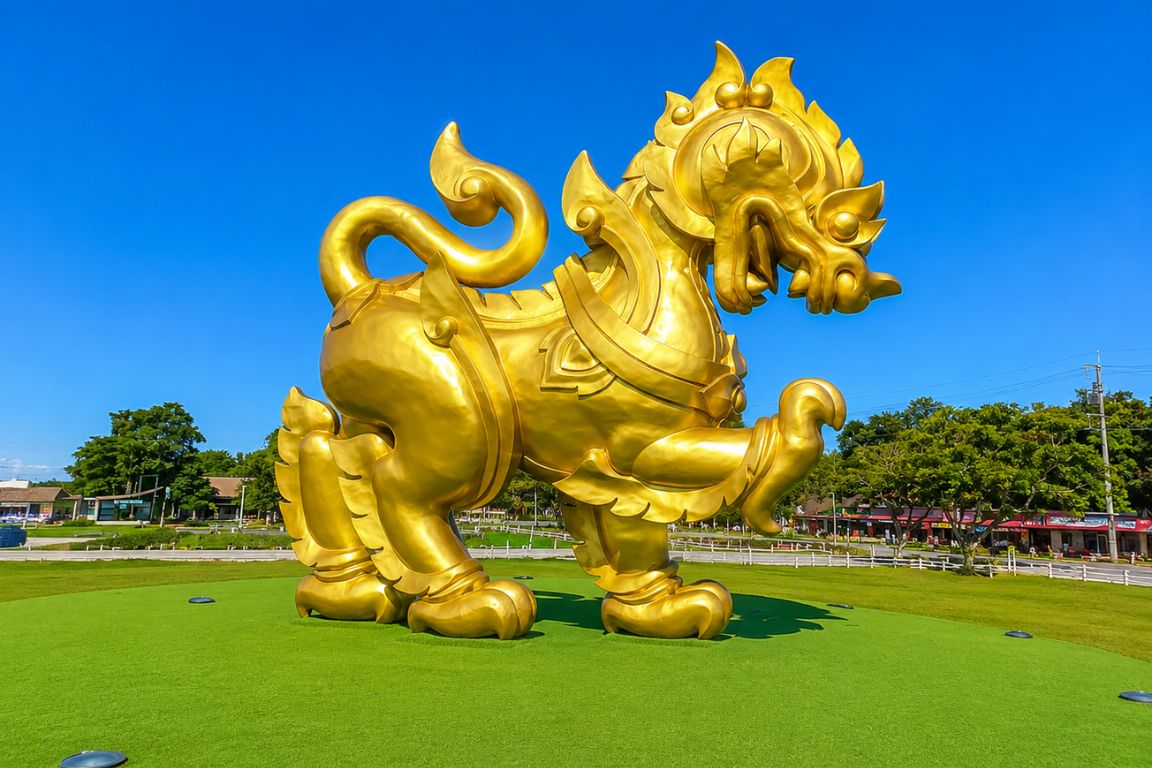 The three color temples (White, Blue, Black) form the core itinerary and can fill a full day. The Golden Triangle is a half-day excursion including the Hall of Opium museum. Doi Mae Salong, the Chinese Yunnan mountain village with its tea plantations, deserves a full second day. Beyond those, Singha Park, Tham Luang Cave, the Saturday and Sunday walking streets, and Phu Chi Fa viewpoint reward travelers who stay longer.
The temples are the anchor, and they deserve to be. But the thing most guides don’t say clearly enough: the three temples represent three completely different experiences. The White Temple is visual overwhelm, pure spectacle, contemporary Buddhist art pushed to an almost uncomfortable level of detail. The Blue Temple is intimate, darker in mood, a place you actually want to sit inside for ten minutes rather than rush through. The Black House is neither a temple nor a museum in any conventional sense. It’s an artist’s life’s work, unsettling and beautiful in equal measure. See all three as a sequence and they form a coherent statement about the relationship between art and death and devotion. See just one and you’ve missed the conversation.
Want to visit the Black House without the confusion that catches most first-timers off guard? Here’s our Black House Chiang Rai visitor guide so you get the most out of a genuinely strange experience.
The Golden Triangle is worth doing but rewards context. Standing at the point where three countries meet at the Mekong is genuinely striking. The Hall of Opium museum nearby is one of the best-designed museums in northern Thailand and tells the full history of the region’s poppy trade without sensationalizing it. Budget at least an hour there. The boat rides around the point range from scenic to tourist-trap depending on operator; ask your guide which ones are worth the fare.
Doi Mae Salong is the destination that separates travelers who spent two nights from those who only had one. The village sits at 1,300 meters elevation, founded by Kuomintang soldiers who’d rather farm tea than surrender to Mao. Signs still run Chinese-Thai-English in that order. The food is Yunnan Chinese. The oolong tea is grown on the terraced hills around the village and brewed in small guesthouses where you can sit for an hour with a pot and a view that goes to Myanmar. It doesn’t feel like Thailand. That’s the whole point.
Tham Luang Cave, site of the 2018 Wild Boars football team rescue, is 90 minutes from the city and has been developed into a thoughtful heritage site with a memorial to Navy SEAL Saman Gunan and art installations. The cave itself stretches over 10 kilometers. Worth pairing with the nearby Emerald Pool, a freshwater spring that takes on a striking green hue from the surrounding forest.
Chiang Rai: What to See and How Long to Budget
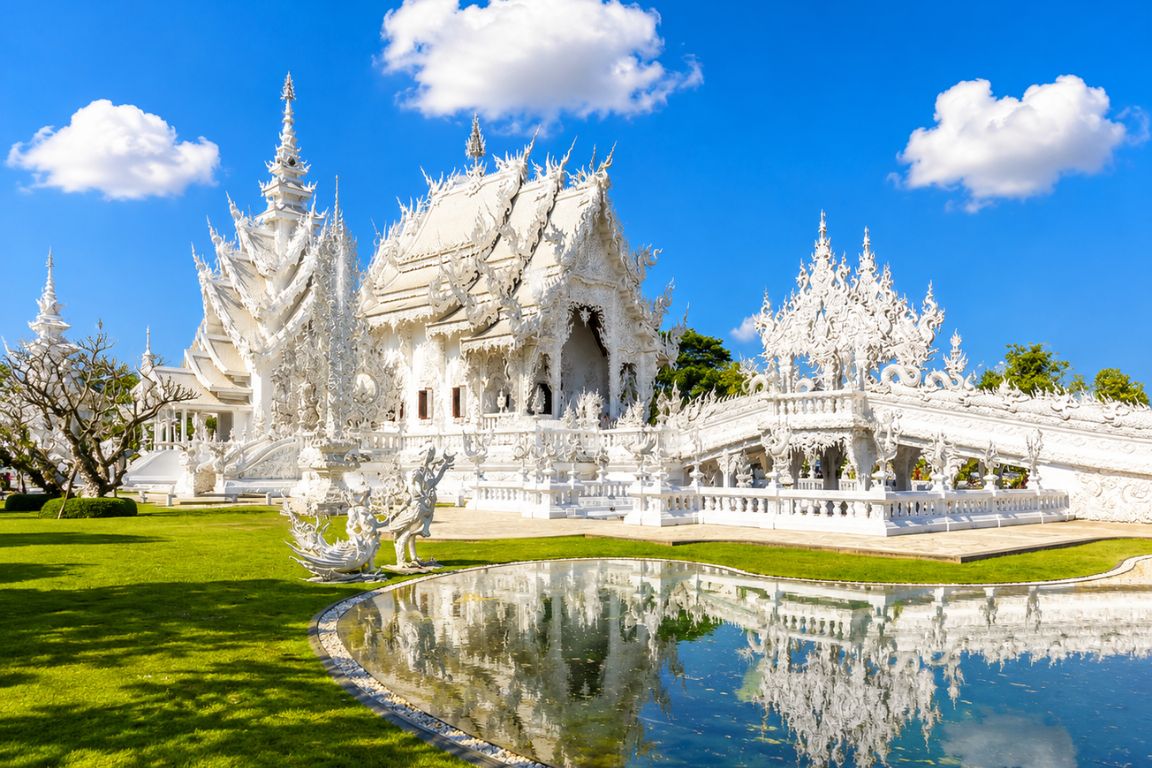
| White Temple (Wat Rong Khun) | 1.5-2 hrs | 200 THB | Art Cave, gold bathroom, pop-culture murals inside the ubosot |
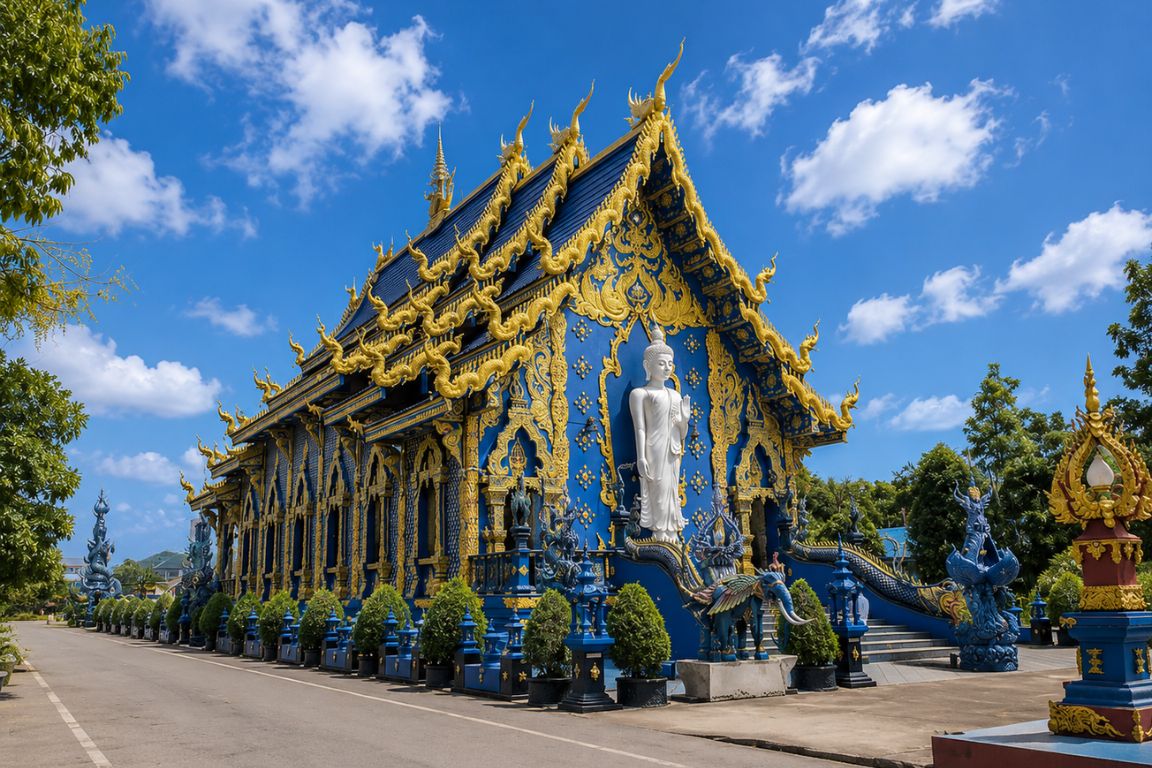
| Blue Temple (Wat Rong Suea Ten) | 40-60 min | Free | Interior Buddha at golden hour; standing Buddha behind main hall for photos |
| Black House (Baan Dam) | 45-60 min | ~80 THB | Main hall interior; bone and skin installations; outdoor sculpture garden |
| Golden Triangle | Half day | Free (Hall of Opium: 200 THB) | Hall of Opium museum; viewpoint at river confluence; boat ride optional |
| Doi Mae Salong | Full day | Free (tea tasting: 50-150 THB) | KMT village history; tea co-op store; lunch at Yunnan Chinese restaurant |
| Tham Luang Cave | 2-3 hrs | Free | Saman Gunan memorial; 2018 rescue art installations |
| Night Bazaar / Walking Streets | 2-3 hrs evening | Free | Khao soi; hot pot stalls; Saturday street is the better of the two |
| Singha Park | Half day | Free (tram: ~100 THB) | Tea plantation cycling; flower fields; ziplining if traveling with kids |
Prices verified May 7, 2026.
How Does Chiang Rai Compare to Chiang Mai?
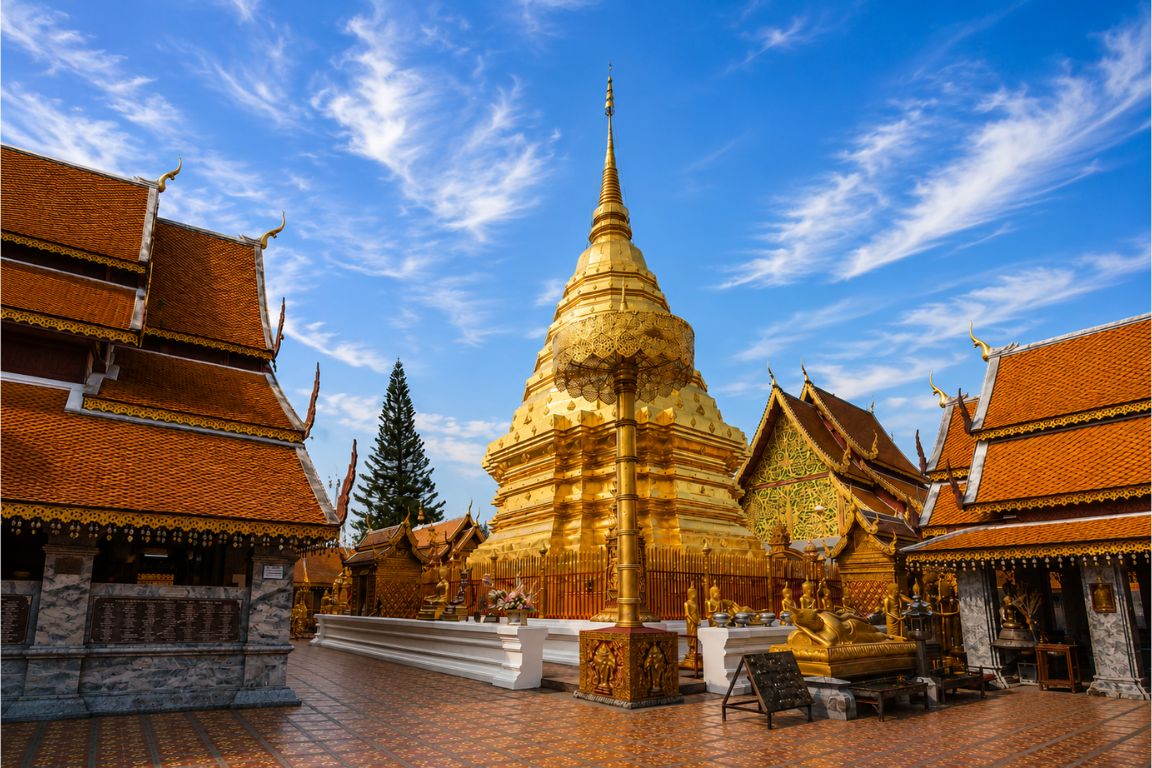 They are genuinely different cities, not versions of the same place. Chiang Mai is bigger, louder, more connected, and has more variety in food, nightlife, and activities. Chiang Rai is smaller, quieter, has more dramatic temples, easier access to border-region culture, and costs 20-30% less across most categories. For temple photography, the Golden Triangle, and authentic northern Thai atmosphere, Chiang Rai wins. For cooking classes, elephant sanctuaries, nightlife, and digital nomad infrastructure, Chiang Mai wins.
The question we get most often from travelers is whether they should choose one or the other. We always say the same thing: you should do both, and you should base yourself in Chiang Mai for the convenience while treating Chiang Rai as the destination that justifies the journey north.
The temples are the clearest difference. Chiang Mai has dozens of temples with genuine historical weight, Doi Suthep on the mountain above the city, ancient Lanna architecture, centuries of accumulation. Chiang Rai has fewer temples but they are, temple for temple, more visually arresting than almost anything in Chiang Mai. The White Temple is the most photographed site in northern Thailand for a reason. Nothing in Chiang Mai competes with it for visual impact. And the Blue Temple isn’t even close to a Chiang Mai equivalent because nothing like it exists in Chiang Mai.
The nightlife gap is real. Chiang Rai closes earlier, offers fewer bar options, and has nothing like Nimman Road’s density of cafes and rooftop venues. The Night Bazaar is good, the walking streets are lively two nights a week, but travelers who want a proper night out should stay in Chiang Mai. Chiang Rai evenings are for eating well and sleeping early.
Price is genuinely lower. Temple entries in Chiang Rai are cheaper (or free) compared to Chiang Mai equivalents. Grab rides cost slightly more per kilometer because distances between attractions are larger, but accommodation, food at local restaurants, and most activities run 15-25% below Chiang Mai pricing for comparable quality.
Want an honest comparison before you finalize your northern Thailand itinerary? Here’s our Chiang Rai vs Chiang Mai guide so you pick the base that actually fits your trip.
Chiang Rai vs. Chiang Mai: Honest Comparison
| Temple visual impact | Extraordinary (3 world-class modern temples) | Strong (many historic temples) | Chiang Rai |
| Temple quantity | Fewer, but concentrated quality | 300+ temples in province | Chiang Mai |
| Crowd levels | Low-moderate (outside White Temple peak) | High in peak season | Chiang Rai |
| Food variety | Excellent local Thai; limited international | Excellent local Thai + strong international | Chiang Mai |
| Nightlife | Night Bazaar, walking streets, quiet bars | Nimman area, rooftops, live music venues | Chiang Mai |
| Unique geography | Golden Triangle, 3-country border region | Mountains, Doi Inthanon national park | Chiang Rai |
| Hill tribe access | More authentic, less commercialized | Available but more tourism-facing | Chiang Rai |
| Cost | 15-25% cheaper on most categories | Higher baseline prices | Chiang Rai |
| Digital nomad infrastructure | Growing but limited coworking | One of Southeast Asia’s best nomad cities | Chiang Mai |
| Our verdict | Visit both. Base in Chiang Mai, spend 2-3 nights in Chiang Rai. They are not alternatives to each other. |
How Many Days Do You Actually Need in Chiang Rai?
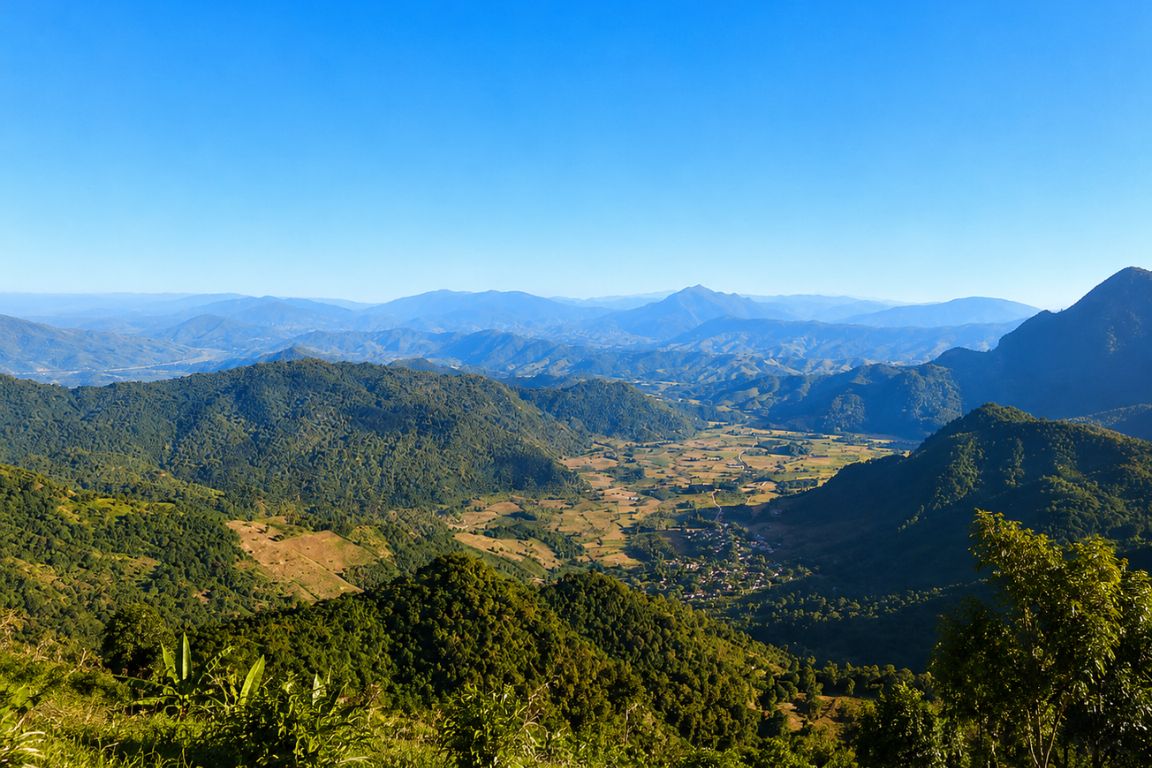 Two full nights is the minimum that lets you see Chiang Rai properly: temples on day one, Golden Triangle or Doi Mae Salong on day two, evening Night Bazaar on both. Three nights is the sweet spot for travelers who want to add a hilltribe village visit or a sunrise at Phu Chi Fa. One night is better than none but you’ll leave with a list of things you ran out of time for.
Day one is for the three color temples, visited in the right order. Start with the Blue Temple at 7am before tour groups arrive, then the Black House, then the White Temple in the early afternoon when the first wave of Chiang Mai day-trippers has cleared out. That sequence fills the day and leaves your evening free for the Night Bazaar or the Clock Tower light show at 7, 8, or 9pm.
Day two is where Chiang Rai separates itself from everywhere else. The Golden Triangle excursion takes most of the morning and includes enough cultural layering at the Hall of Opium to make it meaningful rather than just a photo stop. Alternatively, drive to Doi Mae Salong, eat lunch at a KMT Chinese restaurant 1,300 meters up, walk through tea terraces, and arrive back in the city in the early evening. You cannot do both in one day properly. That’s the argument for three nights.
The travelers who have the best time in Chiang Rai are almost always the ones who resist the urge to fill every hour. The city is quiet in a way that rewards slowness. A coffee at a local cafe, a walk along the Kok River, a night market dinner with no particular schedule. Chiang Rai gives you those moments if you let it. Rush it and you’ll just get sightseeing.
Want to know the minimum time needed to make a Chiang Rai visit genuinely worthwhile? Here’s our how long do you need in Chiang Rai tours guide so you don’t cut it too short.
Is Chiang Rai Worth It for a Day Trip, or Do You Need to Stay Overnight?
 A day trip is worth doing if your only alternative is skipping Chiang Rai entirely. But it changes the experience in a concrete way: you arrive after tour buses, visit temples in crowds, and leave before the city reveals its evening self. One overnight stay costs 400-1,800 THB for accommodation and unlocks a completely different version of the same place. The math almost always favors staying.
Here’s what day-trippers consistently miss according to travelers who came back and stayed overnight. The White Temple at 8am, when there are twenty people instead of two hundred, and the mosaic catches morning light rather than high-noon glare. The Blue Temple at 6pm, when the gold accents deepen and the crowds from Chiang Mai have all gone home. The Saturday walking street, which only runs on weekends and which most day-trippers miss because they’re back on a bus by 6pm. And the morning of the second day, which is when people tend to discover the food markets, the riverside, the smaller temples that no tour bus goes to.
One night doesn’t feel like much of a commitment. It’s the difference between knowing what the city looks like and knowing what it feels like. We’ve run this route since 2014. The travelers who remember Chiang Rai most vividly, who email us months later saying they want to come back, almost never spent just one day.
The Blue Temple is newer than most visitors realize and that changes how you read everything inside – our Blue Temple Chiang Rai visitor guide breaks down the artwork, symbolism, and what separates it from the other temples on the Chiang Rai circuit.
What Do Travelers Who Loved Chiang Rai Have in Common?
 They stayed at least two nights. They visited the White Temple before 9am or after 1:30pm, not in the middle. They ate at local markets rather than tourist restaurants. They added at least one experience beyond the three temples, whether the Golden Triangle, Doi Mae Salong, or a hilltribe village visit. And they did not treat Chiang Rai as a box to tick between Chiang Mai and Laos.
This is the pattern we’ve watched form across more than 8,400 travelers over eleven years of guiding this region. There is a version of Chiang Rai that produces mediocre memories: arrive at 11am on a tour bus, stand in a crowd at the White Temple, eat lunch at a tourist restaurant near the temple complex, visit the Blue Temple in the afternoon heat, get back on the bus by 5pm. That version is worth doing once. It’s not the version people come back for.
The travelers who leave talking about Chiang Rai as a highlight of their Thailand trip share specific choices. They booked accommodation near the city center, within walking distance of the Night Bazaar. They got up early. They asked what their guide actually recommended eating for breakfast (the khao tom rice soup stalls near Kad Luang market, most likely, not anything on a laminated tourist menu). They let the city show them something instead of rushing through a checklist.
What Are the Honest Downsides of Visiting Chiang Rai?
 The main temples get heavily crowded between 10am and 2pm during peak season (November to February). The city center itself is spread out and not walkable between attractions: you need transport for almost every site. Nightlife is limited. The burning season from late February to mid-April produces haze that grays out the White Temple’s famous exterior and can affect air quality significantly. And if you only have one day, the logistics are genuinely punishing.
The crowd issue at the White Temple is real and gets underplayed in most positive reviews. Over a million people visit Wat Rong Khun each year. On peak days in December and January, tour buses from Chiang Mai converge in the late morning and the bridge to the temple becomes a bottleneck. Visitors who go at 10:30am and leave at noon see a very different place than visitors who go at 8am or 2pm. The temple does not change. The experience changes entirely.
Transport logistics catch people off guard. The Blue Temple is 6 km north of the city center. The White Temple is 13 km south. The Black House is another 10 km north of the Blue Temple. You cannot walk between major attractions. Every visit requires a Grab, tuk-tuk, songthaew, or rental scooter. Budget for this and it’s fine. Forget to budget for it and you’ll spend the day standing on roadsides trying to flag down transport.
The burning season is the most underreported downside in travel content. Late February through mid-April, farmers across northern Thailand clear fields. The smoke builds over days and the AQI in Chiang Rai regularly exceeds 150. The White Temple looks grey-hazed instead of brilliant white. Views from Doi Mae Salong disappear. Travelers with respiratory sensitivities should avoid this window entirely. Anyone else should check air quality apps before committing to March or April travel.
International food options are limited compared to Chiang Mai. Northern Thai cuisine in Chiang Rai is exceptional, but if you’re traveling with someone who needs Western food options, vegetarian variety, or dietary-specific menus, your choices narrow considerably outside the tourist-facing restaurants near the temples. Chiang Rai’s food scene rewards adventurousness. It doesn’t accommodate restriction as gracefully as Chiang Mai does.
None of these are reasons to skip Chiang Rai. They’re reasons to plan it correctly.
We’ve put together a full visitor breakdown in our White Temple Chiang Rai visitor guide so you know exactly what to see, how to dress, and when to arrive to avoid the worst of the tour group crowds.
What Our Travelers Said About Chiang Rai: Insights from 8,400+ Guests
| “Exceeded expectations” | 67% | Most had been told “just do it as a day trip from Chiang Mai” |
| “Would have stayed longer” | 54% | Particularly among travelers who stayed only 1 night |
| White Temple was trip highlight | 43% | Even among travelers who had visited many Thai temples previously |
| Doi Mae Salong was “unexpected favorite” | 38% | Among travelers who added a second day beyond the temples |
| Preferred Chiang Rai to Chiang Mai | 29% | Particularly solo travelers and couples over 35 |
| Returned or booked a second trip | 21% | Highest return rate among all northern Thailand destinations we cover |
Based on our 2025 client group data from Chiang Rai Tours guests. Percentages are approximate.
Frequently Asked Questions
Is Chiang Rai worth visiting?
Yes. Chiang Rai has the most visually distinctive modern temples in Thailand, a border-region geography that no other Thai city can offer, and significantly fewer crowds than Chiang Mai outside of peak temple hours. The White Temple alone justifies the trip. Add the Blue Temple, Black House, Golden Triangle, and Doi Mae Salong and you have 2-3 days of experiences that don’t exist anywhere else in the country.
How many days should you spend in Chiang Rai?
Two nights minimum to see the temples and add one second-day excursion. Three nights if you want the Golden Triangle, Doi Mae Salong, and a hilltribe village visit without feeling rushed. One night is better than a day trip. A day trip is better than nothing.
Is Chiang Rai better than Chiang Mai?
They are different, not competing. For temple photography, border-region culture, quieter atmosphere, and budget travel, Chiang Rai has the edge. For nightlife, food variety, digital nomad infrastructure, elephant sanctuaries, and activities beyond temples, Chiang Mai wins. Most travelers should visit both. Chiang Rai is not a replacement for Chiang Mai; it’s the reason to stay in northern Thailand a few days longer.
What is special about Chiang Rai?
Three things that exist nowhere else in Thailand in the same combination: living-artist contemporary temples built within the last 30 years, immediate access to the Golden Triangle border region where Thailand, Myanmar, and Laos converge, and mountain communities like Doi Mae Salong with a Yunnan Chinese cultural identity that makes it feel like you’ve crossed a border without leaving Thailand.
Is Chiang Rai safe?
Yes, Chiang Rai is considered one of Thailand’s safer destinations. It has low crime, a small-city atmosphere, and is well-set up for independent travelers. The main practical concerns are traffic on motorbikes (standard Thai road caution applies), burning season air quality in March and April, and staying aware of tuk-tuk overpricing in the main tourist areas near the White Temple.
What is the best time to visit Chiang Rai?
November is the sweet spot: cool and dry, crowds are building but not yet at December peak, and the Loy Krathong lantern festival adds a memorable evening to the trip. November to February is the full peak season. Avoid March to mid-April for the burning season. The rainy season from May to October offers genuine value with lower prices and smaller crowds, but afternoon downpours are regular.
Written by Jasmine Kittisak
Thai tour guide since 2014 · Founder, Chiang Rai Tours
Jasmine has guided over 8,400 travelers through Chiang Rai and the Golden Triangle region since founding the agency.
Initial recommendation: general guidance, before you enter any preferences.
Private Chiang Rai Temple Day
Have a travel date in mind? Set your own temple priorities with a private guide and vehicle. Check your date before arranging the rest of your trip.
8 hours; Chiang Rai hotel pickup; English guide and air-conditioned transport. White Temple, Blue Temple and Baan Dam are listed stops.
Entry fees, lunch and personal expenses are extra. Confirm your preferred order and longer stops before booking; early entry is not guaranteed.
Scheduled dates load here. Confirm availability and final prices on Viator.
No verified option in this shortlist fits all your choices. Change your departure city, allow more time, or reset. Participant or access requirements need direct provider confirmation; no suitability claim is made here.
Adjust The Route Or Compare Alternatives
Choices change the booking recommendation and floating offer. A one-way transfer ends in the other city; a day tour follows its listed return or selected drop-off. Route matches do not confirm age, accessibility, dietary needs or medical suitability.
- Seven Chiang Rai Sites With Tickets
Bundle the three art sites and Golden Triangle with entry tickets and lunch. 10 hours; English guide; city pickup; White Temple, Baan Dam, village and Opium Museum tickets included.
A busy fixed circuit: about 1 hour at White Temple, 30 minutes at Blue Temple and 45 minutes at Baan Dam. Not wheelchair suitable.
- Doi Mae Salong & Doi Tung Mountain Day
Visit tea country, the KMT memorial and the gardens and villa at Doi Tung. Full day from Chiang Rai; English-speaking guide/driver, vehicle, water and hotel transfer.
Reserve a full day; exact return time must be confirmed. Garden/villa entry and meals cost extra.