Black House Chiang Rai Visitor Guide
What is the Black House in Chiang Rai? Discover this dark, surreal art complex, entry details, and why it’s considered the opposite of the White Temple.
Last updated: July 1, 2026
Read the museum context first, then compare a guided art-site day with a private vehicle that includes Baan Dam.
Black House Quick Facts
| Official Name | Baan Dam Museum (บ้านดำ) – “Black House” |
| What It Is | Private art museum and studio. Not a temple. No religious affiliation. |
| Location | 333 Moo 13, Nang Lae, Mueang Chiang Rai – 10 km north of city center |
| Opening Hours | Daily 9:00am-5:00pm. Closed noon-1:00pm for lunch. Closed some national holidays. |
| Entry Fee | 80 THB (adults). Children under 12: free. |
| Dress Code | None. It is a museum, not a temple. |
| Photography | Permitted throughout. Use low light settings inside buildings. |
| Creator | Thawan Duchanee (1939-2014), Thai National Artist (2001) |
| Construction Start | 1976. Duchanee worked on it until his death in 2014. |
| Scale | ~40 buildings across 16 hectares (160,000 sq m) |
| Time to Budget | 45-60 minutes standard; 90 minutes for thorough visit |
| Content Warning | Animal remains (bones, skins, horns), explicit phallic sculptures, macabre themes. Not recommended for young children. |
Hours and entry fee confirmed May 7, 2026. 80 THB fee introduced December 2016, unchanged as of 2026.
What Is the Black House in Chiang Rai?
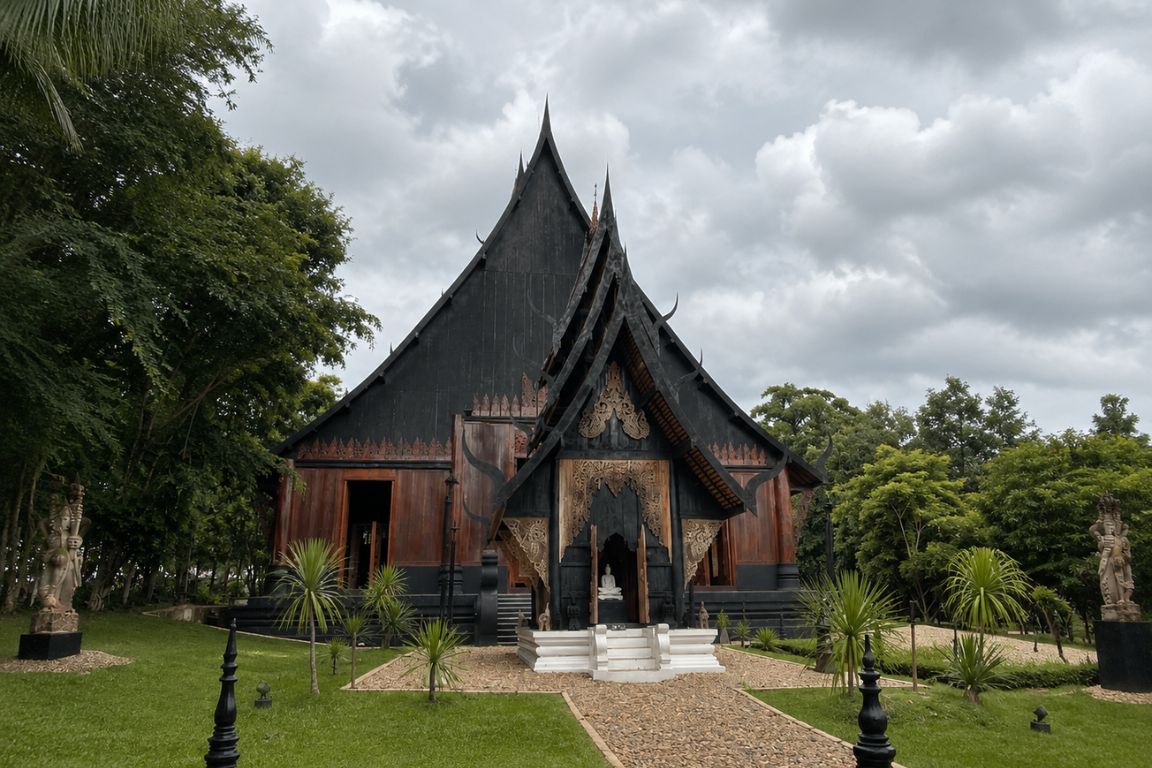 The Black House, or Baan Dam, is a private art museum and the life’s work of Thai National Artist Thawan Duchanee, built on a 16-hectare property north of Chiang Rai starting in 1976. It is not a temple, has no religious affiliation, and requires no dress code. What it contains is around 40 black wooden structures – ranging from traditional Lanna-style halls to igloos, whale-shaped buildings, and triangular structures – filled with Duchanee’s paintings, sculptures, and installations made from animal remains, all exploring Buddhist themes of impermanence, death, desire, and the suffering inherent in the cycle of existence. Where the White Temple is heaven, the Black House is the other side of that coin.
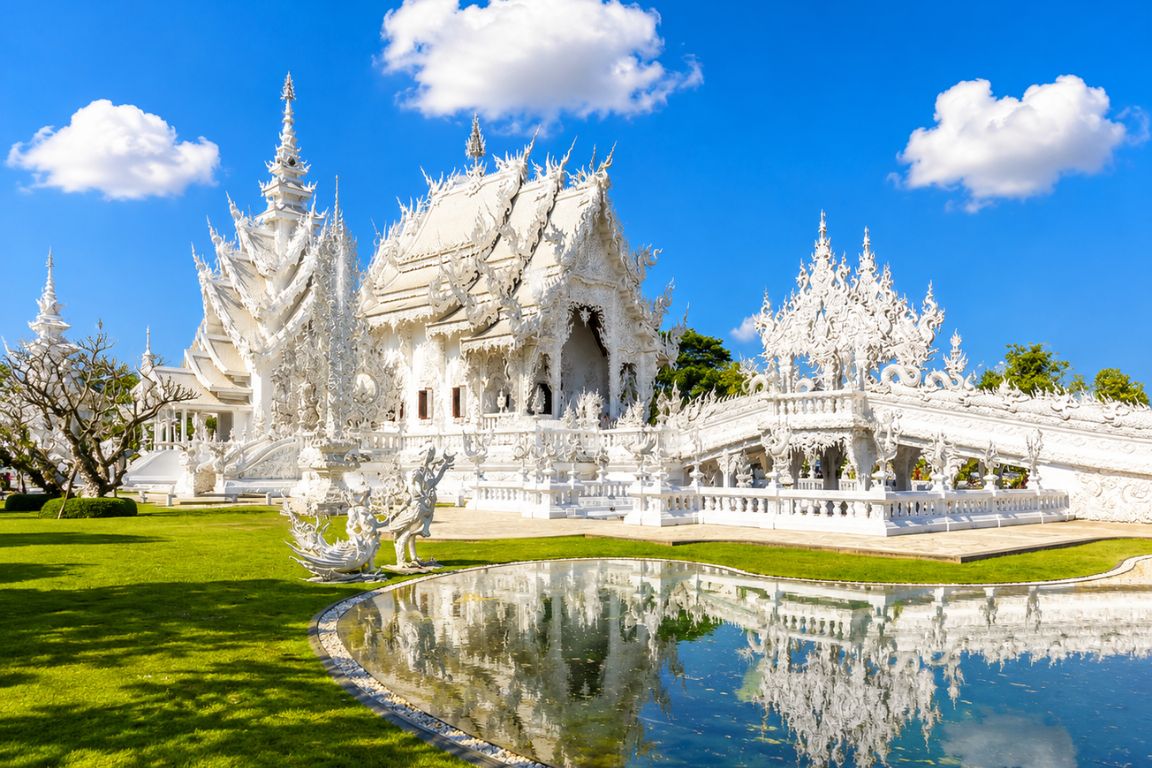
The Thai saying captures it precisely: “Chalerm Sawan, Thawan Narok” – Chalermchai’s heaven, Thawan’s hell. Both artists are from Chiang Rai. Both were working simultaneously on their respective projects for decades. Both produced something that has no equivalent anywhere else in Thailand. The comparison is useful, but calling the Black House a “hell temple” misrepresents what it actually is. Duchanee was a devout Buddhist. His darkness is Buddhist darkness: the confrontation with impermanence, with the reality that everything beautiful and living is moving toward decay. The animal bones and skins are not there to shock. They are there because Duchanee saw them as honest materials for honest art about what life is.
Thawan Duchanee began constructing Baan Dam in 1976 and worked on it until his death in September 2014 at age 74. During those 38 years, the property grew from a single structure to a compound of approximately 40 buildings designed exclusively by him, using a mix of traditional Lanna architecture, Burmese and Balinese influences, and entirely personal forms that resist classification. He lived in several of the buildings at various points. The whale-shaped structure was his bedroom when on site. The main cathedral was completed in 1999 after seven years of construction. The triangular Tri Phum house, the oldest structure, was destroyed by storms three times and rebuilt each time.
In 2001, the Thai government named Duchanee a National Artist in Fine Arts – the highest recognition available to a Thai artist. His work had been controversial enough earlier in his career that students vandalized his paintings at his first solo exhibition in the 1970s, considering them blasphemous interpretations of Buddhist iconography. He reportedly destroyed some of the damaged paintings himself, saying it was a matter of misinterpretation, and kept working. The Black House is what emerged from four decades of that kind of commitment.
What Does the Black House Actually Look Like?
Forty structures scattered across 16 hectares of garden, most of them built from dark teak wood in shades of black and deep brown. The largest is the main hall: a traditional Lanna-style building with a three-tiered roof, inside which a long wooden table runs the length of the room, laid with snake and crocodile skins, surrounded by black chairs made from animal horns, and hung with Duchanee’s large-format black and red paintings. The other buildings range from conventional-looking dark wooden pavilions to a whale-shaped building, white igloo domes, and triangular structures. Everything that isn’t a building tends to be a sculpture, a bone installation, or a garden piece. The grounds around the buildings are green, peaceful, and well-tended – the sharpest possible contrast to the interiors.
Nothing in the Black House telegraphs what it is from the entrance. You pay 80 THB, walk through a gate, and the first thing you encounter is the main hall: a large, dark, imposing structure with the silhouette of a traditional northern Thai temple. If you had arrived knowing nothing, you would assume it was a temple. The three-tiered roof, the naga serpent decorations, the scale. Then you go inside.
The interior of the main hall is the centerpiece of the visit. The table is the first thing that registers: long, heavy wood, its length covered entirely with a snake skin that serves as the table runner. The chairs around it are formed from buffalo horns. The walls hold Duchanee’s paintings, dense compositions in black and red that pull from Buddhist philosophy, Hindu mythology, and his own interpretation of the darker currents of human nature. Skulls and horns line the walls. The ceiling is high and dark. The room produces a specific mood – not fear, exactly, but a kind of serious attention. You feel the weight of what the artist was saying here without needing to have it explained.
The other buildings have their own characters. One contains open galleries of bones, horns, and skins arranged in symmetrical rows across tables and beams. Another holds phallic sculptures of various scales, which Duchanee placed as ancient symbols of fertility, creation, and desire – themes rooted in Buddhist and Hindu traditions rather than provocation. The Cathedral building, built from 1999 over seven years, is where the most formally Buddhist elements appear: it is used for drawing and recalling Buddhist doctrine as well as for displaying Duchanee’s more explicitly religious paintings. Several buildings remain off-limits, including the whale-shaped bedroom and structures used by members of the Thai royal family for meditation.
The garden between buildings is one of the genuinely underrated elements of the Black House. Green, shaded by large trees, scattered with rock sculptures and smaller installations. Across the grounds, white igloo-like domes and triangular structures appear between the dark wooden buildings, unexpected shapes that give the whole compound a slightly dreamlike quality. The contrast between the peaceful garden and the interiors you keep entering is deliberate. You surface from one building into calm green space, then enter the next.
What’s in the Black House Complex
| Main Hall (largest building) | Snake-skin table, horn chairs, Duchanee’s paintings, skulls and bones | Yes | The centerpiece. Start here. Most photographed exterior. |
| Cathedral (main gallery) | Duchanee’s religious paintings, Buddhist doctrine drawings | Yes | Built 1999-2006. Used for Buddhist study as well as display. |
| Open-air bone gallery | Bones, horns, skins in symmetrical arrangements across tables | Yes | To the right of the main hall. Walk through slowly. |
| Phallic sculpture buildings | Wood and bone fertility/desire sculptures | Yes | Explicit content. Not suitable for young children. |
| Whale-shaped building | Duchanee’s former bedroom and private quarters | No (exterior only) | View from outside. One of the strangest silhouettes on site. |
| White igloo domes | Various installations and collections | Some open, some closed | Visual contrast to the dark buildings. Unexpected. |
| Tri Phum (Triangle House) | Oldest structure, rebuilt 3 times after storm damage | Check on site | Starting point of the whole complex. |
Complex layout as of 2026. Some buildings open status changes. Check with staff on arrival.
What Is the Story Behind Thawan Duchanee?
 Thawan Duchanee was born in Chiang Rai in 1939, studied art in Bangkok and later earned his doctorate in metaphysics and aesthetics in Amsterdam. He developed a singular style that fused traditional Thai and Lanna Buddhist iconography with themes of violence, desire, mortality, and mysticism, working predominantly in black ink and blood-red pigment. His work was controversial enough to be physically attacked early in his career; it was later recognized as among the most significant in modern Thai art. He was named a National Artist in 2001 and died in Chiang Rai in September 2014. The Black House was his home, his studio, and his statement – built over 38 years as a living expression of the Buddhist themes that defined his entire practice.
The formative moment in Duchanee’s career came from a critique. As a student at Silpakorn University in Bangkok, he received a low grade in a drawing class from the legendary professor Silpa Bhirasri (born Corrado Feroci, the Italian sculptor who founded modern Thai art education). The professor told him his fish had no fishy smell, his birds could not fly, his horses could not be ridden. You are merely a copier, not a true artist. Duchanee took this seriously. He stopped copying and began making something that had never existed before. He moved to Amsterdam, completed a doctorate, painted murals for Gottorf Castle in Germany across 140 rooms, and returned to Chiang Rai to build the Black House in the compound where he grew up.
His work is Buddhist in the way that sits outside the comfortable version of Buddhism that temple murals usually present. Duchanee engaged with the concept of dukkha – suffering – not as an abstraction but as the defining condition of existence, the thing you have to confront before you can move past it. He drew demons. He painted desire. He assembled furniture from the remains of animals and called it art about the impermanence of every beautiful thing. The students who vandalized his first exhibition thought he was blaspheming. He thought he was being more honest about Buddhism than the paintings they found acceptable.
The relationship between Duchanee and Chalermchai Kositpipat, the creator of the White Temple, adds another layer. The two artists are contemporaries from the same city, often discussed together, sometimes said to have been student and teacher to each other at different points. Both operated outside the mainstream of Thai temple art. Both spent decades building landmark structures in Chiang Rai. The local phrase puts them in permanent dialogue: Chalerm the Heaven, Thawan the Hell. That framing is too simple, but it captures something true. The White Temple is an argument for transcendence. The Black House is an argument that you have to face the darkness first.
“Everything in here represents the circle of life – birth, ageing and decay,” Duchanee said about his creation. His funeral was held in Bangkok in 2014, the cremation ceremony bestowed by HRH Princess Maha Chakri Sirindhorn. Thawan Duchanee Day is held at Baan Dam every September 27, his birthday, with merit-making and cultural events. The museum continues under the management of his estate.
The White Temple rewards visitors who understand what they’re looking at – our White Temple Chiang Rai visitor guide breaks down the symbolism, the dress code, and the sections most tourists rush straight past.
When Is the Best Time to Visit the Black House?
 Morning between 9am and 11am on a weekday is the best window: the grounds are least crowded and the shade from the large trees keeps the temperature manageable for walking between buildings. The noon closure from 12pm to 1pm is a hard stop – arrive too late and you’ll be turned away from certain buildings mid-visit. Afternoons after 2pm are the second-best window, as day-tour groups have typically moved on. Weekday mornings offer the quietest experience. Peak season from November to February brings the most visitors; the Black House never reaches White Temple crowd levels, but weekend mornings in December and January can be noticeably busy.
The Black House has a crowd pattern that works more gently than the White Temple’s. There is no single 90-minute window when five tour buses converge. The property is large enough that even on a busy day visitors spread across the grounds and the density at any individual building rarely becomes overwhelming. That said, the main hall – the most photographed building and the natural first stop – gets the most concentrated attention, and arriving at opening gives you the first twenty minutes there without competition.
Light matters at the Black House in a different way than at the color temples. The buildings are black against green garden. Morning light through the trees produces the kind of dappled, directional quality that makes the teak wood glow rather than flatten. Interior photography requires low-light settings regardless of time of day, because the buildings are dark inside by design. Flash is considered impolite. A phone or camera that handles ISO well gets better results than forced flash in any of the interior buildings.
The noon closure is the one timing trap that catches visitors every year. The ticket counter closes at noon and reopens at 1pm. If you arrive at 11:30am, you get half an hour before the break. Plan around it: arrive by 9:30am for a full morning visit, or plan to arrive at 1pm or later for a full afternoon.
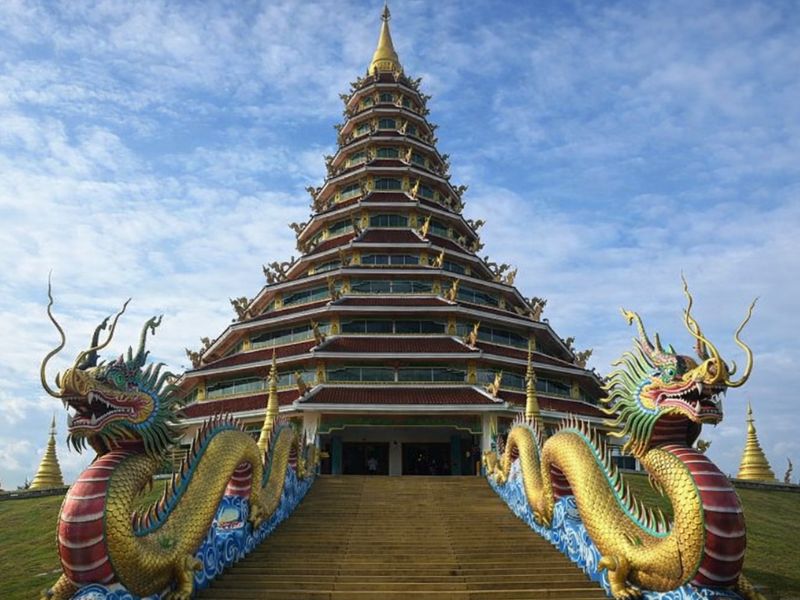
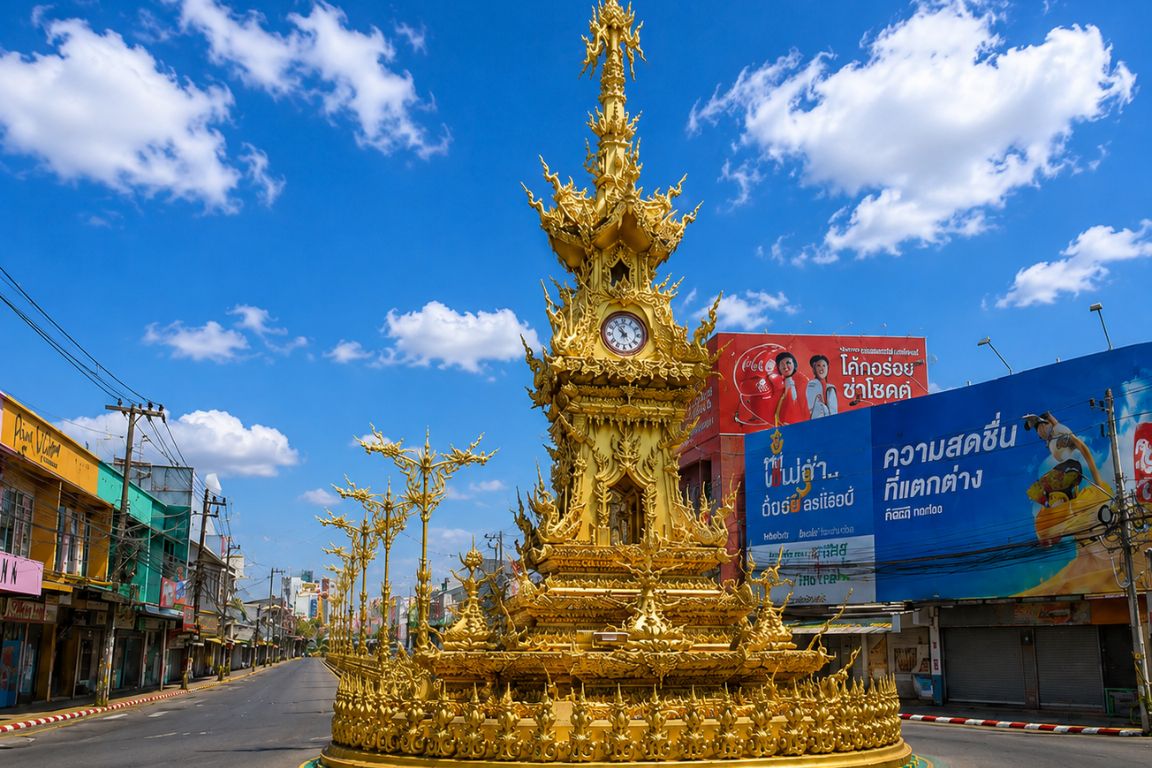
One practical note: the Black House sits about 5 km from the Blue Temple on the same northern axis out of Chiang Rai city. The sequence that works best in our experience across 8,400 guided travelers is: Black House in mid-morning (arriving 9:30am), Blue Temple in the early afternoon (arriving 1:30pm after the Black House noon closure), then return to the city for the Night Bazaar and Clock Tower show. This puts you at the Blue Temple in its afternoon sweet spot rather than the morning rush, and makes efficient use of the northern corridor above the city.
Want to visit the Blue Temple without wasting time figuring out the basics on arrival? Here’s our Blue Temple Chiang Rai visitor guide so you get the most out of it.
Black House: Best and Worst Times to Visit
| 9:00-11:00am (weekday) | Low | Morning light through trees, cooler temperature | Best window |
| 11:00am-12:00pm | Moderate | Getting warm; ticket closes at noon | Fine, but arrive earlier if possible |
| 12:00-1:00pm | N/A | CLOSED – ticket counter and some buildings shut for lunch | Do not arrive during this window |
| 1:00-3:00pm | Moderate, clearing | Hot midday, day tours thinning out | Good if you missed the morning |
| 3:00-5:00pm | Low | Afternoon light, cooler, quiet | Strong second choice, especially on weekdays |
Crowd patterns based on Chiang Rai Tours guide experience since 2014.
How Do You Get to the Black House from Chiang Rai City?
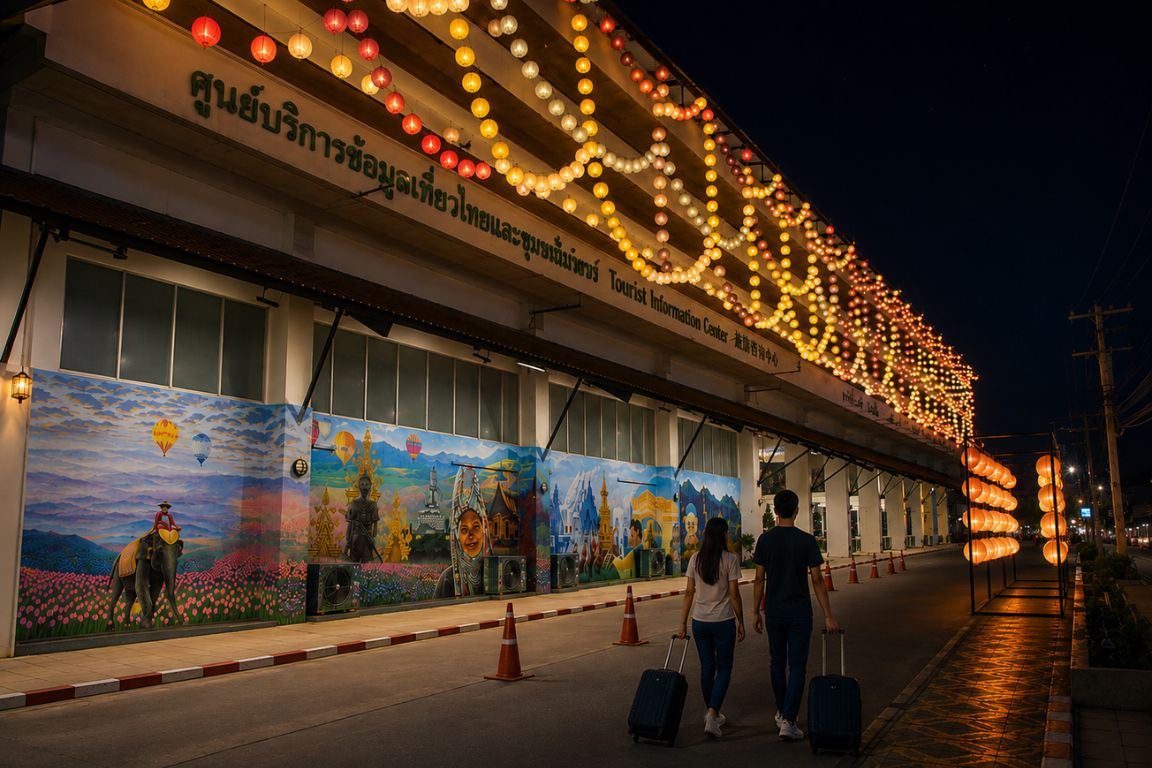 The Black House is 10 km north of Chiang Rai city center, a 20-minute drive. Grab costs around 120-160 THB one way; Bolt runs slightly cheaper. A tuk-tuk costs 300-400 THB return if you negotiate a round trip with waiting time. The public bus toward Mae Sai from Bus Terminal 1 (Platform 7) stops near the Black House for around 20-30 THB, but the drop-off is on the highway and requires a short walk. Rented scooter is the most flexible option if you’re combining the Black House with the Blue Temple in the same day. Return Grabs from the Black House can be unpredictable – the area is quieter than the temple areas closer to the city, so order your return early.
The transport logistics for the Black House are slightly more complex than for the Blue Temple because the neighborhood around it is quieter and Grab drivers don’t circulate past the entrance the way they do near the city-center temples. The practical solution is to order a return Grab while you’re still inside the museum, 15 to 20 minutes before you plan to leave, rather than waiting until you’re at the gate. This avoids the common situation of finishing the visit and then waiting 20 minutes for a driver to come from the city.
A negotiated round-trip tuk-tuk is worth considering for the Black House specifically. 300 to 400 THB for a round trip with the driver waiting makes sense here because the return problem goes away. Agree on waiting time (usually an hour is enough) and price before getting in. This is more expensive than Grab but removes the logistics headache entirely.
The most efficient transport solution for a Black House and Blue Temple combination day is a rented scooter. Both sites sit north of the city on the same highway corridor. The Black House is 10 km out, the Blue Temple is roughly 6 km – opposite direction from the White Temple (which is south). With a scooter you can visit both without Grab logistics, and the drive between them is 15 minutes through straightforward northern Thai roads. Scooter rental in Chiang Rai city center runs 150 to 250 THB per day.
Check out our how to visit Chiang Rai tours from Chiang Mai guide before you commit to anything.
Getting to the Black House: Transport Options
| Grab / Bolt | 120-160 THB one way | 20 min | Order return early – area is quiet for pickups |
| Tuk-tuk (round trip, negotiated) | 300-400 THB return with wait | 20-25 min | Good option – solves return logistics. Agree on price and wait time upfront. |
| Public bus (Mae Sai route, Platform 7) | 20-30 THB | 25-35 min | Drop-off on highway, ~500 m walk to entrance. Return: flag down buses on opposite side. |
| Scooter rental (full day) | 150-250 THB/day | 20 min | Best for combining Black House + Blue Temple. Both sites are north of city. |
| Guided tour | Included in 3 Colors of Chiang Rai tour price | Hotel pickup | Handles all logistics. Black House context from a guide is particularly valuable here. |
Prices verified May 7, 2026.
The Black House is the site where a knowledgeable guide adds the most to a Chiang Rai temple day. The White Temple’s symbolism is widely documented. The Blue Temple’s serenity speaks for itself. The Black House’s layers of meaning – Buddhist, biographical, and deliberately unsettling – respond well to someone who can explain what Duchanee was doing and why.
What Are the Entry Rules, Fees, and Practical Details?
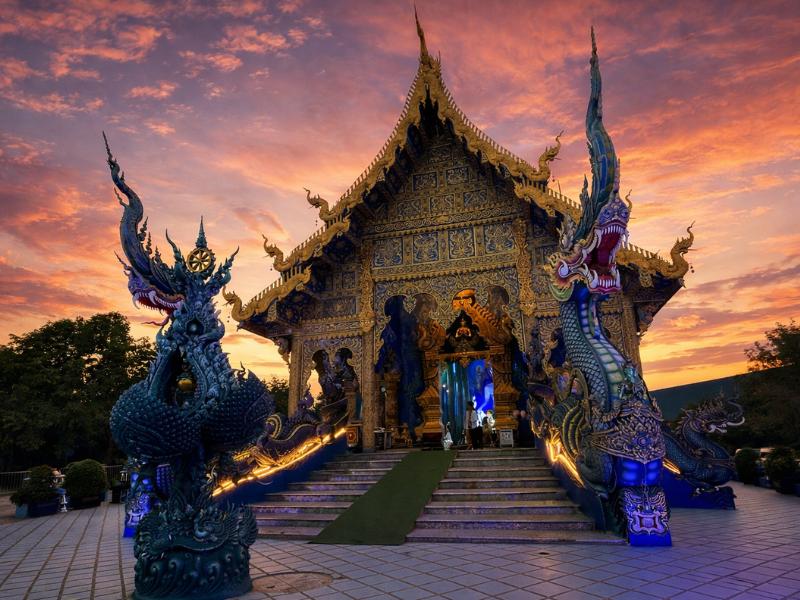
Entry is 80 THB for adults, free for children under 12. The 80 THB fee was introduced in December 2016 and has not changed as of 2026. The museum is not a temple, so there is no dress code – shorts and sleeveless tops are fine. Photography is permitted throughout, including inside buildings, though flash is considered impolite and low-light camera settings produce better results anyway. The noon-to-1pm closure is firm. Some buildings remain permanently closed to the public, including the whale-shaped bedroom and buildings used by royalty for meditation. The grounds include a coffee shop, food stalls, massage services, and a souvenir market near the entrance.
The no-dress-code aspect of the Black House is worth explicitly noting because most of Chiang Rai’s main attractions require covered shoulders and knees. If you’re doing a temple day that includes the White Temple and Blue Temple, you’ll be dressed appropriately for those sites but may find the covered clothing unnecessary and warm by the time you reach the Black House. That’s fine. Come in whatever you wore in the morning.
Photography throughout the compound is permitted, which puts the Black House in notable contrast with the White Temple’s no-interior-photography rule. The main hall’s interior is dark, and the installations are dense. A phone camera in portrait mode with auto HDR will get you most of what you want. A wider-angle lens captures the scale of the spaces better. Flash will flatten the teak wall textures and irritate other visitors. Low-light patience produces far better results.
The buildings themselves are worth navigating carefully. Not all of them are open, and some that appear to be accessible have closed off sections or restricted inner chambers. Follow signage and staff guidance rather than assuming. The main hall, the Cathedral, and the open-air bone gallery are the three structures worth prioritizing if your time is limited. The garden walk between buildings and the sculptures scattered through it are free-form and worth taking at a slow pace.
A word for visitors with children: several sections of Baan Dam contain content that is explicitly sexual in nature (phallic sculptures) and graphic in the display of animal remains. Neither is hidden; both are integral to Duchanee’s artistic statement. Parents should make their own judgment calls, but the museum is generally not recommended for children under 12 or for anyone sensitive to macabre content. The Black House is the only one of Chiang Rai’s three major art sites where this caveat is genuinely necessary.
Is the Black House Worth Visiting?
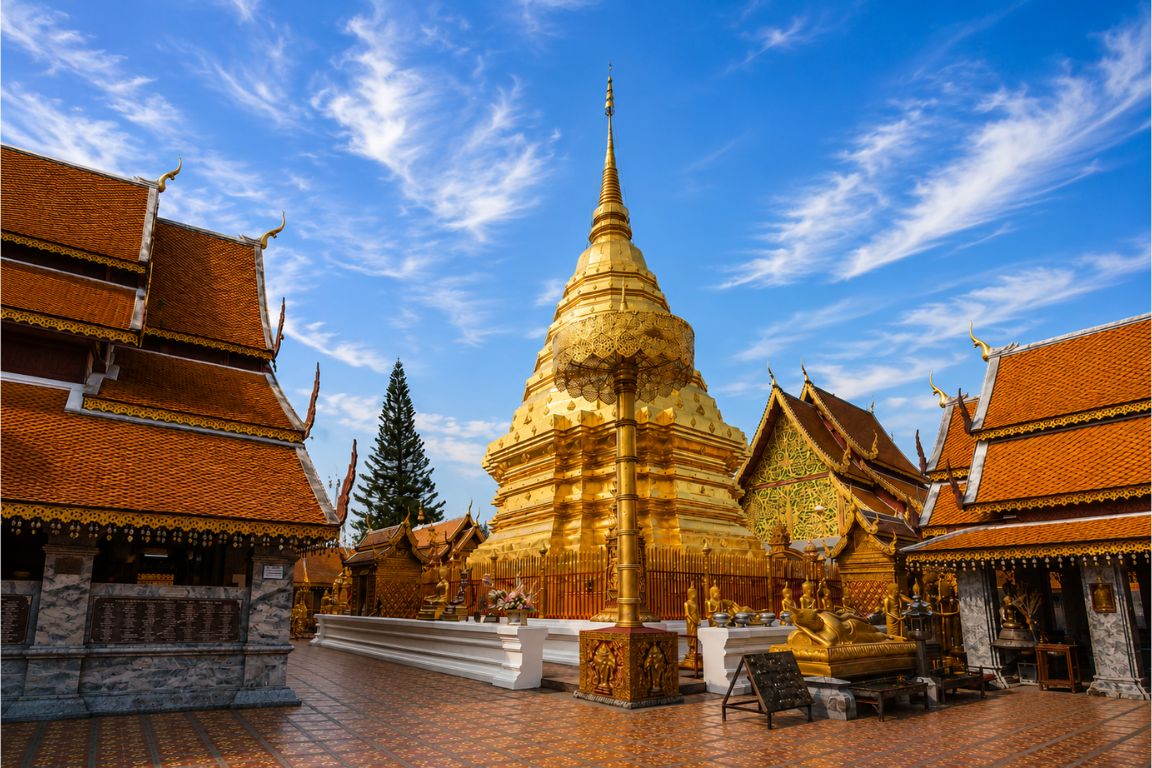 Yes, for travelers who came to Chiang Rai for more than photographs. The Black House is not visually stunning in the way the White or Blue Temples are. It does not produce the kind of instant awe that those sites deliver at first sight. What it produces is something slower and less comfortable: a prolonged encounter with an artist’s complete vision of life, death, desire, and the cycle of existence that Buddhist philosophy calls samsara. Visitors who leave the White Temple energized and slightly overwhelmed often find the Black House to be where the day becomes meaningful rather than just impressive.
The common complaint about Baan Dam is that it’s creepy, strange, and not for everyone. That is accurate and also beside the point. Thawan Duchanee spent 38 years building something that was specifically designed to make you uncomfortable in a productive way. The discomfort is the content. Walking through a room of animal bones arranged into art furniture and asking yourself what you feel about that is exactly the experience the artist intended. It is more honest about the Buddhist concept of impermanence than any sanitized golden temple.
The comparison with the White Temple is the frame most travelers bring. White Temple first, Black House second. Heaven then hell. That sequence is popular because it works: the White Temple’s spectacular exterior and complicated interior prepare you to appreciate what Duchanee was responding to, and the Black House’s darkness has more meaning when you’ve just spent an hour in something straining toward light. Some travelers find the reverse true too: the Black House’s grounded earthiness makes the White Temple’s transcendence feel more earned when you revisit it afterward. Either direction, the two sites are in genuine dialogue and both are better for being understood in relation to each other.
The travelers who skip the Black House almost always say, in retrospect, that they wish they’d gone. It is the site that separates the Chiang Rai that exists in photographs from the Chiang Rai that exists as an experience. Three modern artists, three radically different visions, all within fifteen minutes of each other in the same northern Thai city. That combination is the cultural argument for Chiang Rai as a destination in its own right, not just an extension of Chiang Mai.
We’ve put together a full breakdown in our is Chiang Rai worth visiting guide so you know exactly what to expect and whether it fits what you actually came to northern Thailand to see.
What Our Travelers Said About the Black House: Insights from 8,400+ Guests
| Said it was the most memorable part of the day | 31% | Among travelers who visited all three color sites on the same day |
| Initially skeptical but glad they came | 58% | “I almost skipped it” was the most common phrasing |
| Wished they had a guide to explain the symbolism | 63% | Higher than at any other single Chiang Rai site |
| Not suitable for their children | 22% | Among travelers visiting with children under 12 |
| Said visiting all three sites made Chiang Rai feel complete | 76% | Versus 44% who visited only the White and Blue Temples |
Based on our 2025 client group data from Chiang Rai Tours guests. Percentages are approximate.
Frequently Asked Questions
What is the Black House in Chiang Rai?
The Black House (Baan Dam) is a private art museum and the life’s work of Thai National Artist Thawan Duchanee (1939-2014), built on a 16-hectare property north of Chiang Rai starting in 1976. It contains approximately 40 black wooden structures filled with Duchanee’s paintings, sculptures, and installations made from animal remains, all exploring Buddhist themes of death, desire, and impermanence. It is not a temple and has no religious affiliation.
How much does it cost to enter the Black House?
Entry is 80 THB for adults. Children under 12 enter free. The 80 THB fee was introduced in December 2016 and has remained unchanged as of 2026. There is no separate charge for different buildings within the complex.
What are the Black House opening hours?
The Black House is open daily from 9:00am to 5:00pm, with a closure for lunch from noon to 1:00pm. The ticket counter closes at noon and reopens at 1pm, so do not arrive for a full visit after 11am. The museum is closed on some national holidays.
Is there a dress code at the Black House?
No. The Black House is an art museum, not a temple. There is no requirement to cover shoulders or knees. You can visit in whatever you wore for the rest of the day. This is unlike the White Temple and Blue Temple, which require modest dress.
What is the relationship between the Black House and the White Temple?
Both were created by Chiang Rai-born artists working simultaneously for decades. Chalermchai Kositpipat built the White Temple as an expression of Buddhist purity and the aspiration toward enlightenment. Thawan Duchanee built the Black House as an expression of the Buddhist reality of suffering, death, and desire that precedes enlightenment. The local Thai saying describes them as “Chalerm Sawan, Thawan Narok” – Chalermchai’s heaven, Thawan’s hell. Visiting both in sequence on the same day gives each site more meaning than either has alone.
Is the Black House suitable for children?
Generally not recommended for children under 12. The museum contains explicit phallic sculptures used as ancient symbols of fertility and desire, graphic displays of animal bones, skins, and skulls, and macabre installations throughout. These are integral parts of the artist’s statement and are not hidden or separated from the main visitor route. Parents should use their judgment, but we advise caution with younger children.
Written by Jasmine Kittisak
Thai tour guide since 2014 · Founder, Chiang Rai Tours
Jasmine has guided over 8,400 travelers through Chiang Rai and the Golden Triangle region since founding the agency.
Initial recommendation: general guidance, before you enter any preferences.
Private Chiang Rai Temple Day
Have a travel date in mind? Set your own temple priorities with a private guide and vehicle. Check your date before arranging the rest of your trip.
8 hours; Chiang Rai hotel pickup; English guide and air-conditioned transport. White Temple, Blue Temple and Baan Dam are listed stops.
Entry fees, lunch and personal expenses are extra. Confirm your preferred order and longer stops before booking; early entry is not guaranteed.
Scheduled dates load here. Confirm availability and final prices on Viator.
No verified option in this shortlist fits all your choices. Change your departure city, allow more time, or reset. Participant or access requirements need direct provider confirmation; no suitability claim is made here.
Adjust The Route Or Compare Alternatives
Choices change the booking recommendation and floating offer. A one-way transfer ends in the other city; a day tour follows its listed return or selected drop-off. Route matches do not confirm age, accessibility, dietary needs or medical suitability.
- Seven Chiang Rai Sites With Tickets
Bundle the three art sites and Golden Triangle with entry tickets and lunch. 10 hours; English guide; city pickup; White Temple, Baan Dam, village and Opium Museum tickets included.
A busy fixed circuit: about 1 hour at White Temple, 30 minutes at Blue Temple and 45 minutes at Baan Dam. Not wheelchair suitable.
- Choose Four Chiang Rai Stops With A Driver
Choose four stops, including White Temple, Blue Temple or Baan Dam, within a private half-day. 5 hours; private vehicle, basic-English driver, fuel, parking and city pickup.
Entry fees and meals extra. Driver service, not specialist guiding; routes and longer stops must fit the time allowance.