White Temple Chiang Rai Visitor Guide
Planning to visit the White Temple in Chiang Rai? Learn ticket prices, best times to go, photography rules, and how long you really need.
Last updated: June 8, 2026
Use the timing and art guide below to plan your visit, then choose a route with enough time at Wat Rong Khun.
White Temple Quick Facts
| Official Name | Wat Rong Khun (วัดร่องขุ่น) |
| Location | Pa O Don Chai, Mueang District, Chiang Rai – 13 km south of city center |
| Opening Hours | Daily 8:00am – 5:30pm (last entry ~5:00pm) |
| Entry Fee (Foreigners) | 200 THB (increased from 100 THB on January 1, 2026). Includes Cave of Art. |
| Entry Fee (Thai citizens) | Free |
| Free Entry | Visitors aged 70+ and children under 120 cm |
| Photography | Permitted outdoors. Strictly prohibited inside the main hall (ubosot). No drones. |
| Dress Code | Shoulders and knees covered. Shoes removed to enter ubosot. Sarongs available at entrance. |
| Best Arrival Time | 8:00am (opening) on a weekday. Tour buses from Chiang Mai arrive 10am-noon. |
| Time to Budget | 90 min minimum; 2 hours for full complex |
| Construction Started | 1997. Expected completion: ~2070. |
| Annual Visitors | Over 1 million per year |
Prices verified May 7, 2026.
What Is the White Temple in Chiang Rai?
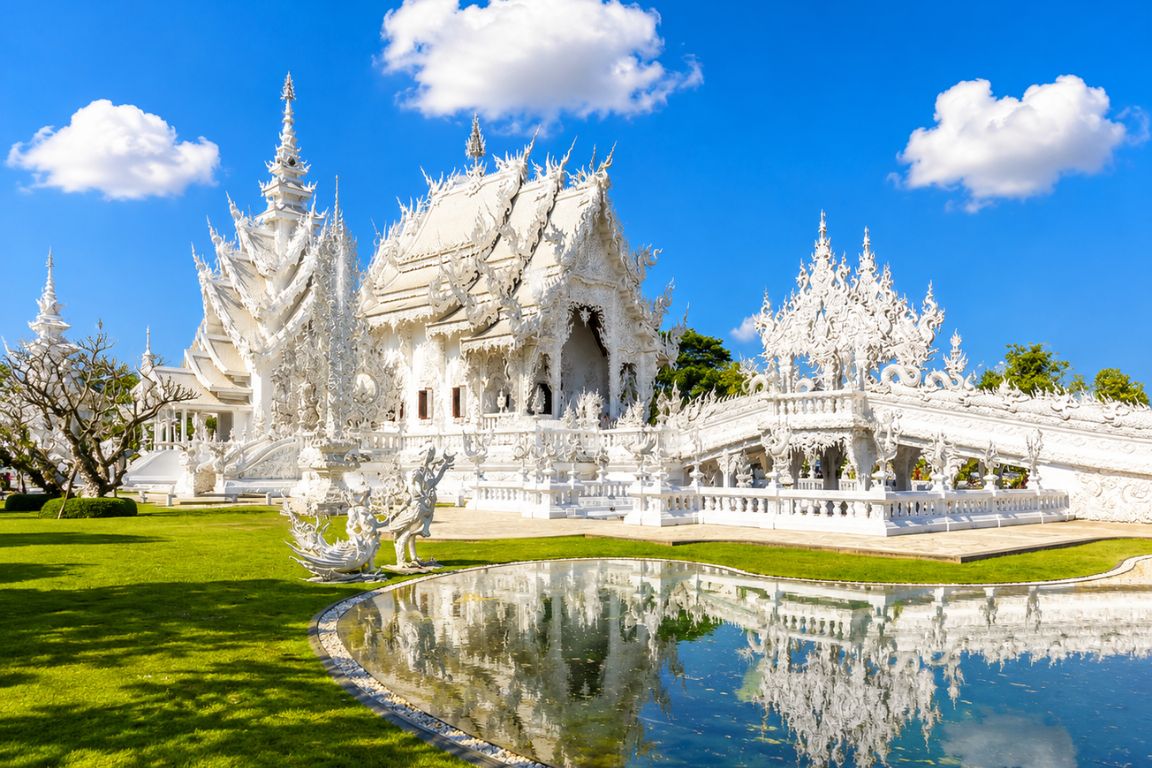 The White Temple, officially Wat Rong Khun, is a privately owned contemporary Buddhist art temple 13 km south of Chiang Rai city. It was created by Thai artist Chalermchai Kositpipat, who began building it in 1997 using his own money, has spent over 40 million THB on construction to date, and expects the full nine-building complex to take until around 2070 to complete. It is not a historical temple. It is an active work of art that happens to function as a sacred Buddhist site, and the distinction between those two things is the key to understanding why it looks and feels the way it does.
The original Wat Rong Khun had stood on the same site for centuries, but by the end of the 20th century the building had deteriorated to the point of no return. Chalermchai, a Chiang Rai-born artist who had spent years studying Buddhist temple mural painting and was already one of Thailand’s most recognized artists, decided to rebuild it entirely. He declined government funding. He declined corporate donors. He capped individual donations at 10,000 THB to prevent any single contributor from influencing his vision. The temple he built is his offering to Buddhism and to Thailand, financed entirely on the proceeds of his painting career and small public donations.
That independence is visible in every corner of what he made. Traditional Thai Buddhist temples are gold: gold spires, gold statues, gold leaf pressed into lacquer by centuries of devotion. Chalermchai made his white. The white represents the purity of the Buddha. The mirror fragments embedded in the white plaster represent the wisdom of the Dharma reflecting across the universe. When morning light hits the temple at the right angle, the whole surface goes alive, each mirror chip throwing back a piece of the sky, and the effect is genuinely unlike anything else in Thailand. Over a million people visit each year. The ones who arrive at 8am and the ones who arrive at 11am see the same building. They do not have the same experience.
Construction continues. New installations appear on return visits. The temple’s expected completion date sits around 2070, which means it will almost certainly outlast its creator. Chalermchai has said he intends to paint for Buddhism until the last day of his life. The White Temple is his life’s work made physical, which is worth holding in mind when you stand in front of it.
What Does the White Temple Actually Look Like Inside and Out?
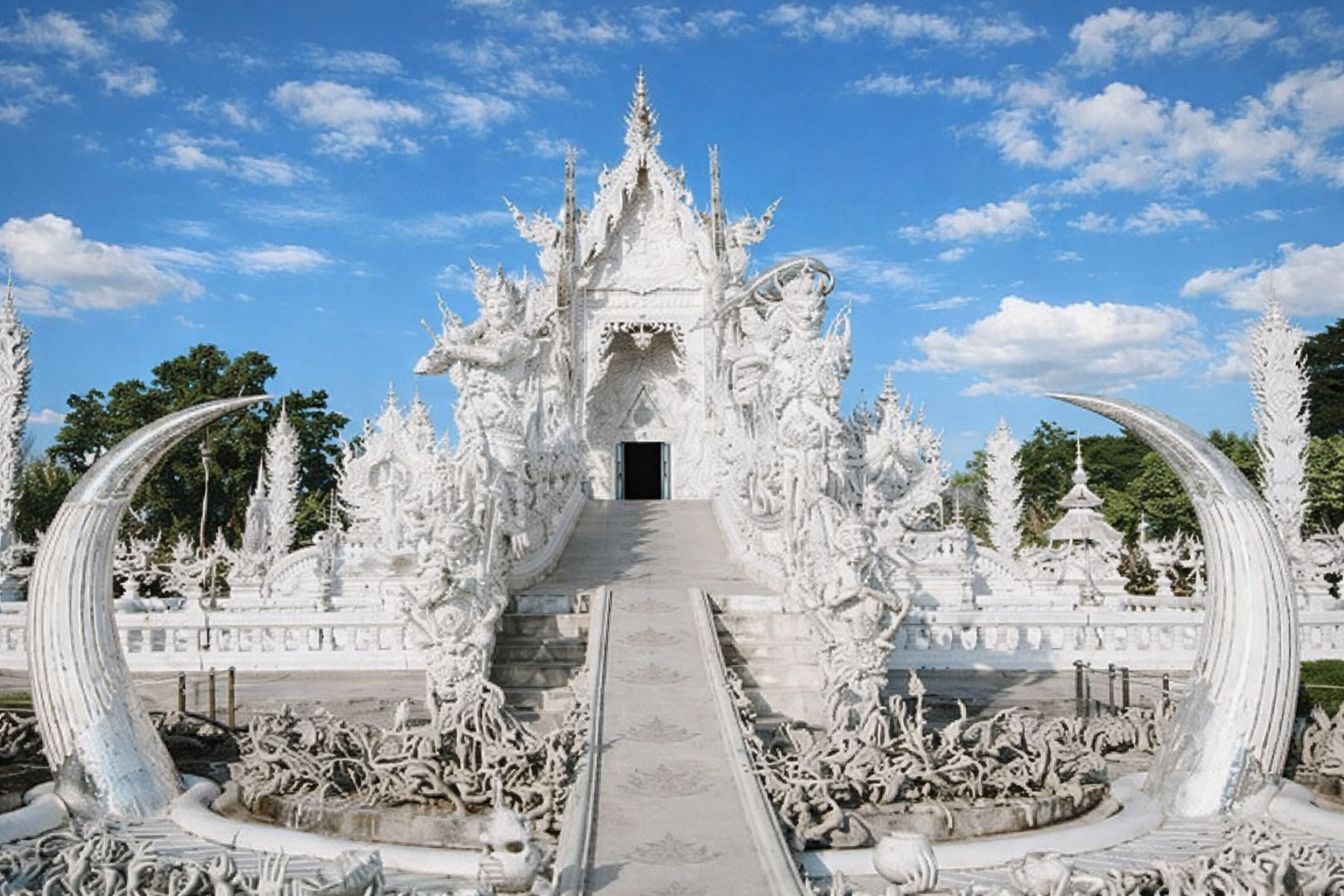 Outside, the White Temple is all whitewash and mirrors: a main hall (ubosot) built in classical Lanna style with a three-tiered roof and naga serpent decorations, covered entirely in white plaster embedded with mirror chips that catch sunlight from every angle. A bridge crosses a lake of hundreds of sculpted hands reaching upward. Two mythological guardian figures flank the entrance gate. Inside the ubosot, the white disappears and is replaced by murals of swirling flames, demons, pop culture figures (Michael Jackson, Neo from The Matrix, Batman, Superman, Keanu Reeves, Angry Birds), scenes of nuclear warfare and the September 11 attacks – all alongside traditional Buddhist imagery. Photography inside is forbidden, which means you have to see it yourself.
The exterior sequence is worth understanding before you walk through the gate, because everything you encounter has an intended meaning. The approach to the bridge passes a pond studded with hands, hundreds of white arms reaching upward from below the waterline. These are souls in samsara: trapped in desire, suffering, unable to cross. The bowl some of them hold is empty. The outstretched middle finger on one of them is intentional. Chalermchai leaves no ambiguity about what he is depicting.
The bridge itself is the Bridge of the Cycle of Rebirth. Crossing it is symbolic: you leave your earthly attachments behind and move toward the spiritual. Temple workers on loudspeakers will encourage you to keep moving. If you stop too long, you will be told to continue. The traffic flow is one-way from this point. There is no turning back once you start, which is, again, deliberate.
At the end of the bridge, before the main hall, two large guardian figures represent Death and Rahu, the deity who judges the dead. You pass through the Gate of Heaven. You take off your shoes. You enter the ubosot.
What’s inside is the part most photographs cannot prepare you for, because they’re not allowed. The white exterior gives no indication. Inside, Chalermchai’s murals run floor to ceiling: Buddhist cosmology and pop culture coexisting without irony. Superman and the Terminator. Harry Potter. Neo from The Matrix. Scenes of oil pumps, nuclear explosions, the World Trade Center. These are not random choices. Chalermchai’s argument is that human suffering and the forces of evil look different in each era, but the nature of the struggle is the same. The Buddha image at the far end of the hall is the destination point. Everything before it is what you had to move through to get there.
After the ubosot, the rest of the complex opens up: a large art gallery near the entrance with Chalermchai’s paintings, the Cave of Art (now included in the entry fee), the golden bathroom building, the wishing leaf trees, and the construction sheds where workers apply mirror chips to panels by hand before installation. That last one is the most under-visited part of the complex and one of the most interesting, especially if you want to understand how the temple is actually built.
What’s in the White Temple Complex
| Ubosot (main hall) | White mirrored temple with Buddhist-pop culture murals inside | Exterior: yes. Interior: strictly prohibited. | Never |
| Bridge of Rebirth | One-way bridge over sculpted hands – the approach to the hall | Yes | Never (it’s the main entrance) |
| Cave of Art | New installation – immersive art cave, now included in entry fee | Limited | Don’t skip – new as of 2025 |
| Golden Building | The gold bathroom. Not a joke – symbolizes earthly desires vs. spiritual purity | Yes (exterior) | Worth seeing and using |
| Chalermchai Art Gallery | Paintings by the temple’s creator near the entrance – free with entry | Check on site | Most visitors skip it. Don’t. |
| Wishing Leaf Trees | Metal chime trees – visitors write wishes and donate a chime (30 THB) to be incorporated | Yes | Nice moment if you have time |
| Mirror-laying sheds | Construction workshop – watch craftspeople applying mirror chips to temple panels by hand | Check on site | Very undervisited. Genuinely fascinating. |
Complex layout as of 2025. New structures are added periodically as construction continues.
When Is the Best Time to Visit the White Temple?
 Arrive at 8am when the gates open. That is the single most effective thing you can do to improve your experience. Tour buses from Chiang Mai arrive between 10am and noon and stay through early afternoon. The window from 8am to 9:30am is the closest thing to a quiet White Temple that exists. Afternoon from 2pm onward is the second-best window as the first wave of day-trippers clears. Weekdays beat weekends by a significant margin. Avoid the 11am-2pm window if you can, and avoid weekends in peak season if you care about photographs without crowds.
The timing issue at Wat Rong Khun is more specific than at most Thai temples. The problem is not that it gets generally busy across the day. The problem is that it gets specifically, dramatically crowded during a few predictable hours. Every day-tour operator from Chiang Mai follows roughly the same schedule: depart 6 to 7am, arrive White Temple 10 to 11am, stay 45 to 60 minutes, move on. That means five to ten tour buses converging on the same site within the same 90-minute window, every morning, throughout peak season from November to February.
The bridge photo, the one that ends up in everyone’s album, becomes a negotiation exercise at 11am. There are people in front of you, behind you, and beside you. You wait for a gap. You don’t really get one. You take the photo anyway because the temple is genuinely stunning even in a crowd. But the visitor who arrives at 8am stands on that bridge nearly alone, morning mist still in the air, the mirror surface throwing back light rather than midday glare, and takes the photograph they actually wanted.
Light quality matters at the White Temple in a way that’s specific to the all-white exterior. The mirror chips and white plaster work in soft light: early morning and late afternoon, the temple almost glows from within. At midday under a hard sun, the surface becomes blinding in a way that photographs poorly and physically uncomfortable to stand in front of for long. Slightly underexpose on your camera or phone when shooting the white exterior, because the mirrors will blow out highlights quickly. The reflecting pond in front of the complex gives a mirror image when the water is still, which is almost always in the early morning before tour groups stir the air.
For photographers: Tuesday through Thursday mornings in November and December offer the combination of cool-season light, smaller weekday crowds, and Chiang Rai’s best weather. Weekend mornings in peak season are the worst combination: maximum crowds with maximum light quality, which feels like a cruel trade-off but is accurate.
First time planning a northern Thailand trip and genuinely unsure which city to prioritize? Here’s our Chiang Rai vs Chiang Mai guide so you don’t default to the obvious choice without considering the alternative.
White Temple: Best and Worst Times to Visit
| 8:00-9:30am (weekday) | Low | Excellent (soft morning light) | Best possible window |
| 9:30-10:30am | Building | Good | Still manageable on weekdays |
| 10:30am-2:00pm | Peak (tour buses) | Harsh midday | Avoid if possible |
| 2:00-4:00pm | Moderate (lunch rush clearing) | Improving | Good second-choice window |
| 4:00-5:30pm | Low-moderate | Golden hour (best for exteriors) | Excellent if your itinerary allows |
| Weekends, peak season | High all day | Varies | Arrive at 8am or accept the crowds |
Crowd patterns based on Chiang Rai Tours guide experience since 2014.
How Do You Get to the White Temple from Chiang Rai City?
 The White Temple is 13 km south of Chiang Rai city center on Highway 1, about a 20-minute drive. You have four real options: the public bus from Chiang Rai Bus Terminal 1 (platform 8, 20-30 THB, every 20-30 minutes), Grab or Bolt (around 100-150 THB one way), a rented scooter (150-250 THB per day), or a private car or guided tour that handles both transport and the temple sequencing. The bus is cheapest and drops you directly at the entrance. Grab is the most convenient for groups of two to three. The bus is harder to use for the return journey because Grab drivers rarely come to the temple area unprompted.
The public bus option is genuinely simple and underused by foreign visitors. From Bus Terminal 1 (the Old Bus Station, near the Night Bazaar), take the bus on Platform 8 toward Mae Kachan. The bus stops directly in front of Wat Rong Khun. Cost is 20 to 30 THB each way. The journey takes 20 to 30 minutes. The limitation is the return: Grab drivers are inconsistent about accepting pickups at the temple because it takes them off the main Chiang Rai grid. The bus back exists but runs less predictably. If you’re on a tight budget and don’t mind the variable return timing, the bus in is fine. Most travelers who use it end up taking a tuk-tuk or negotiating a songthaew back.
Grab is the most predictable option for groups of two or three. At around 100 to 150 THB each way, split between passengers it’s affordable. The driver picks you up and drops you at the entrance, and you order the return Grab from inside the complex while you’re still visiting. Order it 10 to 15 minutes before you plan to leave. On busy mornings, drivers sometimes decline the pickup because they know the area has poor return trips, so build the buffer time.
A rented scooter gives you full schedule freedom: leave when you want, stay as long as you want, and combine the White Temple with the Blue Temple and Black House in the same day at your own pace. The temples are spread in different directions, so a scooter makes the sequencing genuinely flexible. Rental shops in the city center charge 150 to 250 THB per day. You need an international driving license to legally drive in Thailand.
Planning a trip to northern Thailand’s most underrated city and not sure how to make the journey from Chiang Mai work? Here’s our how to visit Chiang Rai tours from Chiang Mai guide so you plan it properly.
Getting to the White Temple: Transport Comparison
| Public bus (Platform 8, Bus Terminal 1) | 20-30 THB | 20-30 min | Budget travelers, solo visitors |
| Grab / Bolt | 100-150 THB | 15-20 min | Groups of 2-3, most convenient |
| Tuk-tuk / songthaew (negotiate) | 150-300 THB | 20-30 min | Small groups, more flexibility |
| Scooter rental (full day) | 150-250 THB/day | 15-20 min | Independent travelers, multi-temple days |
| Private guided tour | 3,850+ THB/person (full day) | Hotel pickup | Families, those wanting context and convenience |
Prices verified May 7, 2026.
What Are the Entry Rules, Fees, and Dress Code?
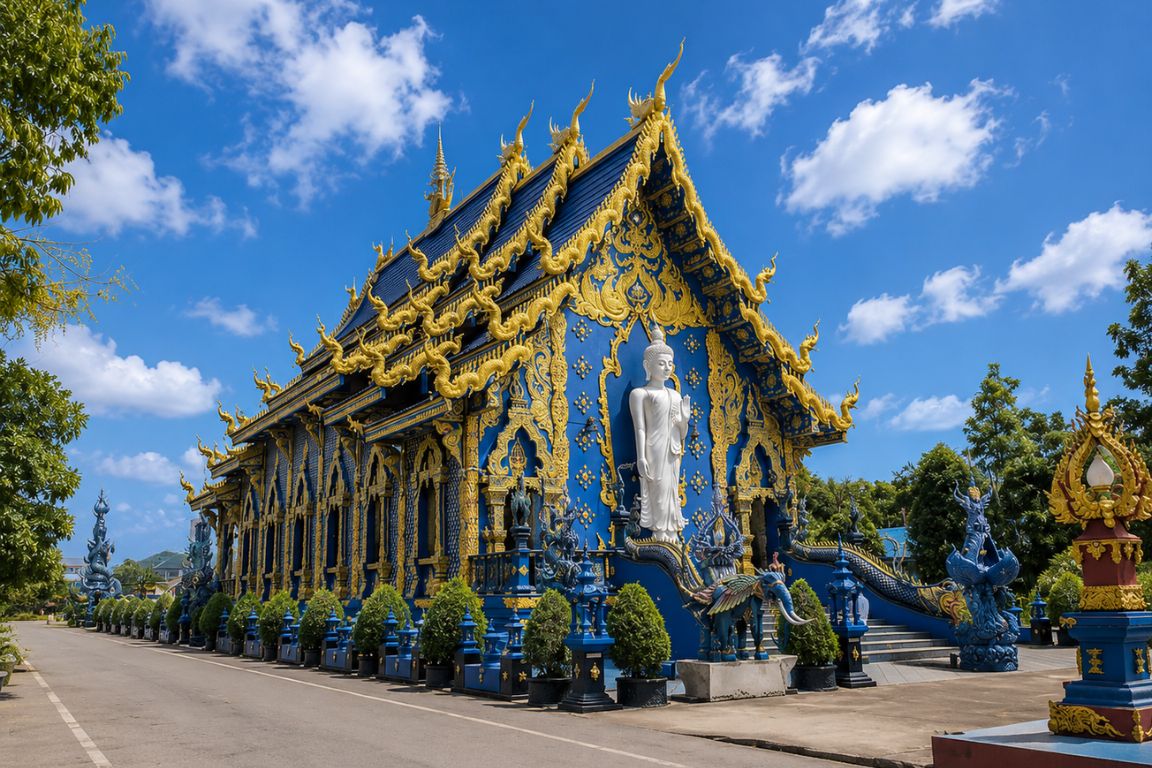 Entry is 200 THB for foreign visitors as of January 1, 2026, up from 100 THB. The increase was announced by the temple in November 2025 and applies to all foreign nationals. Thai citizens enter free. Children under 120 cm and visitors aged 70 or older also enter free. The fee now includes access to the Cave of Art, which was previously a separate 50 THB charge. Dress code is strictly enforced: shoulders and knees must be covered. Shoes must be removed to enter the ubosot. Sarongs are available to borrow at the entrance but run out on busy days.
The fee structure deserves a brief note because older online sources still show 100 THB (or even 50 THB, which was the rate before 2024). The January 2026 increase was confirmed by Khaosod English citing the temple directly. Temple officials said the increase covers maintenance and facility improvements as visitor numbers grow past one million annually. At 200 THB it remains one of the more affordable major temple entries in the region when you consider the scale of what’s been built and what is actively being added.
The dress code at the White Temple is enforced more strictly than at many other Thai temples, in part because the site receives so many visitors who don’t realize it is a functioning religious site rather than just a tourist attraction. Guards turn people away at the gate. There is no option to pay extra to enter without appropriate clothing. Sarongs to borrow are available near the ticket window, but on peak days they run out. The practical solution is to carry a lightweight scarf or wear long pants. If you’re combining the White Temple with the Blue Temple and Black House in a single day, you need the same dress code for all three, so it’s worth dressing appropriately from the start rather than borrowing and returning sarongs at each stop.
Photography rules: the entire complex is photography-friendly outdoors. The bridge, the exterior, the golden building, the garden, the wishing leaf trees, everything is fair game. The interior of the ubosot is the one absolute prohibition. Guards are present and enforce this firmly. Camera confiscation is not typical but being asked to delete photos is. Drones are prohibited throughout the complex. No exceptions.
One behavior note: the bridge is one-way and visitors are not permitted to turn back once they start. Temple workers manage traffic flow and will call out people who stop too long on the bridge or try to reverse direction. This is not rudeness. It’s crowd management for a site handling over a million visitors a year, and it’s worth knowing before you arrive so the experience doesn’t feel confusing.
Want to know what makes the Blue Temple a worthy addition to your Chiang Rai itinerary beyond just being a less crowded alternative to the White Temple? Here’s our Blue Temple Chiang Rai visitor guide so you arrive with the right context.
What Do Most Visitors Miss at the White Temple?
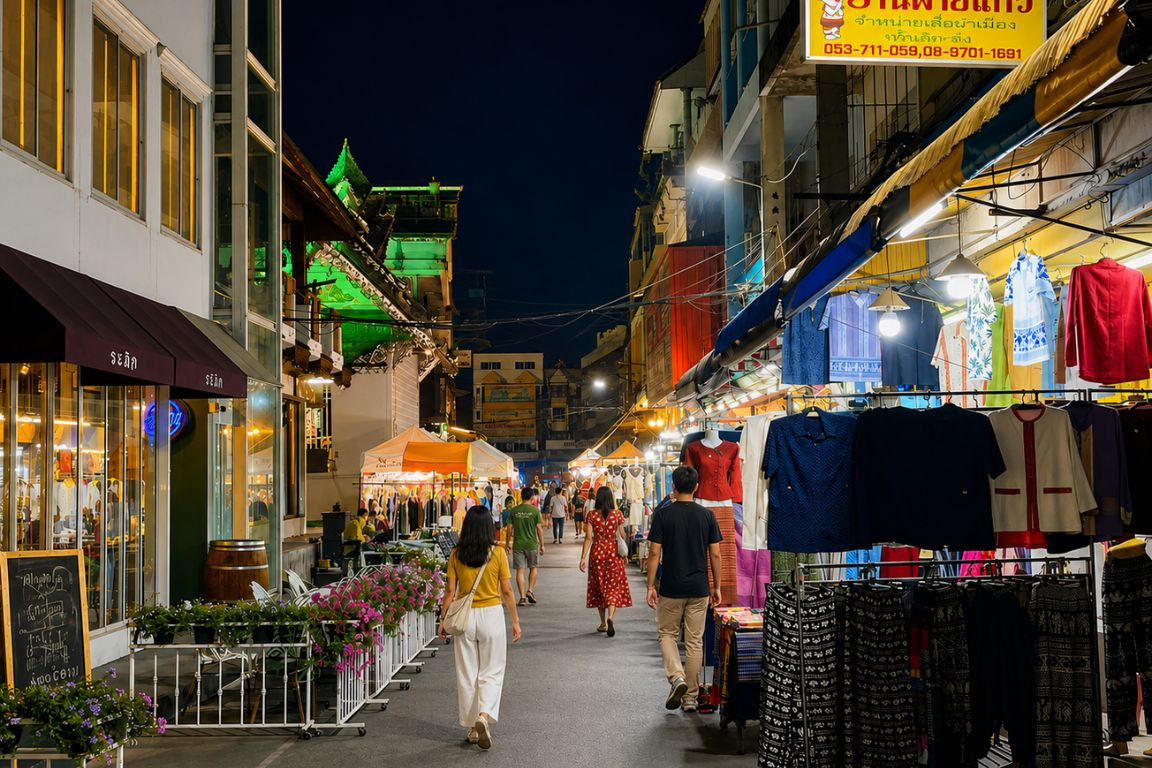 Most visitors miss four things: the Chalermchai Art Gallery near the entrance, the mirror-laying workshop sheds where craftspeople assemble temple panels, the full symbolism of the complex (which transforms the visit from sightseeing into something more meaningful), and the golden bathroom building, which is both practical and genuinely part of the artistic statement. Tour groups with 45-minute allocations miss almost all of this. Independent visitors who budget 90 minutes or more can cover it properly.
The art gallery sits right next to the entrance and almost no one goes in. It contains Chalermchai’s paintings, the work that funded the temple’s construction in the first place. These are large-format paintings that show the full range of his visual language: the same synthesis of Buddhist iconography, pop culture, and cosmic scale that appears in the ubosot murals, but available to look at properly and for as long as you want. Understanding what Chalermchai does as a painter makes the temple more legible as an extension of that practice. Budget 15 minutes. It’s free with your entry.
The mirror-laying sheds are in the construction area at the back of the complex. Workers sit at benches applying small mirror chips to pre-formed plaster panels, one piece at a time, by hand, before the panels are attached to the temple structures. This is how every surface of every building at Wat Rong Khun was made and continues to be made. Watching it happen for five minutes gives you a relationship to the scale of the project that no photograph of the finished surface can communicate. The temple isn’t magic. It’s thousands of hours of manual labor, built piece by piece, and it will continue to be built for decades after the current workers have gone.
The golden building, the one that houses the bathrooms, gets a lot of laughs and deserves them. It’s genuinely funny. But the humor is the point. Chalermchai deliberately made the most utilitarian structure in the complex the most ostentatiously material: gold from roof to floor, ornate, excessive, representing worldly desire. It sits next to the pure white ubosot. The contrast is his most direct architectural joke and most direct theological statement. The bathrooms inside are nice, which is part of the joke too.
The wishing leaf trees are the most participatory part of the complex. For 30 THB you write a wish or prayer on a silver metal leaf, which is then incorporated into the decorative trees and walkway ceilings throughout the grounds. These are real donations in the Buddhist sense: small acts of contribution to something larger. The roofs of covered walkways are hung entirely with these leaves, thousands of individual prayers accumulated over years. Looking up through them when the light comes through sideways is one of the genuinely quiet moments available at a site that otherwise never quite goes quiet.
Is the White Temple Worth the Hype?
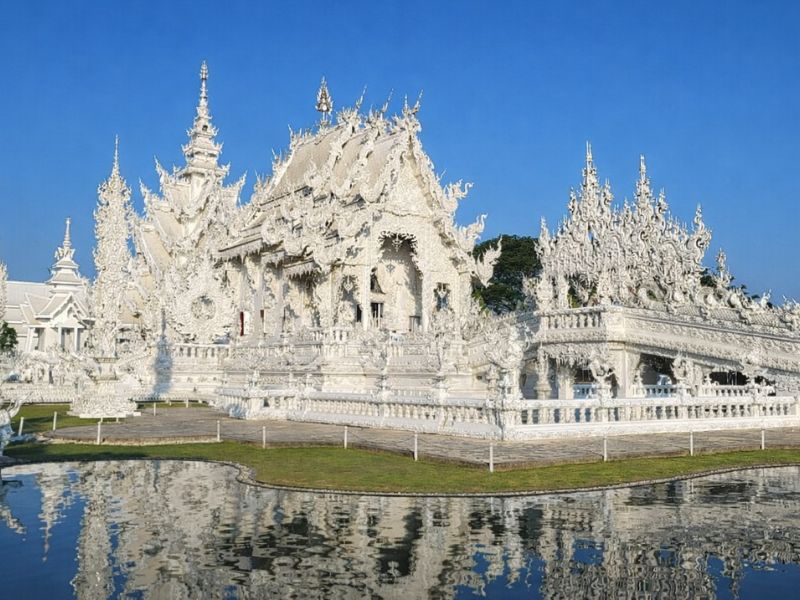
Yes. Unambiguously. The White Temple is the most visually original Buddhist site in Thailand and one of the most unusual sacred spaces in Southeast Asia. The combination of mirrored exterior, one-of-a-kind interior murals, and the ongoing nature of the construction creates a visit that works on multiple levels: as pure spectacle, as artistic experience, and as genuine Buddhist teaching if you’re willing to engage with what Chalermchai is actually saying. The hype around it, which is considerable, undersells the interior and oversells the exterior as the reason to go.
The honest case against the hype is the crowd timing problem. Travelers who arrive at 11am with a tour bus and leave at noon having not understood the symbolism, not visited the gallery, not found the workshop sheds, and not been to the ubosot interior for long enough to take it in – those travelers often come home saying the temple was beautiful but they felt rushed. That’s an itinerary failure, not a temple failure. The solution is 90 minutes, an early arrival, and some basic knowledge of what you’re looking at before you arrive.
The case for the hype is simpler. Wat Rong Khun is unlike any other temple in Thailand. There is no other building in the country that puts Batman and the September 11 attacks and the Buddha in the same room and makes it cohere. There is no other sacred space being assembled, piece by piece, mirror chip by mirror chip, in front of your eyes, expected to take until 2070 to complete. The White Temple is not a historical monument. It is a living thing in the middle of being made. Showing up to see it now is different from showing up in 2040, which will be different from 2060. Most landmarks in northern Thailand have been finished for centuries. This one is still deciding what it will be.
We have guided groups through Wat Rong Khun hundreds of times since 2014. The visitors who leave with the most are the ones who arrived before the tour buses, walked slowly, read the symbolism, and stayed long enough to find the parts nobody photographed. That combination is available to anyone. It requires a good morning start and a willingness to look past the surface that literally, gleamingly, catches all the light.
Trying to figure out if Chiang Rai lives up to the hype beyond the White Temple photos? Check out our is Chiang Rai worth visiting guide before you start planning.
What Our Travelers Said About the White Temple: Insights from 8,400+ Guests
| Rated White Temple as Chiang Rai highlight | 61% | Including many who had visited hundreds of temples across Asia |
| Said tour group allocation of 45 min was too short | 74% | Most common complaint among day-trippers from Chiang Mai |
| Visited art gallery (and were glad they did) | 34% | Those who did consistently rated their visit higher |
| Arrived at 8am or before 9:30am | 41% | Significantly higher satisfaction scores versus those arriving later |
| Wished they had known about the symbolism beforehand | 58% | Most common reflection in post-tour feedback |
Based on our 2025 client group data from Chiang Rai Tours guests. Percentages are approximate.
Questions about how to build the White Temple into your Chiang Rai itinerary?
Frequently Asked Questions
What is the White Temple in Chiang Rai?
The White Temple (Wat Rong Khun) is a privately owned contemporary Buddhist art temple 13 km south of Chiang Rai city. It was designed and built by Thai artist Chalermchai Kositpipat starting in 1997 using his own money. The entire exterior is white plaster embedded with mirror chips. It is still under construction and is expected to be completed around 2070. It attracts over one million visitors per year and is the most photographed site in northern Thailand.
How much does it cost to visit the White Temple?
Entry is 200 THB for foreign visitors as of January 1, 2026, increased from the previous 100 THB. Thai citizens enter free. Visitors aged 70 and older and children under 120 cm also enter free. The 200 THB fee now includes access to the Cave of Art. Donations are accepted but capped at 10,000 THB per donor, as the creator refuses large-donor influence over the project.
What time does the White Temple open?
The White Temple is open daily from 8:00am to 5:30pm, with last entry around 5:00pm. It is open year-round, including public holidays. The best time to arrive is at the 8am opening on a weekday, before tour buses from Chiang Mai arrive between 10am and noon.
Can you take photos inside the White Temple?
Photography is strictly prohibited inside the main hall (ubosot). Guards enforce this and may ask you to delete photos if caught. Photography is permitted throughout all outdoor areas of the complex. Drones are prohibited across the entire site. Avoid blocking pathways or posing in ways that disrespect religious statues.
What is the dress code at the White Temple?
Shoulders and knees must be covered. Shoes must be removed to enter the main hall. Sarongs are available to borrow at the entrance but run out on busy days, so it’s better to arrive appropriately dressed. The dress code is strictly enforced, and visitors who arrive in shorts or sleeveless tops will be turned away or required to use borrowed coverings.
How long should you spend at the White Temple?
Budget at least 90 minutes. Two hours lets you cover the full complex: the main hall, Cave of Art, art gallery, golden building, wishing leaf trees, and the mirror-laying workshop sheds. Most standard tour group allocations of 45 minutes are not enough to see the site properly. Independent visitors who arrive at opening and move without rushing consistently report that 90 to 120 minutes feels right.
Written by Jasmine Kittisak
Thai tour guide since 2014 · Founder, Chiang Rai Tours
Jasmine has guided over 8,400 travelers through Chiang Rai and the Golden Triangle region since founding the agency.
Initial recommendation: general guidance, before you enter any preferences.
Private Chiang Rai Temple Day
Have a travel date in mind? Set your own temple priorities with a private guide and vehicle. Check your date before arranging the rest of your trip.
8 hours; Chiang Rai hotel pickup; English guide and air-conditioned transport. White Temple, Blue Temple and Baan Dam are listed stops.
Entry fees, lunch and personal expenses are extra. Confirm your preferred order and longer stops before booking; early entry is not guaranteed.
Scheduled dates load here. Confirm availability and final prices on Viator.
No verified option in this shortlist fits all your choices. Change your departure city, allow more time, or reset. Participant or access requirements need direct provider confirmation; no suitability claim is made here.
Adjust The Route Or Compare Alternatives
Choices change the booking recommendation and floating offer. A one-way transfer ends in the other city; a day tour follows its listed return or selected drop-off. Route matches do not confirm age, accessibility, dietary needs or medical suitability.
- Seven Chiang Rai Sites With Tickets
Bundle the three art sites and Golden Triangle with entry tickets and lunch. 10 hours; English guide; city pickup; White Temple, Baan Dam, village and Opium Museum tickets included.
A busy fixed circuit: about 1 hour at White Temple, 30 minutes at Blue Temple and 45 minutes at Baan Dam. Not wheelchair suitable.
- Choose Four Chiang Rai Stops With A Driver
Choose four stops, including White Temple, Blue Temple or Baan Dam, within a private half-day. 5 hours; private vehicle, basic-English driver, fuel, parking and city pickup.
Entry fees and meals extra. Driver service, not specialist guiding; routes and longer stops must fit the time allowance.