Chiang Rai vs Chiang Mai
Chiang Mai or Chiang Rai? Compare temples, atmosphere, nightlife, and travel style to decide which northern Thailand city fits your trip best.
Last updated: July 1, 2026
Compare the cities below, then choose a day trip or an intercity transfer if Chiang Rai fits your trip.
Chiang Rai vs Chiang Mai: At a Glance
| Founded | 1263 (first Lanna capital) | 1296 (second Lanna capital) |
| City population | ~200,000 | ~400,000 |
| Distance from Bangkok | ~885 km north | ~700 km north |
| Airport (direct international flights) | Mae Fah Luang (CEI) – limited routes | Chiang Mai Intl (CNX) – 31 destinations, 27 airlines |
| Temples | Fewer, but world-class modern art temples | 300+ including ancient Lanna architecture |
| Signature attraction | White Temple (1M+ visitors/year) | Wat Phra That Doi Suthep, Old City |
| Unique geography | Golden Triangle (3-country border), hill tribes, tea mountains | Doi Inthanon (highest peak in Thailand), elephant sanctuaries |
| Average mid-range daily budget | ~1,700-2,500 THB/day | ~2,000-3,500 THB/day |
| Recommended stay | 2-3 nights | 4-5 nights (first-timers) |
| Digital nomad infrastructure | Growing, limited coworking spaces | One of Southeast Asia’s top nomad cities |
| Nightlife | Night Bazaar, walking streets, quiet bars | Nimman Road, rooftops, jazz clubs, Muay Thai |
Data sourced from Tourism Authority of Thailand, FlightConnections, and verified May 7, 2026.
What Is the Actual Difference Between Chiang Rai and Chiang Mai?
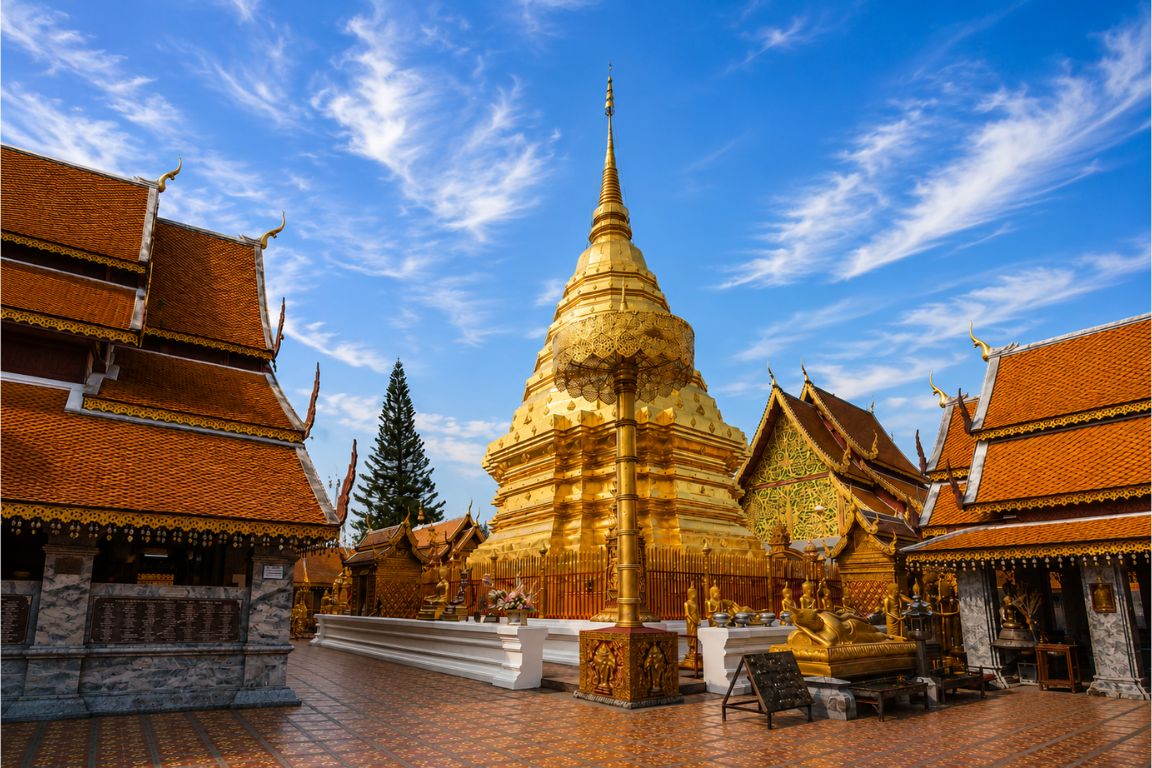 Chiang Mai is the cultural capital of northern Thailand: a larger, well-connected city with ancient temples, a bustling food and café scene, strong digital nomad infrastructure, and four to five days’ worth of activities inside the city alone. Chiang Rai is 180 km further north, smaller by half, quieter by a lot, and defined by a different kind of attraction: contemporary art temples built by living artists, immediate access to the Golden Triangle border region, and mountain communities that feel genuinely remote. One city rewards long stays. The other rewards the right two or three days.
Most travelers arrive in Thailand expecting to find one obvious winner. There isn’t one. They solve different problems. Chiang Mai handles the first-timer who wants variety, convenience, and the feeling of a real city with temples woven through it. Chiang Rai handles the traveler who wants something unusual, quieter, and less predictable, who has already done Chiang Mai or who finds the idea of a 400,000-person city too comfortable.
The history runs parallel. King Mengrai founded Chiang Rai in 1263 as the first capital of the Lanna Kingdom, then moved his capital to the newer city of Chiang Mai in 1296. Chiang Rai was always the older sibling, overtaken and outgrown. That dynamic still defines them. Chiang Mai accumulated centuries of historical sediment: temples, monasteries, markets, city walls, moats. Chiang Rai went a different direction. It became the province where artists built things, where the Mekong defines the border, where the last stretch of northern Thailand before Myanmar and Laos begins. Not less, exactly. Just different.
The question we hear most often is which one to prioritize. Our answer is always the same: if you have the time, both. If you genuinely cannot do both, read the section below on who should choose which. The two cities are 3.5 hours apart by bus and the road between them is one of northern Thailand’s better drives.
Not sure whether Chiang Rai deserves a spot on your Thailand itinerary or whether Chiang Mai covers everything you need? Here’s our is Chiang Rai worth visiting guide so you decide before you commit.
Which City Has Better Temples?
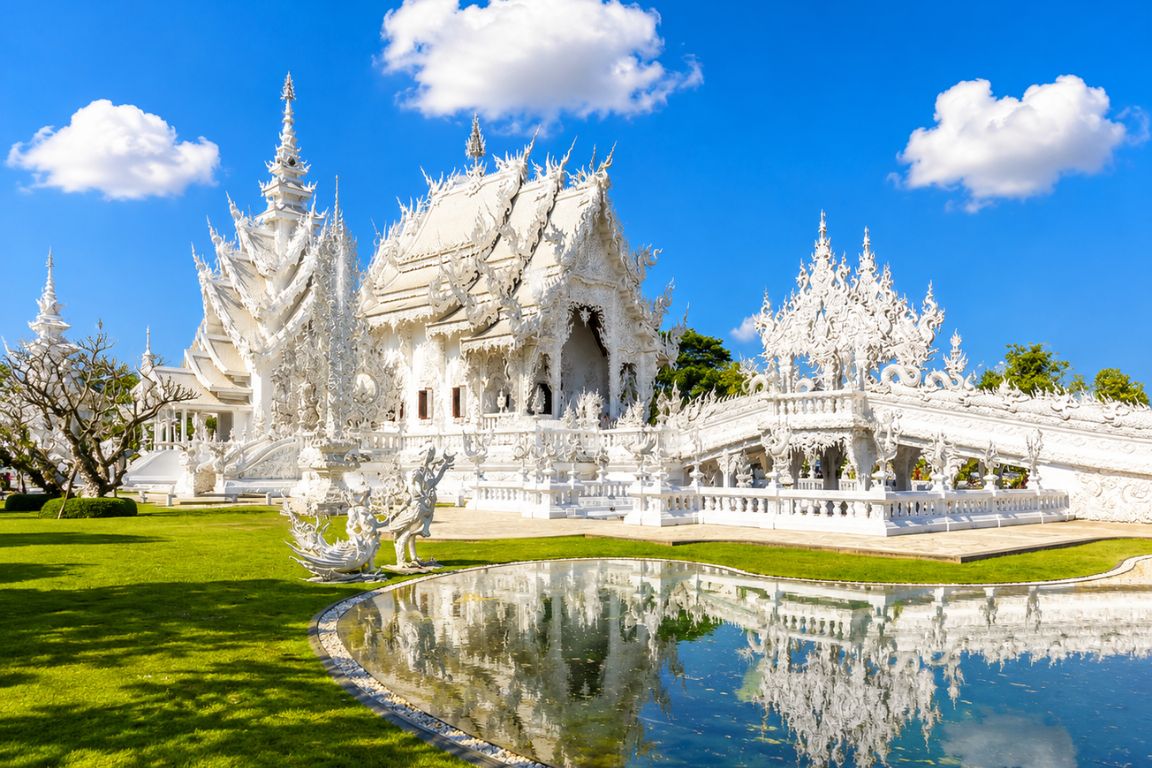 Chiang Rai wins on visual impact. Its three signature temples, the White Temple, the Blue Temple, and the Black House, were all created by living artists within the last 30 years and have no equivalent anywhere in Thailand. Chiang Mai wins on quantity, depth, and historical weight: 300-plus temples including Doi Suthep on the mountain above the city, Wat Chedi Luang in the walled old city, and ancient Lanna architecture that spans centuries. The honest answer is that they offer fundamentally different temple experiences rather than better or worse ones.
This is the category that generates the most debate, and it’s worth being precise about what each city actually offers.
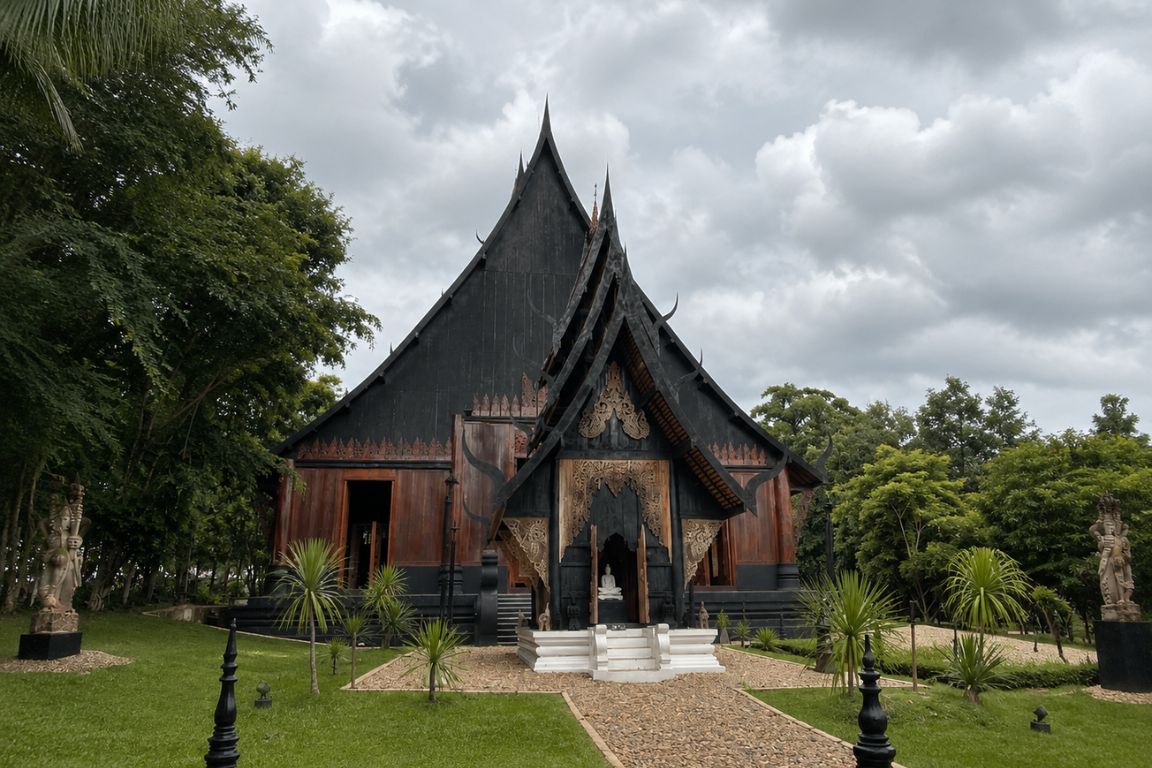
Chiang Rai’s three contemporary temples represent something that exists nowhere else in Thailand. Wat Rong Khun, the White Temple, was begun by artist Chalermchai Kositpipat in 1997 and is still unfinished. The entire exterior is white with mirrored mosaic, and the interior murals mix Buddhist cosmology with Batman, Superman, and Keanu Reeves in ways that are simultaneously disorienting and coherent. The Blue Temple opened in 2016 and is quieter, darker, a place you want to sit inside rather than photograph from outside. The Black House, Baan Dam, is not a temple at all but forty dark wooden structures filled with bones, crocodile skins, and Buddhist iconography assembled over a lifetime by artist Thawan Duchanee. These three sites together form a conversation about art and death and devotion that you will not find in any other Thai city.
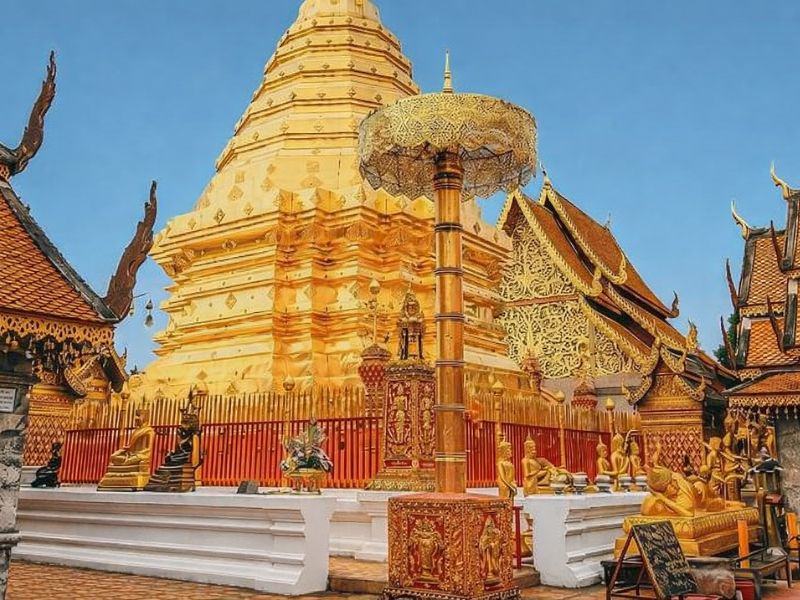
Chiang Mai’s temple landscape operates differently. Over 300 temples spread across the province, dozens within the walled old city alone. Wat Phra That Doi Suthep sits 1,676 meters up the mountain behind the city, a sacred site since the 14th century with views across the valley that catch morning mist. Wat Chedi Luang, inside the old city walls, has a 14th-century chedi that once stood 90 meters tall before an earthquake reduced it to its current impressive ruin. These are places of active worship, not contemporary art installations. The monks are real. The spiritual weight is different.
Travelers who care most about photography almost always prefer Chiang Rai’s temples. Travelers who want to understand Thai Buddhism, Lanna history, and the lived religious culture of northern Thailand often find Chiang Mai’s temples more meaningful. Many travelers want both, which is another argument for visiting both cities.
Not sure what to expect inside Wat Rong Khun beyond the iconic white exterior and mirror mosaics? Check out our White Temple Chiang Rai visitor guide before your visit.
Temple Comparison: Chiang Rai vs. Chiang Mai
| White Temple (Wat Rong Khun) | Chiang Rai | Contemporary art, 1997-ongoing | 200 THB | Photography, visual impact |
| Blue Temple (Wat Rong Suea Ten) | Chiang Rai | Contemporary, opened 2016 | Free | Evening visit, golden hour photography |
| Black House (Baan Dam) | Chiang Rai | Art museum, dark aesthetic | ~80 THB | Art lovers, unconventional experiences |
| Doi Suthep (Wat Phra That) | Chiang Mai | Sacred Lanna, 14th century | 50 THB | Sunrise views, spiritual depth |
| Wat Chedi Luang | Chiang Mai | Ancient Lanna, 14th century ruin | 50 THB | Monk chat, history, evening |
| Wat Phra Singh | Chiang Mai | Classic Lanna, 14th century | 50 THB | Lanna art, murals, architecture |
Prices verified May 7, 2026.
Which City Is Better for Food and Nightlife?
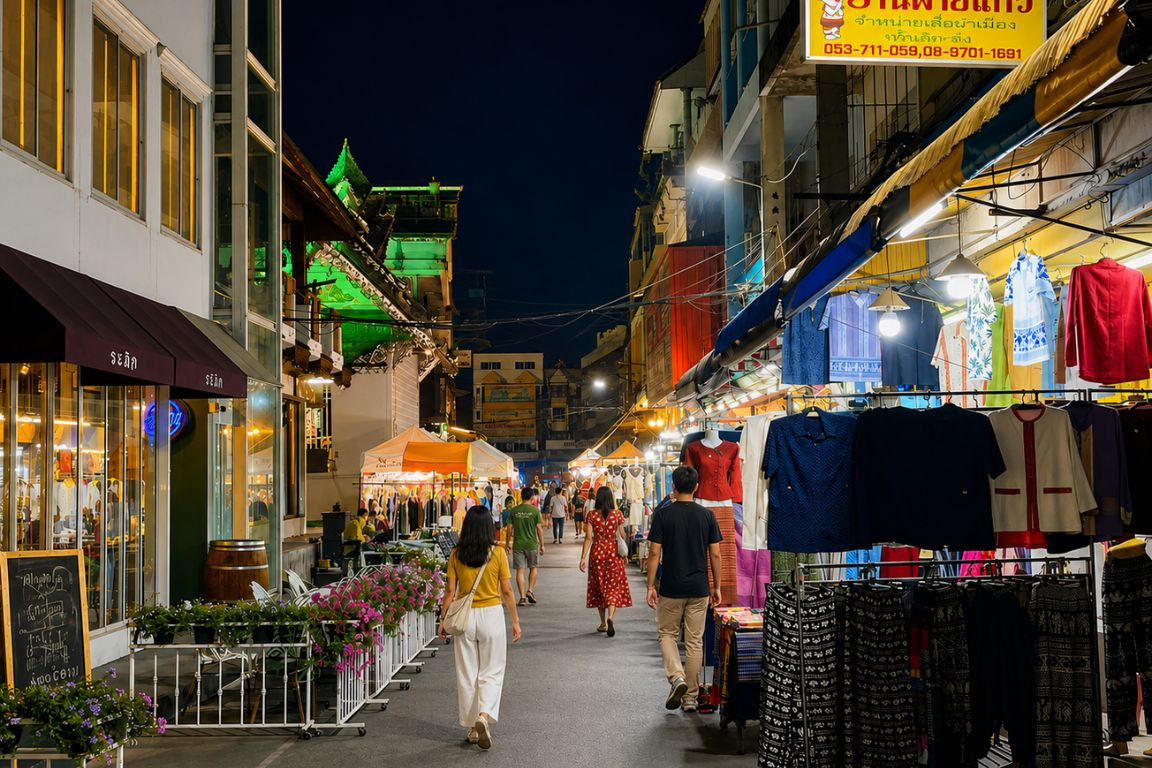 Chiang Mai wins both categories. Its food scene is one of the best in Thailand, and that’s a serious claim in a country that takes food seriously: khao soi, sai oua sausage, Northern Thai curries, plus a café culture and international dining scene that accommodates most dietary preferences. Its nightlife runs from the jazz clubs of the North Gate area to rooftop bars on Nimman Road to Muay Thai evenings at the city’s stadiums. Chiang Rai has excellent Northern Thai food and a Night Bazaar that gets genuinely lively, but the nightlife closes early and the international food options are sparse.
The food gap is real but not total. Chiang Rai’s local food is outstanding. Khao soi exists here in versions every bit as good as in Chiang Mai, you just have fewer places competing for your attention and fewer tourists driving up prices at the popular spots. The Night Bazaar runs nightly and is one of the more authentic market experiences in northern Thailand, less curated for tourists than Chiang Mai’s equivalent. The Saturday walking street near Thanalai Road draws real local crowds. If you eat Thai food and only Thai food, you’ll eat extremely well in Chiang Rai for significantly less money.
The difference shows up in breadth. Chiang Mai has spent decades accommodating every kind of traveler, digital nomads who need reliable café Wi-Fi, vegetarians who need dedicated menus, families who need Western options for picky eaters, long-term residents who need real supermarkets. The Nimman Road area alone has more international restaurant options than the whole of Chiang Rai city center.
Nightlife in Chiang Rai is best understood as evening-scale rather than late-night. A few bars near the clock tower stay open until midnight. The Night Bazaar has live music some evenings. That’s close to the ceiling. Travelers who want to end a day in Chiang Mai at the North Gate Jazz Co-Op, at a rooftop cocktail bar watching the city lights, or at a late-night Muay Thai fight will not find those things in Chiang Rai. That’s a trade-off, not a failing. Chiang Rai is a morning city. Its gifts are early: temples at 8am, hill roads before the heat, coffee at a local market while the day is still quiet.
Which City Is Easier to Get To and Get Around?
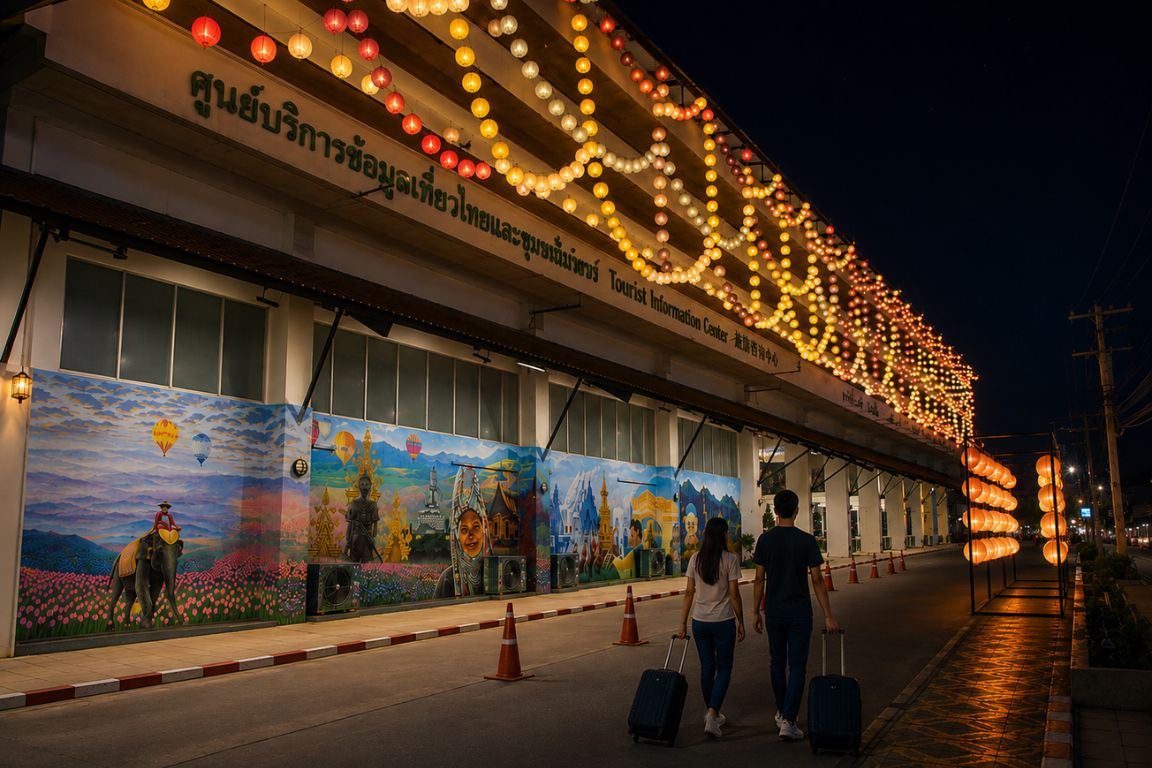 Chiang Mai is significantly easier to reach from both Bangkok and international origins. Chiang Mai International Airport (CNX) connects to 31 destinations across 12 countries with 27 airlines. Chiang Rai’s Mae Fah Luang Airport (CEI) has domestic routes from Bangkok plus a handful of regional connections. There is no direct flight between Chiang Rai and Chiang Mai. Within the cities, Chiang Mai is more walkable and denser: attractions are closer together and Grab works reliably throughout. Chiang Rai’s major sites are spread out, Grab works but distances between attractions mean you spend more on transport.
For most international travelers, the routing goes: fly into Bangkok, connect to Chiang Mai. The flight from Bangkok to Chiang Mai takes around one hour and runs multiple times daily with Thai AirAsia, Thai Lion Air, Nok Air, and others. From Chiang Mai, Chiang Rai is 3.5 hours by Green Bus VIP or around 3 hours by private transfer. That makes Chiang Mai the natural base for exploring the whole northern region, with Chiang Rai as a 2 to 3 night extension.
You can also fly Bangkok to Chiang Rai directly, which is useful if you’re coming from Chiang Rai first and heading to Chiang Mai afterward. The flight is roughly one hour. But for most standard itineraries, Chiang Mai comes first simply because of its better flight connections and the logical direction of travel through northern Thailand.
Getting around inside each city follows the same logic. Chiang Mai’s old city is compact, surrounded by a moat, and genuinely walkable between many of its central temples and markets. Grab drivers are everywhere and rides between central areas tend to be short and cheap. Chiang Rai’s city center is smaller but its main attractions sit outside it: the White Temple is 13 km south, the Blue Temple 6 km north, the Black House another 10 km north of the Blue Temple. Every temple visit requires a Grab, tuk-tuk, or rented scooter. Budget the transport time and cost accordingly.
Getting to Chiang Rai from Chiang Mai is straightforward but getting the most out of the visit takes more planning than most tourists expect – our how to visit Chiang Rai tours from Chiang Mai guide breaks down everything before you go.
Getting There and Getting Around: Key Logistics
| Airport international routes | Limited (mainly Bangkok domestic + a few regional) | 31 destinations, 27 airlines including Singapore, Seoul, Taipei, KL |
| Flight from Bangkok | ~1 hr (Bangkok Suvarnabhumi or Don Mueang) | ~1 hr (multiple daily flights, multiple airlines) |
| Train from Bangkok | Not available (no direct train) | Available (overnight sleeper, ~12 hrs) |
| City walkability | Low – major attractions spread outside center | Moderate – old city is walkable, some attractions require transport |
| Grab availability | Good in city, patchy to outlying temples | Excellent citywide |
| Typical Grab ride cost | 93-169 THB (longer distances between sites) | 10-83 THB (shorter distances within center) |
| Scooter rental (daily) | 150-250 THB | 150-250 THB |
| Red songthaew (shared taxi) | Limited availability | Widely available, 20-50 THB within city |
Transport costs verified May 7, 2026.
Which City Is Better for Your Budget?
 Chiang Rai is cheaper across most categories, but the gap is smaller than travelers expect and the reasons matter. Street food costs about the same in both cities (50-80 THB for a full meal). Accommodation in Chiang Rai runs roughly 15-25% cheaper for comparable quality. Within-city transport is more expensive in Chiang Rai because the distances between major sites are longer. Chiang Mai costs more overall because there is simply more to spend money on: better restaurants, more activities, more markets, a busier nightlife ecosystem. Budget travelers who eat local and move by songthaew will find Chiang Rai measurably more affordable. Mid-range travelers often spend nearly as much simply because Chiang Mai gives them more options.
The food numbers are close. A bowl of khao soi at a local restaurant runs 60-80 THB in both cities. Street food from the morning markets in either city delivers a complete breakfast for 30-60 THB. The Night Bazaar in Chiang Rai is widely reported as slightly cheaper than Chiang Mai’s equivalent markets. Where Chiang Mai diverges is in what it offers above that baseline. If you want to eat at the western-facing cafés on Nimman Road, attend a cooking class, do a Monk Chat dinner show, or try one of Chiang Mai’s international restaurants, you’ll spend more. Those options are either sparse or nonexistent in Chiang Rai.
Accommodation is genuinely cheaper in Chiang Rai at every tier. Budget guesthouses near the Night Bazaar start at 400-600 THB per night for a clean private room with air conditioning. Mid-range hotels in the 800-1,800 THB range are available in both cities, but the quality-to-price ratio in Chiang Rai tends to be slightly better. Long-term: a 1-bedroom apartment in central Chiang Rai runs around 6,000 THB per month versus 10,000 THB per month in Chiang Mai. For travelers on extended stays, the difference is real.
The one area where Chiang Rai costs more than you might expect is local transport. Because the White Temple, Blue Temple, and Black House all sit outside the city center and in different directions from each other, you rack up Grab or tuk-tuk fares across a day of temple visiting. Budget at least 500-800 THB per day for transport if you’re doing the temples independently, versus 200-400 THB for a similar temple-focused day in Chiang Mai where the Old City temples are within walking distance of each other.
First time visiting Baan Dam and not sure what to make of it from the outside? Here’s our Black House Chiang Rai visitor guide so you leave with the full picture rather than just a confused impression.
Daily Budget Comparison: Chiang Rai vs. Chiang Mai
| Budget guesthouse (per night) | 400-600 | 500-800 |
| Mid-range hotel (per night) | 800-1,800 | 1,000-2,500 |
| Street food meal | 50-80 | 50-80 |
| Local restaurant meal | 80-150 | 100-200 |
| Western/international meal | 200-400 (limited options) | 300-800 (wide variety) |
| Daily temple transport (Grab) | 500-800 (spread-out sites) | 200-400 (compact Old City) |
| Major temple entry fees (per day) | 280 THB (White + Black House; Blue is free) | 150-200 (most major temples 50 THB each) |
| Estimated mid-range daily total | 1,700-2,500 | 2,000-3,500 |
Prices verified May 7, 2026. Estimates cover accommodation, 3 meals, transport, and 1-2 activities per day.
Who Should Choose Chiang Rai, and Who Should Choose Chiang Mai?
Choose Chiang Rai if: you are a repeat Thailand traveler who has already done Chiang Mai, you prioritize visual impact in temples over historical depth, you want quieter mornings and a slower pace, you are interested in border-region culture and the Golden Triangle, or you are a photographer chasing shots that don’t exist anywhere else in Thailand. Choose Chiang Mai if: this is your first trip to northern Thailand, you want maximum activity variety in limited time, you need strong digital nomad infrastructure, you travel with people who have diverse food requirements, or you want a meaningful nightlife option after temple days.
The solo female traveler who tells us Chiang Rai feels more real than Chiang Mai has a point. So does the family that books Chiang Mai first because the kids need more activity options. Both are right about their own trip. The difference is not quality. It’s fit.
First-time visitors to Thailand almost universally benefit from Chiang Mai first. The city is built for people who don’t know the country yet. English is widely spoken, the tourist infrastructure absorbs every kind of traveler, the Old City is one of the best-laid-out historic districts in Southeast Asia, and there’s enough going on within walking distance that you can have a complete experience without renting a scooter or figuring out how the songthaew system works. Chiang Mai teaches you Thailand. Chiang Rai rewards you for already knowing a little.
Photographers, artists, and people who specifically came for the temples will feel the pull of Chiang Rai more strongly. There is no equivalent of the White Temple in Chiang Mai. Not even close. And the Blue Temple at 6pm in the golden hour, nearly alone in a space that only opened in 2016, is the kind of image that makes people reorganize their Thailand itinerary around it afterward.
Digital nomads and long-stay travelers belong in Chiang Mai. Chiang Rai is improving on this front, but the coworking scene is thin, the café infrastructure is less developed, and the city center does not yet have the critical mass of nomad community that Nimman Road offers. Chiang Rai for a long weekend: yes. Chiang Rai as a 3-month base: only if you’ve specifically come for the slower pace and don’t need a professional community around you.
Want to visit the Blue Temple without wasting time figuring out the basics on arrival? Here’s our Blue Temple Chiang Rai visitor guide so you get the most out of it.
Do You Have to Choose, or Should You Visit Both?
Visit both. They are 3.5 hours apart by comfortable VIP bus and the road between them is scenic mountain driving. Chiang Mai makes the most sense as your base because of its flight connections. From there, Chiang Rai works beautifully as a 2 to 3 night side trip. You do not need to choose between them any more than you would choose between a city and a day in the countryside. They are complementary, and the travelers who see both consistently describe the combination as one of the best experiences in Thailand.
The standard approach that works for most travelers: fly into Chiang Mai, spend 4-5 days in and around the city, then take the 7am VIP bus to Chiang Rai for 2-3 nights. See the temples, do the Golden Triangle or Doi Mae Salong, come back. Or travel onward from Chiang Rai to Laos by crossing the border at Chiang Khong, which puts you on the Mekong slow boat route to Luang Prabang, one of Southeast Asia’s great multi-day journeys.
The Chiang Mai to Chiang Rai to Luang Prabang route is the backbone of the northern Thailand traveler circuit. It’s popular for a reason. Each stop escalates the sense of remoteness and cultural specificity: Chiang Mai is polished northern Thailand, Chiang Rai is the edge of it, and Laos is the step fully across the border into something else. You understand each place better for having seen the others in sequence.
What we’ve seen in over a decade of guiding 8,400-plus travelers through this region is that the people who regret not visiting Chiang Rai almost always treated it as optional. People who skipped Chiang Mai for Chiang Rai occasionally wish they had the full Chiang Mai immersion on their next trip. But we have almost never heard someone say visiting both was a mistake.
How Our Travelers Split Their Time: Insights from 8,400+ Chiang Rai Guests
| Chiang Mai first, then Chiang Rai overnight | 51% | Most common pattern; highest overall satisfaction |
| Chiang Rai only (day trip from Chiang Mai) | 23% | 54% said they wished they had stayed at least one night |
| Chiang Rai as standalone destination (no Chiang Mai) | 14% | Mostly repeat Thailand travelers; very high satisfaction |
| Chiang Rai to Laos (onward via Chiang Khong) | 12% | Described as one of SE Asia’s best multi-destination sequences |
Based on our 2025 client group data from Chiang Rai Tours guests. Percentages are approximate.
We’ve run this region since 2014 and the answer has not changed: both cities reward a visit and the combination is better than either alone. Let our team at Chiang Rai Tours build the Chiang Rai leg of your northern Thailand trip, whether that’s 2 nights from Chiang Mai or a week through the Golden Triangle and beyond.
Not sure whether a day trip from Chiang Mai does Chiang Rai justice or whether you need to stay overnight to get the most out of it? Here’s our how long do you need in Chiang Rai tours guide so you plan the right length visit.
Frequently Asked Questions
Is Chiang Rai or Chiang Mai better?
They are different, not better or worse. Chiang Mai is larger, better connected, has more nightlife and food variety, and suits first-time visitors to northern Thailand. Chiang Rai is quieter, cheaper, has more visually dramatic temples, and offers unique experiences like the Golden Triangle and Doi Mae Salong that don’t exist in Chiang Mai. Most travelers who visit both agree the combination is better than either alone.
Can you visit both Chiang Rai and Chiang Mai?
Yes, and we recommend it. The two cities are 3.5 hours apart by Green Bus VIP service (315 THB). The standard approach is to base yourself in Chiang Mai for 4-5 days and take a 2 to 3 night extension to Chiang Rai. You can also travel onward from Chiang Rai to Laos via the Mekong border crossing at Chiang Khong.
Which city is cheaper, Chiang Rai or Chiang Mai?
Chiang Rai is cheaper on accommodation (roughly 15-25% lower for comparable rooms) and slightly cheaper on food at local restaurants. Within-city transport runs higher in Chiang Rai because the major temples are spread outside the center and require longer Grab or tuk-tuk rides. Mid-range travelers often end up spending similar amounts in both cities simply because Chiang Mai has more to spend money on.
Which city is better for temples?
Chiang Rai wins on visual impact: the White Temple, Blue Temple, and Black House are contemporary art installations unlike anything else in Thailand. Chiang Mai wins on quantity, history, and spiritual depth: 300-plus temples including the sacred Doi Suthep and ancient Lanna architecture spanning the 13th to 14th centuries. The best answer is that they offer fundamentally different temple experiences.
How far is Chiang Rai from Chiang Mai?
Approximately 180 km by road, around 3 to 3.5 hours by private transfer and 3.5 to 4 hours by Green Bus VIP. There is no direct train and no direct flight between the two cities. Road is the only option and the route passes through genuinely scenic northern Thai hill country.
Which city is better for digital nomads?
Chiang Mai without question. It is consistently ranked among the top digital nomad cities in Southeast Asia, with deep café culture, multiple coworking spaces, a large expat and nomad community, and reliable infrastructure in the Nimman Road and Old City areas. Chiang Rai has growing café options but limited coworking infrastructure and a much smaller nomad community.
Written by Jasmine Kittisak
Thai tour guide since 2014 · Founder, Chiang Rai Tours
Jasmine has guided over 8,400 travelers through Chiang Rai and the Golden Triangle region since founding the agency.
Initial recommendation: general guidance, before you enter any preferences.
Private Chiang Rai Day From Chiang Mai
Have a travel date in mind? Visit White and Blue Temples, tea country and the Golden Triangle without changing your Chiang Mai hotel. Check your date before arranging the rest of your trip.
12 hours; private guide, vehicle, city hotel pickup and entry tickets.
Black House is not listed. Standard itinerary stops are short, about 40 minutes at White Temple; do not assume early arrival.
Scheduled dates load here. Confirm availability and final prices on Viator.
No verified option in this shortlist fits all your choices. Change your departure city, allow more time, or reset. Participant or access requirements need direct provider confirmation; no suitability claim is made here.
Adjust The Route Or Compare Alternatives
Choices change the booking recommendation and floating offer. A one-way transfer ends in the other city; a day tour follows its listed return or selected drop-off. Route matches do not confirm age, accessibility, dietary needs or medical suitability.
- Private Chiang Mai To Chiang Rai Transfer
Move between the two cities door to door, with your own departure time. One-way, 3–3.5 hours; private vehicle; hotel/location pickup and drop-off.
Basic English driver; choose direction, vehicle and luggage capacity. Remote addresses and oversized luggage may cost extra. No sightseeing included.
- Chiang Mai Temples & Golden Triangle Boat Day
See White Temple, Blue Temple and Black House, then take the Mekong boat ride. 15 hours; English guide; Chiang Mai pickup; choose the required drop-off option when booking.
Long day and fixed stops. Karen Village inclusion varies by option; confirm all entry inclusions and endpoint.