How Long Do You Need in Chiang Rai?
How many days do you need in Chiang Rai? Two nights is the sweet spot - learn what you can realistically see in 1, 2, 3, or 4+ days.
Last updated: July 1, 2026
Use the itineraries below to decide your stay length, then choose the temple or countryside day that fits it.
Quick Reference: How Many Days in Chiang Rai?
| Day trip (no overnight) | White Temple + 1-2 other sites | Early morning temples, evening bazaar, all countryside | Travelers with no flexibility in their itinerary |
| 1 night / 1 full day | All 3 color temples, Night Bazaar, Clock Tower show | Golden Triangle, Doi Mae Salong, countryside | Travelers with a tight but committed schedule |
| 2 nights / 2 full days | Temples + Golden Triangle OR Doi Mae Salong | One of the two major countryside excursions | Most travelers – the sweet spot for a complete experience |
| 3 nights / 3 full days | Temples + Golden Triangle + Doi Mae Salong | Phu Chi Fa sunrise, deeper hilltribe visits | Thorough travelers who want the complete picture |
| 4+ nights | Everything above + Phu Chi Fa, hilltribes, waterfalls, slow days | Nothing essential – pure additional depth | Slow travelers, photographers, repeat visitors |
Based on Chiang Rai Tours itinerary data from 8,400+ guided travelers since 2014.
How Many Days in Chiang Rai Is Actually Enough?
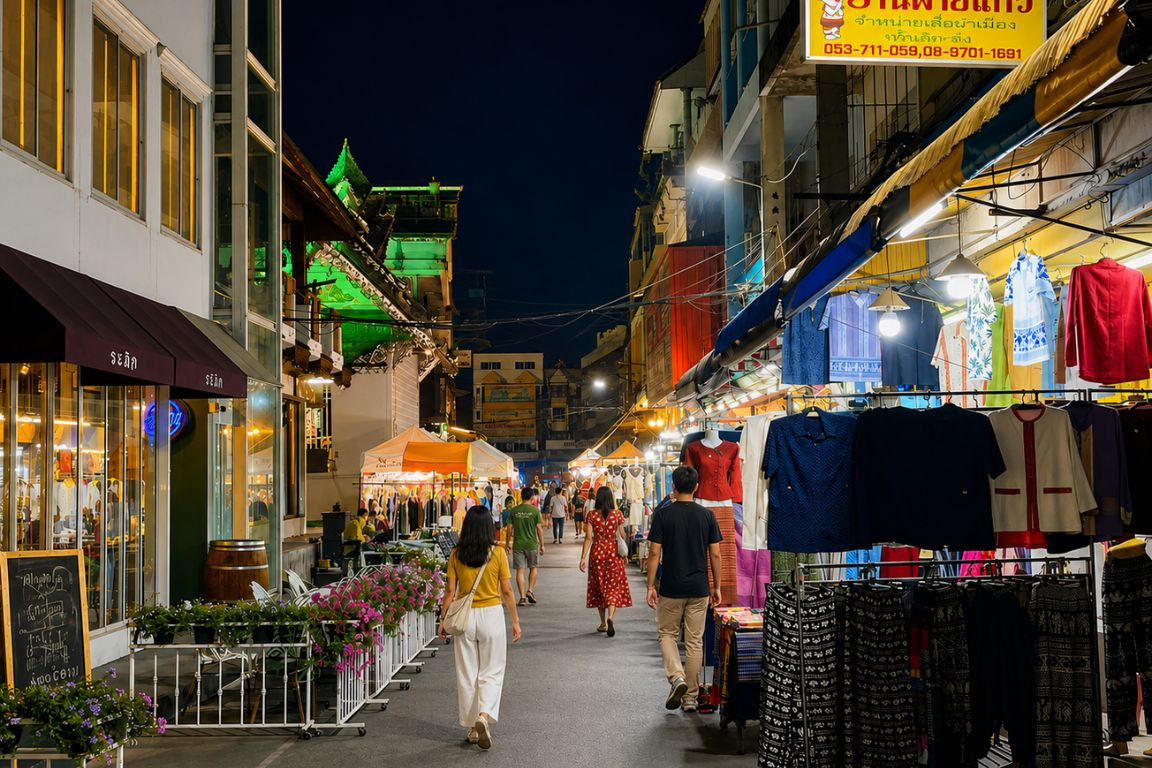 Two nights gives you two full days on the ground, which is enough to see the three color temples without rushing, complete one major countryside excursion (either the Golden Triangle or Doi Mae Salong), and experience the city in the evening at the Night Bazaar. That is the minimum for a complete experience. One night works for travelers who are genuinely short on time but committed to getting more than a day trip gives. Three nights is the version most travelers who return say they wished they had booked the first time.
The honest answer to how many days you need depends on a second question: what kind of traveler are you? Someone moving fast through a two-week Thailand itinerary with eight destinations booked will have a different answer than someone who chose Chiang Rai as one of three stops and has the latitude to stay until the city reveals itself properly.
What we have observed across more than 8,400 travelers guided through this region since 2014 is a consistent pattern. Travelers who spend one night leave satisfied but curious. They mention things they didn’t have time for. Travelers who spend two nights leave with a different relationship to the place. The pace changes. They ate at the market twice. They saw the Blue Temple at 6pm when it was nearly empty and the gold caught the last of the day. They sat somewhere for an hour without a particular reason. Chiang Rai rewards that kind of attention in a way that most northern Thailand destinations don’t.
The city is small enough that it cannot sustain the kind of activity density that would fill five days with sightseeing. But the province is large and deep. Once you move beyond the temples and into the mountain roads and border towns and tea villages, the days fill themselves. The question is whether your itinerary gives you room for that.
Want to know what makes the Blue Temple a worthy addition to your Chiang Rai itinerary beyond just being a less crowded alternative to the White Temple? Here’s our Blue Temple Chiang Rai visitor guide so you arrive with the right context.
What Can You Do in One Day in Chiang Rai?
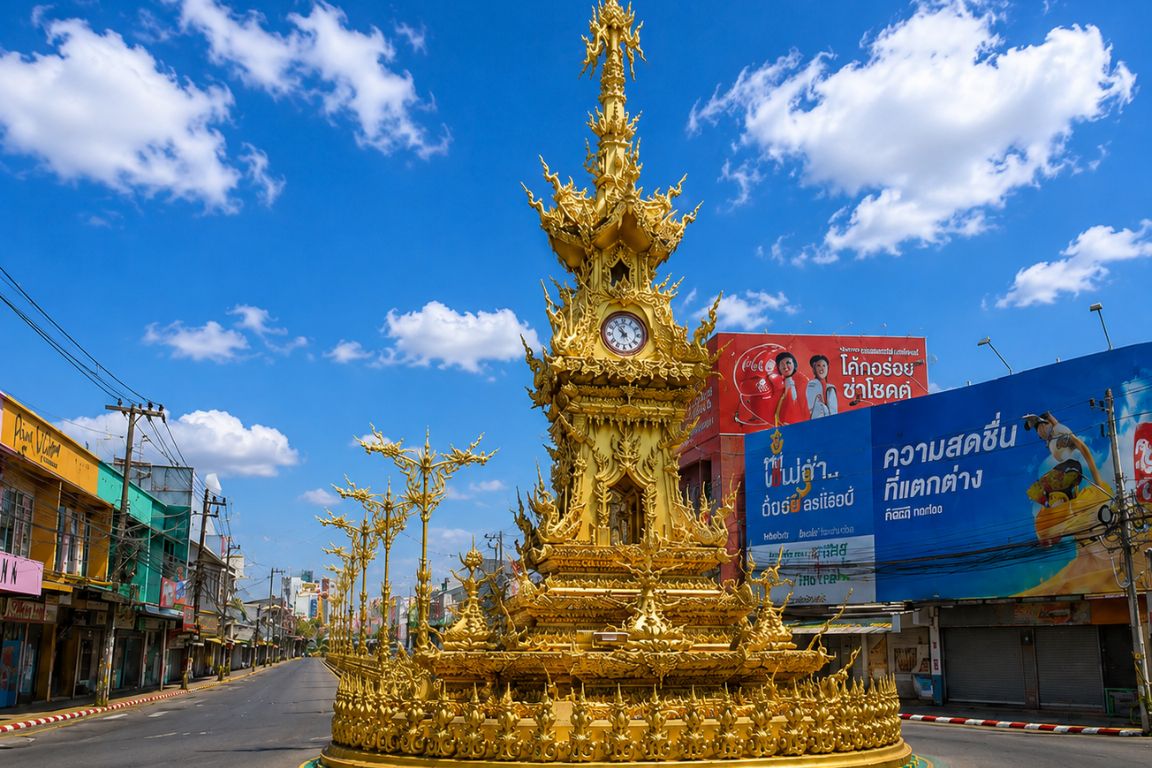 One full day in Chiang Rai, arriving the previous evening and departing the next, covers the three color temples and a Night Bazaar dinner. Arrive at the White Temple at 8am when it opens, visit the Blue Temple and Black House before noon, eat lunch in the city center, return to the Blue Temple or the Clock Tower in the evening for the 7pm or 8pm light show. That sequence works. It is tight but manageable if you start early and move with intention.
The sequence matters more than people realize. Every standard day tour from Chiang Mai arrives at the White Temple between 10am and noon. That window is the most crowded period of the day. Travelers who overnight in Chiang Rai and walk through the gates at 8am on a weekday morning find a completely different place: twenty people instead of two hundred, morning light instead of harsh midday sun, room to stand on the bridge without negotiating around three tour groups. That first hour at Wat Rong Khun, the one that day-trippers almost never get, is the version that appears in the photographs people keep for years.
After the White Temple, head north to the Blue Temple (Wat Rong Suea Ten) and Black House (Baan Dam). These two sites sit close together and together take about 90 minutes. The Blue Temple is free and opens at 7am. The Black House is roughly 80 THB and keeps 9am to 5pm hours with a midday closure from noon to 1pm worth checking before you go. Both are considerably less crowded than the White Temple at almost any time of day, which makes the morning-rush problem a non-issue here.
The evening is what converts a temple tour into a genuine day. The Night Bazaar runs nightly and is liveliest from around 6pm. The Clock Tower light show runs at 7pm, 8pm, and 9pm. The Blue Temple stays open until 8pm and shows differently by lamplight than it does in daylight. None of these things are available to day-trippers from Chiang Mai who leave at 5 or 6pm. They are the reason one overnight changes the experience more than the math of hours suggests.
The White Temple rewards visitors who understand what they’re looking at – our White Temple Chiang Rai visitor guide breaks down the symbolism, the dress code, and the sections most tourists rush straight past.
Sample One-Day Schedule (Overnight in Chiang Rai)
| 7:30am | Breakfast at local market near city center | Khao tom or noodle soup, 40-60 THB |
| 8:00am | White Temple (Wat Rong Khun) – gates open | 200 THB entry. Arrive at opening to beat tour buses. Budget 90 min minimum. |
| 10:00am | Black House (Baan Dam) | ~80 THB. 10 km north of city. Budget 45-60 min. |
| 11:15am | Blue Temple (Wat Rong Suea Ten) – morning visit | Free. 5 min from Black House. Budget 45 min. |
| 12:30pm | Lunch in city center | Khao soi, 70-100 THB. Rest, recharge. |
| 2:30pm | Wat Huay Pla Kang or city walking | Free (lift: 40 THB). Giant Guanyin statue. Panoramic views from pagoda top. |
| 5:30pm | Blue Temple at golden hour | Optional return. Free, open until 8pm. Best light and fewest crowds of the day. |
| 6:30pm | Night Bazaar dinner | Hot pot, grilled meats, northern Thai street food |
| 7:00 or 8:00pm | Clock Tower light show | Free. 10-minute show, nightly. Walk from Night Bazaar. |
Prices verified May 7, 2026.
What Does a Two-Day Chiang Rai Itinerary Look Like?
Day one covers all three color temples, starting at the White Temple at 8am and ending with the Night Bazaar dinner and Clock Tower show. Day two goes into the countryside: either the Golden Triangle (Hall of Opium museum, Mekong viewpoint, optional boat ride) or Doi Mae Salong (Chinese Yunnan mountain village, tea plantations, Akha hill tribe villages). You cannot do both properly in a single second day. That is the strongest argument for three nights.
Two days is where Chiang Rai begins to feel like a destination rather than a transit point. The temple day and the countryside day complement each other in a way that neither achieves alone. The temples show you what the artists made here. The countryside shows you the land and the people that gave the artists something to respond to.
The Golden Triangle excursion runs about 90 minutes each way from Chiang Rai city. The viewpoint where Thailand, Laos, and Myanmar converge at the Mekong is genuinely striking and the physical sensation of standing at a three-country border is one of those moments that lands differently than a photograph suggests. The Hall of Opium museum next to the viewpoint is one of northern Thailand’s best-designed museums: two floors of exhibits that trace the full history of the region’s poppy trade, its CIA codename, its dismantlement, and the development projects that replaced it. Budget at least an hour there. The museum matters more than the boat ride.
Doi Mae Salong is a different kind of day. The drive takes about 90 minutes from the city, climbing through terrain that shifts from lowland Thai countryside into something that feels Chinese before you’ve crossed any border. The village of Santi Kiri sits at 1,300 meters on a ridge settled by Kuomintang soldiers who refused to return to mainland China after 1949. The signs run Chinese-Thai-English. The restaurants serve Yunnan cuisine. The tea is oolong grown on the terraced hillsides surrounding the village and brewed in small shops where you can sit for an hour watching clouds move across Myanmar. Travelers who chose Doi Mae Salong on their second day consistently describe it as the experience they talk about most when they get home.
The question of which to choose for day two depends on your interests. History and geopolitics pull toward the Golden Triangle. Mountain landscapes, food, and cultural layering pull toward Doi Mae Salong. If you genuinely cannot choose, that is the argument for three nights in Chiang Rai.
What Can You Add with a Third Day in Chiang Rai?
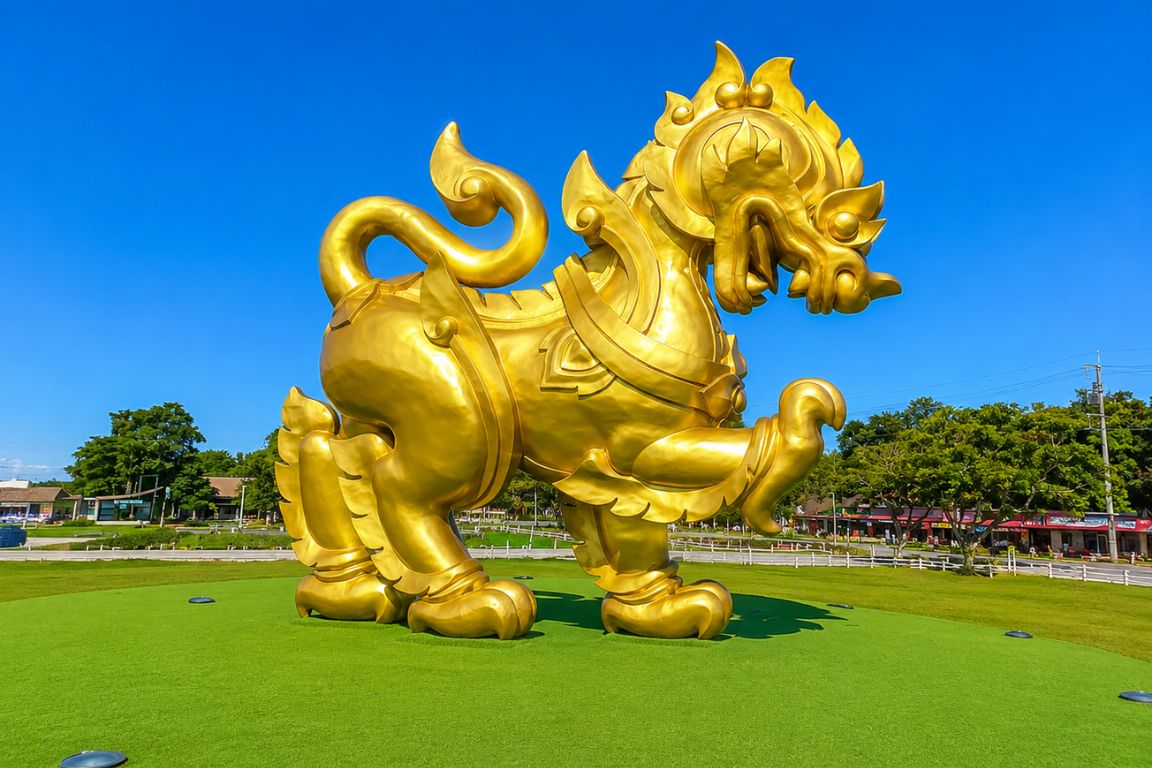 A third day lets you do the second countryside excursion you had to skip on day two. If you did the Golden Triangle on day two, day three goes to Doi Mae Salong. If you did Doi Mae Salong, day three covers the Golden Triangle. Both are full days. A third day can also be used for a hilltribe village visit, Khun Korn Waterfall, Singha Park, or a slower version of anything you rushed through earlier.
Most itinerary guides treat three days as the definitive recommendation for Chiang Rai, and the logic holds. Day one: the three color temples, done right at 8am, not rushed, ending with an evening. Day two: Golden Triangle. Day three: Doi Mae Salong. That sequence is coherent, unhurried, and covers what Chiang Rai offers at the level most travelers want to see it.
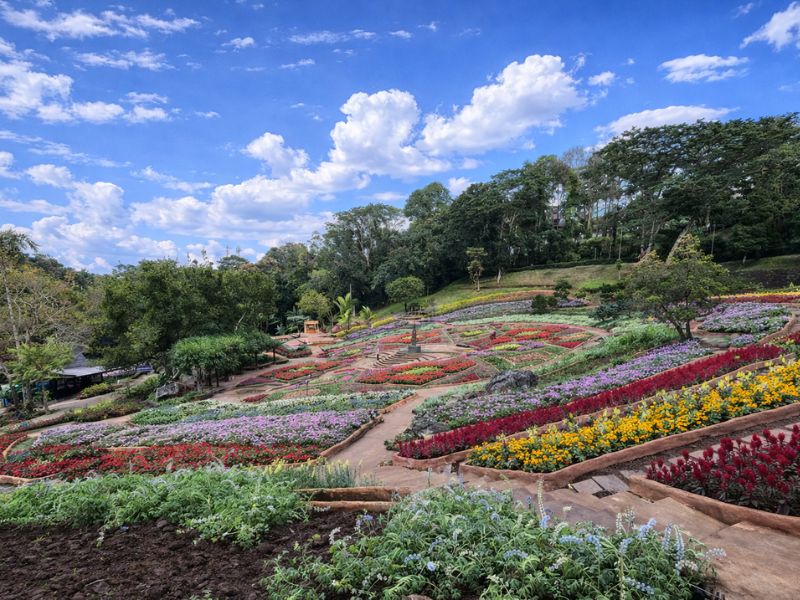
The third day also introduces options that aren’t on any standard itinerary. Khun Korn Waterfall, 57 km south of the city, is the tallest waterfall in Chiang Rai province: a 70-meter cascade reached by a 1.5 km forest trail. It’s one of those places that earns its reputation without needing marketing language. The trail is manageable for most fitness levels and the waterfall at the end justifies the drive. Mae Fah Luang Garden near Doi Tung is another third-day option: a botanical garden established by the late Princess Mother that covers 10 acres and is at its best in the cool season from November to January when the flowers are at peak bloom.
Singha Park is worth considering for travelers with families or anyone who wants a slower half-day. The former barley plantation converted to agritourism has cycling paths through tea and flower fields, a tram for those who don’t want to pedal, a petting zoo, and a café with views that cost nothing to sit in for an hour. It’s not the deepest cultural experience Chiang Rai offers, but it’s a genuine place to breathe without an agenda.
Wondering whether a day trip from Chiang Mai does Chiang Rai justice or whether it deserves at least one overnight stay? This is Chiang Rai worth visiting guide covers the honest assessment most Thailand travel blogs avoid giving.
Sample Three-Day Chiang Rai Itinerary
| Day 1 Temple Circuit |
White Temple at 8am (200 THB). Move quickly before tour buses arrive at 10am. | Black House then Blue Temple. Lunch in city. Optional: Wat Huay Pla Kang. | Night Bazaar dinner. Clock Tower light show 7 or 8pm. |
| Day 2 Golden Triangle |
Drive 1.5 hrs to Sop Ruak (Golden Triangle viewpoint). Three-country confluence. | Hall of Opium Museum (200 THB, budget 1.5 hrs). Optional Mekong boat ride. | Return to city. Saturday night walking street if applicable. |
| Day 3 Doi Mae Salong |
Drive 1.5 hrs to Santi Kiri village. Tea tasting at co-op. Walk through tea terraces. | Yunnan Chinese lunch in village (80-150 THB). Akha hill tribe village nearby if time allows. | Return to city. Blue Temple at golden hour before checking out next morning. |
This itinerary assumes 3 nights in Chiang Rai city center. Prices verified May 7, 2026.
What Does Chiang Rai Reward If You Stay Four Days or Longer?
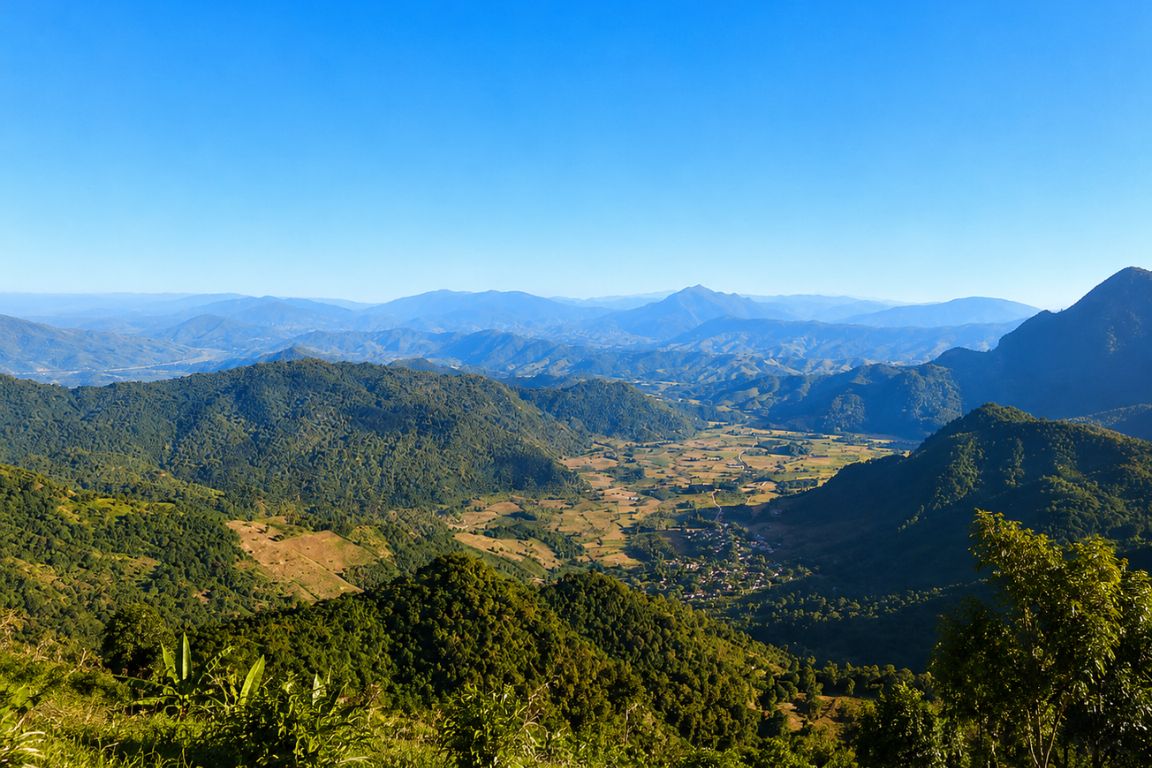 Four days or more unlocks the version of Chiang Rai that most travelers never see: Phu Chi Fa at sunrise, authentic hilltribe village visits, Khun Korn Waterfall, Mae Fah Luang Garden, and the slower rhythm of the city itself. Phu Chi Fa alone requires an early morning departure (3am from the city) to reach the viewpoint by sunrise at a 90 km drive away. It is the most photographed natural scene in northern Thailand and it cannot be done properly without a fourth day built around it.
Phu Chi Fa is the argument for four nights that nobody fully explains in standard travel guides. The viewpoint sits 90 km east of Chiang Rai at 1,442 meters above sea level on the Thai-Lao border. In the cool season from November to February, the sunrise there produces the famous sea of mist: a valley floor blanketed in cloud while you stand above it watching the sun rise from the direction of Laos and paint the whole thing gold. It is legitimately one of the most spectacular natural sights in Thailand. The hike from the parking area to the summit takes 20 to 30 minutes. The drive from Chiang Rai takes about two hours on roads that are well-paved but steep and winding in the final stretch.
The logistics require an early departure: leave Chiang Rai by 3am to reach the summit by 5:30am before sunrise, which runs around 6:30am during the cool season. That means either a very early morning from Chiang Rai city (possible with a private driver booked in advance for around 2,500 THB for the car) or an overnight stay in the Phu Chi Fa village area, which has simple guesthouses from 300 to 1,000 THB. The overnight option means a more relaxed wake-up and the ability to linger after sunrise when the crowds thin and the light continues to change.
A fourth day also opens the door to genuinely off-itinerary experiences. The hilltribe villages around Chiang Rai, particularly the Akha and Lahu communities in the hills toward the Myanmar border, offer a different kind of cultural encounter than the Golden Triangle. These are working villages rather than tourism demonstrations, and the difference in atmosphere is palpable.
How Does Your Travel Style Affect How Long You Need?
 Fast-paced checklist travelers can cover Chiang Rai’s signature attractions in two days and leave satisfied. Slow travelers, photographers, food-focused visitors, and anyone who came specifically for the mountain landscapes need three to four days minimum. Families with young children benefit from the extra buffer of three nights because the distances between sites are real and children tire. Digital nomads and long-stay travelers often find two weeks here surprisingly sustainable, though the infrastructure for remote work is thinner than Chiang Mai.
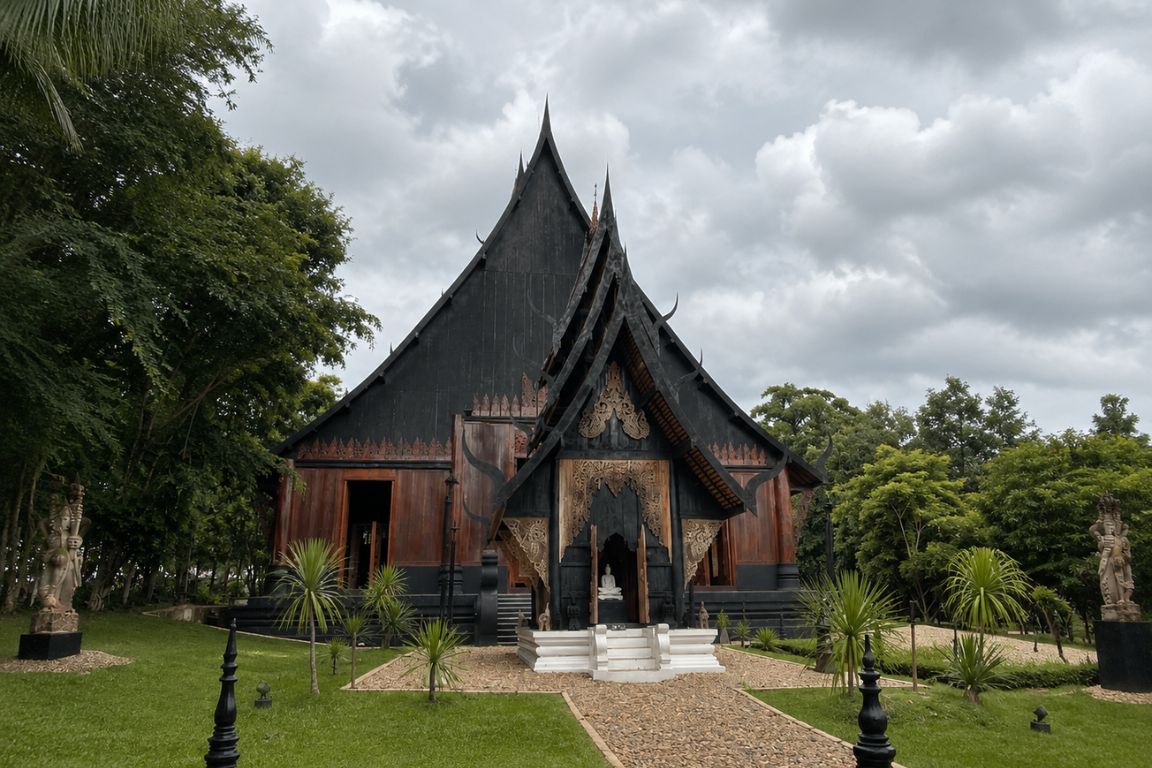
The temple photographers need more time than most guides suggest. The three color temples look completely different at 8am, noon, and 5pm. The Blue Temple changes character by the hour: deep and still in the morning, busy and bright midday, genuinely luminous at golden hour. Returning to the same site twice on different days is not a failure of planning. It’s how you get photographs that don’t look like everyone else’s. Budget a day per temple if photography is the primary reason for the trip, not a secondary one.
Families with children have specific considerations in Chiang Rai. The distances between attractions require transport for every major site, which adds time and cost. Young children find the Black House genuinely unsettling at times; the animal bone installations and dark aesthetic are not for everyone under ten. Singha Park solves both problems: it’s child-friendly, has activities ranging from cycling to a petting zoo, and doesn’t require coordinating Grab rides between sites that are 10 km apart. Families generally benefit from a three-night stay because it allows one day for temples, one day for countryside, and one day for something unhurried like Singha Park or the Mae Kok riverside.
Repeat Thailand visitors and slow travelers often discover that Chiang Rai’s city center has a daily rhythm that rewards lingering. The Kad Luang market in the morning, where locals shop for vegetables and grilled things before the heat builds. The coffee shops in the Nimman-equivalent neighborhoods that opened in the last few years. The Kok River, where you can rent a bicycle and ride along the bank without a particular destination. These are not attractions. They are the texture of a place. You find them on day three or four, not day one.
The Black House is less a temple and more an artist’s obsession – our Black House Chiang Rai visitor guide breaks down the story behind Thawan Duchanee’s life work and what you’re actually looking at inside.
What Do Most Travelers Get Wrong About Planning Their Chiang Rai Time?
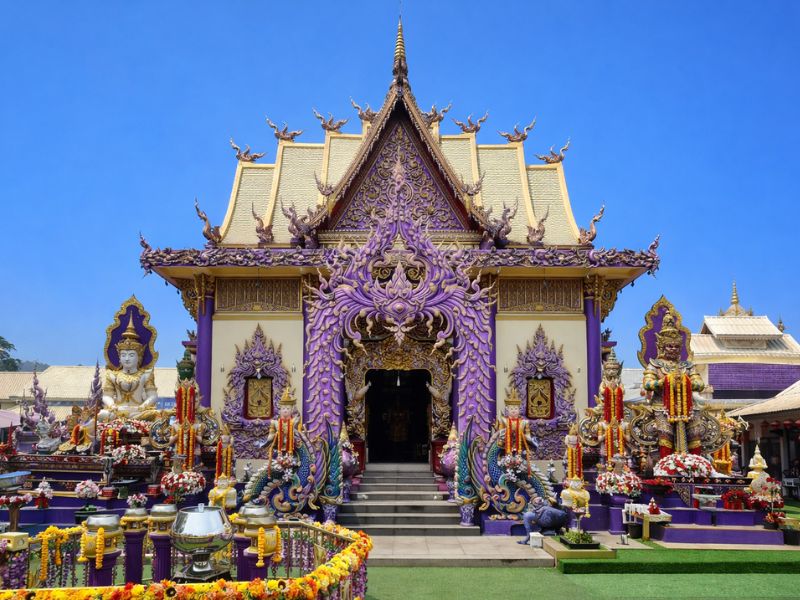
The most common planning mistake is treating Chiang Rai as a city when it is really a province. The three color temples sit within the city orbit. The Golden Triangle, Doi Mae Salong, and Phu Chi Fa are all 90 minutes or more away. Travelers who budget a single day expect to do the temples and one countryside excursion in one go and discover by 4pm that the math didn’t work. The second most common mistake is arriving on a day trip from Chiang Mai and expecting to see the White Temple before the tour buses from the same city do.
The city versus province confusion shapes how people plan their days and then feel disappointed when the distances don’t cooperate. Someone books two nights expecting to cover the White Temple, Blue Temple, Black House, Golden Triangle, and Doi Mae Salong. That is five to six major sites spread across a 150 km radius. It’s two days of driving, not two days of visiting. The better planning model is one destination category per day: temples on day one, one countryside excursion on day two, a second countryside excursion only if you have a third day.
The tour bus timing failure catches even experienced travelers. The standard Chiang Mai day tour departs around 6 or 7am and arrives at the White Temple somewhere between 10 and 11am. That is when you want to be leaving the White Temple, not arriving at it. Travelers who overnight in Chiang Rai and arrive at the White Temple at opening are seeing a different version of the same site. The solution is simple: stay overnight, set your alarm, be at the gates at 8am. The solution requires understanding why the timing matters, and most traveler planning resources explain what to do without explaining what happens if you don’t.
Trying to decide between Thailand’s cultural hub and its quieter, more off-the-beaten-path northern neighbour? Check out our Chiang Rai vs Chiang Mai guide before you commit to either.
The third mistake is underestimating how much Chiang Rai rewards the evening. Travelers who book a day trip by definition miss the Night Bazaar, the Clock Tower light shows, the Blue Temple at golden hour, and the sensation of a small northern Thai city after the tour buses have gone home. These are not optional extras. They are the half of Chiang Rai that the day trip format structurally cannot include. A single overnight stay costs 400 to 1,800 THB and gives you access to all of it.
Planning a trip to northern Thailand’s most underrated city and not sure how to make the journey from Chiang Mai work? Here’s our how to visit Chiang Rai tours from Chiang Mai guide so you plan it properly.
What Our Travelers Said About Their Stay Length: Insights from 8,400+ Guests
| Day trip only | 18% | 61% said they wished they had stayed overnight |
| 1 night / 1 full day | 27% | Most satisfied with temples; 48% wished they had added one more night for countryside |
| 2 nights / 2 full days | 34% | Highest overall satisfaction; 38% said they would add a third night next time |
| 3 nights / 3 full days | 15% | Described as the “complete” experience; very few wished for more time |
| 4+ nights | 6% | Highest rate of return visitors; Phu Chi Fa and hilltribe visits cited as highlights |
Based on our 2025 client group data from Chiang Rai Tours guests. Percentages are approximate.
Frequently Asked Questions
How many days is enough for Chiang Rai?
Two nights and two full days is the minimum for a complete experience that covers the three color temples and one countryside excursion. Three nights adds the second countryside excursion and removes the feeling of rushing. One night works if your schedule is genuinely tight but you are committed to seeing the temples early rather than arriving with the day-trip crowds.
Is one day enough for Chiang Rai?
One full day is enough to see the three color temples and the Night Bazaar if you are already staying overnight in Chiang Rai. It is not enough if you are doing a day trip from Chiang Mai: you arrive after tour buses have already occupied the temples and leave before the evening begins. A minimum one overnight stay changes the entire experience.
What is the best 2-day itinerary for Chiang Rai?
Day one: White Temple at 8am, Black House, Blue Temple, lunch in the city, evening at the Night Bazaar and Clock Tower light show. Day two: Golden Triangle and Hall of Opium Museum, or Doi Mae Salong tea village depending on your interests. History and border geography: choose the Golden Triangle. Mountain culture and food: choose Doi Mae Salong.
Is 3 days enough for Chiang Rai?
Three days is the most complete version of Chiang Rai for most travelers. Day one covers the temples. Day two covers the Golden Triangle. Day three covers Doi Mae Salong. You finish with a full picture of what the province offers: its art, its border-region history, and its mountain communities. The only things left for a fourth day are Phu Chi Fa sunrise and deeper hilltribe village visits.
How long does it take to see the White Temple?
Budget 90 minutes minimum, and two hours if you want to fully explore the whole complex: the main temple, the Art Cave (50 THB extra), the golden bathroom, the reflecting pools, the donation wishing tree, and the art gallery near the entrance. Most tours allocate 45 to 60 minutes. That is enough for the main temple but not the full grounds. Arriving at 8am when the gates open gives you the time and the light.
Is Phu Chi Fa worth it from Chiang Rai?
For the right traveler, absolutely. The sunrise sea of mist at Phu Chi Fa ranks among the best natural spectacles in northern Thailand. But it requires serious commitment: a 90 km drive, a 3am departure from Chiang Rai to arrive in time for sunrise, and a 30-minute uphill hike in the dark. It is only worth the logistics if you have a fourth day to dedicate to it and you genuinely care about mountain sunrise photography. Best from November to February when the sea of mist reliably forms.
Written by Jasmine Kittisak
Thai tour guide since 2014 · Founder, Chiang Rai Tours
Jasmine has guided over 8,400 travelers through Chiang Rai and the Golden Triangle region since founding the agency.
Initial recommendation: general guidance, before you enter any preferences.
Private Chiang Rai Temple Day
Have a travel date in mind? Set your own temple priorities with a private guide and vehicle. Check your date before arranging the rest of your trip.
8 hours; Chiang Rai hotel pickup; English guide and air-conditioned transport. White Temple, Blue Temple and Baan Dam are listed stops.
Entry fees, lunch and personal expenses are extra. Confirm your preferred order and longer stops before booking; early entry is not guaranteed.
Scheduled dates load here. Confirm availability and final prices on Viator.
No verified option in this shortlist fits all your choices. Change your departure city, allow more time, or reset. Participant or access requirements need direct provider confirmation; no suitability claim is made here.
Adjust The Route Or Compare Alternatives
Choices change the booking recommendation and floating offer. A one-way transfer ends in the other city; a day tour follows its listed return or selected drop-off. Route matches do not confirm age, accessibility, dietary needs or medical suitability.
- Seven Chiang Rai Sites With Tickets
Bundle the three art sites and Golden Triangle with entry tickets and lunch. 10 hours; English guide; city pickup; White Temple, Baan Dam, village and Opium Museum tickets included.
A busy fixed circuit: about 1 hour at White Temple, 30 minutes at Blue Temple and 45 minutes at Baan Dam. Not wheelchair suitable.
- Doi Mae Salong & Doi Tung Mountain Day
Visit tea country, the KMT memorial and the gardens and villa at Doi Tung. Full day from Chiang Rai; English-speaking guide/driver, vehicle, water and hotel transfer.
Reserve a full day; exact return time must be confirmed. Garden/villa entry and meals cost extra.